150-million-year-old giant long-necked dinosaur fossils found in Spain mark the first evidence beyond North America
Europe News: Spanish palaeontologists have identified fossils of ‘Diplodocus’ in Teruel, which marks the first evidence of the iconic long-necked dinosaur outside .
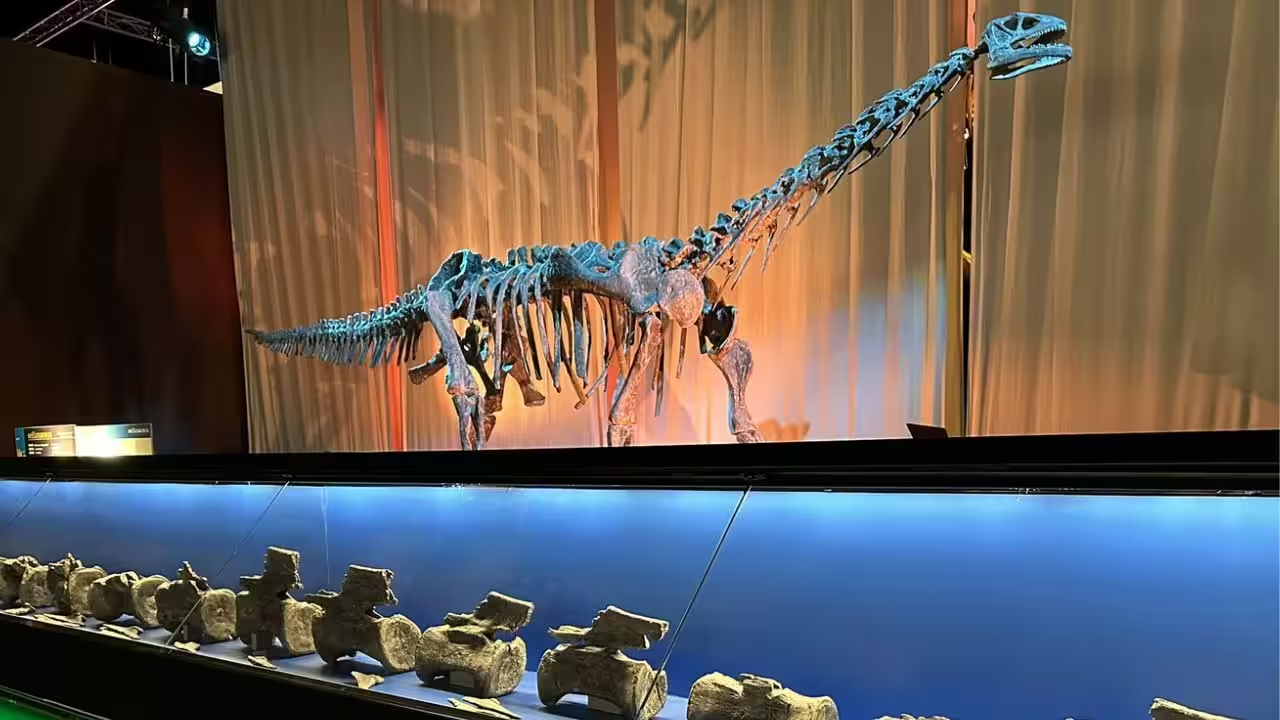
Spanish palaeontologists have identified fossils of ‘Diplodocus’ in Teruel, which marks the first evidence of the iconic long-necked dinosaur outside North America. The remains were recovered from the La Tejería site in El Castellar and date to about 150 million years ago. The material includes 14 well-preserved tail vertebrae and several chevron bones. According to research published in the Journal of Vertebrate Paleontology, researchers identified the specimen as Diplodocus after examining its anatomy and comparing it with other diplodocine sauropods, alongside evolutionary analyses. The study places the animal within the Diplodocus genus and notes that giant sauropods could have moved between North America and Europe during the Late Jurassic.Where did researchers find the 150-million-year-old long-necked dinosaur fossilsResearchers identified the dinosaur remains at the La Tejería fossil site in El Castellar, Teruel, Spain. The material consists of 14 preserved caudal vertebrae and several chevron bones from the tail. According to the Spanish paleontological research institution, the fossils date to approximately 150 million years ago, placing them near the end of the Jurassic Period. Anatomical study revealed features associated with Diplodocus, including large pneumatic cavities in the vertebrae, deep longitudinal grooves along the underside of tail bones, forked chevrons with distinctive medial fossae, and elongated vertebral centra without lateral ridges. These characteristics, together with evolutionary analyses, allowed the researchers to place the specimen within Diplodocus.How were the Teruel fossils identified as ‘Diplodocus’The identification was based on anatomical comparisons and phylogenetic analyses. Researchers examined tail vertebrae and chevron bones and compared their structures with those of diplodocine sauropods. Its vertebrae contained large pneumatic cavities and deep grooves on their underside, while the chevron bones were forked and contained distinctive medial fossae. The vertebral centra were elongated and lacked lateral ridges. The team used analyses, including maximum parsimony and Bayesian inference, to test the anatomical evidence. These analyses placed the specimen within the Diplodocus genus.What makes the Teruel Diplodocus significant among giant sauropodsThe El Castellar Diplodocus was estimated to have reached about 25 metres in length, placing it among the giant sauropods known from the Spanish Jurassic. Its size was comparable to that of North American relatives. The researchers noted that other giant sauropods from the region, including Turiasaurus and Losillasaurus, had characteristics that were different from diplodocids. The fossils therefore add to sauropod diversity in Jurassic Spain. Their preservation also revealed anatomical details that are important for identification.What does Diplodocus reveal about dinosaur movement between continentsThe discovery also offers clues about how dinosaurs moved between continents during the Late Jurassic. The researchers interpret the Spanish Diplodocus as evidence of faunal exchange between North America and Europe at a time when the proto-Atlantic Ocean was still developing. They suggest that temporary land connections may have formed during periods when sea levels fell across the proto-North Atlantic.These connections could have allowed terrestrial animals to move between the two landmasses. The presence of Diplodocus in Iberia supports the possibility of intercontinental dispersal across the emerging Atlantic and provides new evidence for understanding how changing geography shaped dinosaur distributions during the Late Jurassic.What does the Teruel fossil reveal about Diplodocus in EuropeThe Diplodocus fossils provide new evidence of sauropod diversity in eastern Iberia. Teruel has produced fossils representing dinosaur groups, including sauropods, theropods, stegosaurs and ornithopods. The study shows their value for understanding Mesozoic ecosystems and European sauropod diversity. The fossils provide the first evidence of the Diplodocus genus outside North America. The researchers place the specimen close to Diplodocus hallorum, although the available material does not establish a particular species. The fossils are currently preserved and displayed at Dinópolis in Teruel.Catch the latest World News and Live updates. Download the TOI app.
Topics in this story
- Diplodocus fossils in Spain
- Jurassic dinosaur discovery
- long-necked dinosaur evidence
- Teruel dinosaur fossils
- Sauropod diversity in Europe
- palaeontology in Spain
- evidence of interconnected continents
- 150 million-year-old dinosaur
- La Tejería fossil site
- Journal of Vertebrate Paleontology
- World news
- World news today
Gathered from external sources. Rights to this text belong to whoever originally published it.