State Dept. Issues Alert to US Citizens Across Mideast
State Dept. Issues Alert to US Citizens Across Mideast
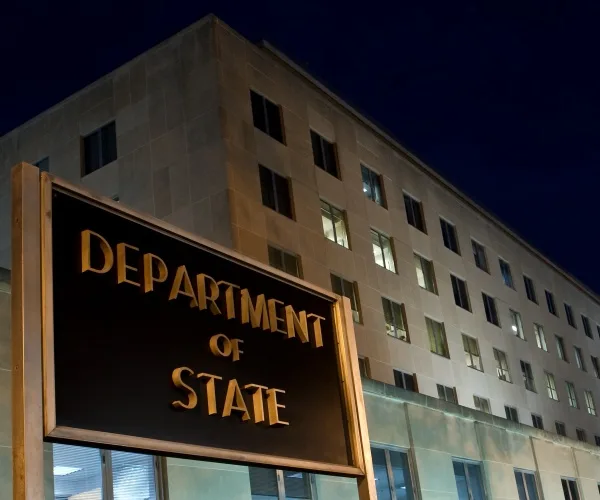
President Donald Trump cut short a weekend stay at Camp David and returned to the White House following a security alert warning of escalating hostilities in the Middle East.
The State Department issued a travel warning for Americans in or traveling to the Middle East, advising heightened vigilance and preparation for possible flight cancellations and other disruptions.
The warning came after Iranian-backed Houthi rebels targeted Saudi Arabia, with the potential for rapid escalation of military conflict in the region.
President Donald Trump cut short a weekend stay at Camp David and returned to the White House on Saturday evening, hours after the State Department issued a security alert warning that escalating hostilities in the Middle East could worsen rapidly.
Trump arrived at the Ellipse aboard Marine One shortly before 8 p.m., according to the White House press pool. His public schedule had called for him to remain at Camp David until Sunday.
War Secretary Pete Hegseth, who visited Texas A&M University Saturday and attended the Aggies' football game against Kentucky, also returned to Washington early.
The White House did not immediately explain Trump's early return, which came as the State Department renewed a broad travel warning for Americans in or traveling to the Middle East following renewed attacks by Iranian-backed Houthi rebels against Saudi Arabia.
At least 11 U.S. embassies in the region also issued warnings about possible travel disruptions, according to The Associated Press.
"Due to tensions in the Middle East, the security environment remains complex with the potential for unforeseen escalation," the State Department said in its statement, posted to X on Saturday.
The department warned Americans in the region to exercise heightened vigilance and prepare for possible flight cancellations, airspace closures, and other travel disruptions. The advisory did not urge Americans to leave the region.
"Iranian-supported Houthis have engaged in hostilities against Saudi Arabia, including civilian airports," the alert said. "This military conflict has the potential to escalate rapidly."
Americans outside the Middle East were urged to "seriously reconsider travel to and through the region," while those traveling there were advised to closely monitor airport and airline operations.
The State Department also said the potential threat extended beyond the Middle East, noting that U.S. diplomatic facilities had been targeted.
"Iran and groups supportive of Iran may target other U.S. interests overseas or at locations associated with the United States and Americans throughout the world, including U.S. businesses and other institutions," the alert said.
The heightened warning came four days after the State Department updated its travel advisory for Saudi Arabia, which remains at Level 3, "Reconsider Travel."
The Sept. 15 advisory cites the risks of Iranian drone and missile attacks against American interests, armed conflict and terrorism.
The Saudi advisory says commercial flights remain operational but have faced significant disruptions since hostilities between the United States and Iran began Feb. 28.
It also warns that Iranian attacks have targeted cities, infrastructure, airports, military bases, diplomatic facilities, and energy installations throughout Saudi Arabia.
The State Department also noted that the Houthis had threatened renewed attacks against Saudi Arabia and warned that falling debris from intercepted missiles and drones posed a risk.
Americans living or working near energy infrastructure and military bases could face heightened danger, the advisory said.
The warnings followed a Houthi attempt to strike the Saudi capital of Riyadh with a ballistic missile Saturday. Saudi Arabia said the missile was intercepted and no casualties were reported.
Houthi military spokesman Brig. Gen. Yahya Saree said the Yemen-based group launched a "large number of ballistic and cruise missiles" and drones at targets in Saudi Arabia, including Riyadh and facilities belonging to state-owned oil giant Saudi Aramco in Yanbu, The Hill reported.
The Houthis' claims about attacks on Saudi oil infrastructure could not immediately be independently verified.
The attack prompted Riyadh's first air raid alert since renewed Saudi-Houthi fighting began in July, opening another front in the broader Iran war.
The U.S. Embassy in Jerusalem also issued a security alert, saying consular services in Jerusalem and at its Tel Aviv branch continued to operate normally while urging Americans to take additional precautions, Israel Hayom reports.
The embassy advised U.S. citizens to verify flight status at Ben Gurion and Haifa airports, identify the nearest bomb shelter or safe room, download Israel's Home Front Command app for real-time alerts, and maintain supplies of water, food, and essential medications.
Americans were also advised to avoid demonstrations and large gatherings.
Topics in this story
Gathered from external sources. Rights to this text belong to whoever originally published it.