In the 18th century, Prickly Pear Cactus was introduced to South Africa by European settlers as living fencing, but it spread across 900,000 hectares and became an agricultural nightmare
Rest of World News: Discover the fascinating history of prickly pear cactus in South Africa, its introduction by European settlers, and its transformation from a useful plant to an invasive agricultural pest before becoming a cultivated crop once again.
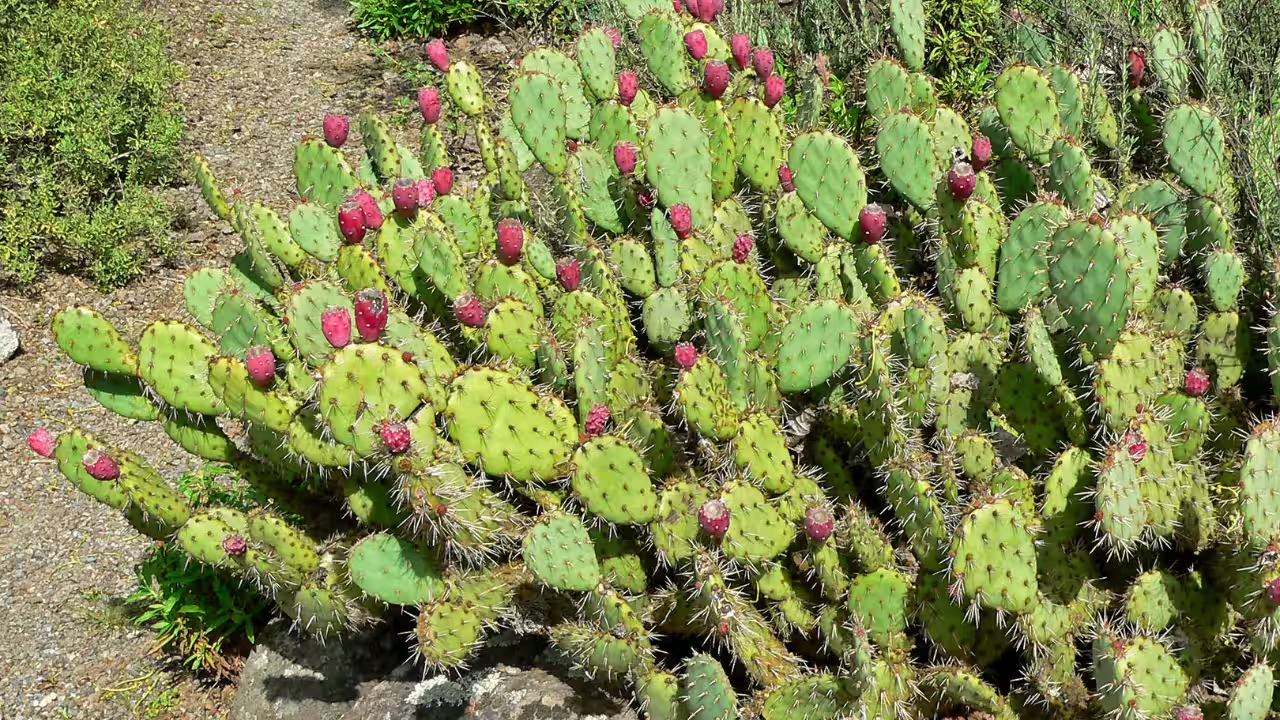
Opuntia ficus-indica, also commonly known as prickly pear, reached South Africa with European settlers in the 18th century, and became particularly useful as food, fodder and a living barrier around properties. It spread through the country's dry eastern regions, and by the early 20th century the wild plant had become a major agricultural problem, with estimates putting the affected area at about 900,000 hectares.The cactus originated in Mexico and neighbouring parts of Mesoamerica, and had already travelled from the Americas to Europe after the Spanish conquest and subsequently moved through other parts of the world. A historical study by William Beinart and Luvuyo Wotshela records that O. ficus-indica, one of the most common prickly pears in South Africa, reached Graaff-Reinet with early white settlers in the 18th century. The plant initially spread because people found practical uses for it, which included fruit, fodder and hedging.A useful boundary plantPrickly pear could do something ordinary fencing could not, that is, it could grow in dry country while producing a dense barrier of spiny pads. A later review of southern African pasture and forage plants records that settlers carried O. ficus-indica into arid and semi-arid parts of the subcontinent, where it was cultivated as a living fence as well as for its fruit. The cactus also provided fodder during dry periods.Individual pads could establish new plants, while seeds were spread by animals and through the movement of people and livestock. Prickly pear found more disturbed ground and fewer barriers to its spread as cultivation and livestock farming expanded into the semi-arid interior.By the early 20th century, dense stands had formed across parts of the Eastern Cape and Karoo, and the plant could form thickets that restricted movement and reduced the amount of usable grazing land. The historical literature places the worst infestation at roughly 900,000 hectares, and a study of prickly pear in the Eastern Cape records that the plant was estimated to cover that area at its height in the 1930s, when agricultural officials and farmers increasingly treated the wild cactus as an invasive pest.South Africa turned to insectsMechanical removal was difficult because the cactus could occupy large areas and regenerate from surviving plant material, and South Africa therefore became an early testing ground for biological control. The government introduced insects that attacked prickly pear, including the cochineal insect Dactylopius opuntiae and the cactus moth Cactoblastis cactorum. The insects damaged the cactus itself rather than requiring workers to remove individual plants.Research published in Agriculture, Ecosystems & Environment records the scale of the change. The authors found that the original 900,000-hectare infestation of O. ficus-indica had been reduced to less than 100,000 hectares by the time of their 1991 review, and the remaining populations were concentrated in cooler, wetter areas where the cochineal insect was less effective.The insects did not distinguish neatly between unwanted wild plants and cultivated varieties; as biological control reduced the invasive populations, it also affected cultivated cactus, which changed the role of prickly pear in South African agriculture. The wild, spiny forms were treated as invasive plants, while spineless cultivars remained useful for fruit and livestock feed.From weed to crop againThe ResearchGate-published Cactusnet briefing notes that about 1,500 hectares were being cultivated for fruit in South Africa, and another 3,000 hectares for fodder at the time of publication. Modern production relies mainly on spineless varieties that are managed as crops rather than allowed to spread freely.Prickly pear first entered South Africa as a useful plant, became an extensive agricultural pest, and was later brought under enough biological control for some forms to return to productive farming. Its earlier spread remains one of the better-known cases in South Africa of a plant introduced for practical use becoming difficult to contain across a large agricultural landscape.Catch the latest World News and Live updates. Download the TOI app.
Topics in this story
Gathered from external sources. Rights to this text belong to whoever originally published it.