They were building infrastructure in Nepal. Their families in China want to know what happened to them
Chinese workers have been working on infrastructure in Nepal. Their families want to know what happened to them.
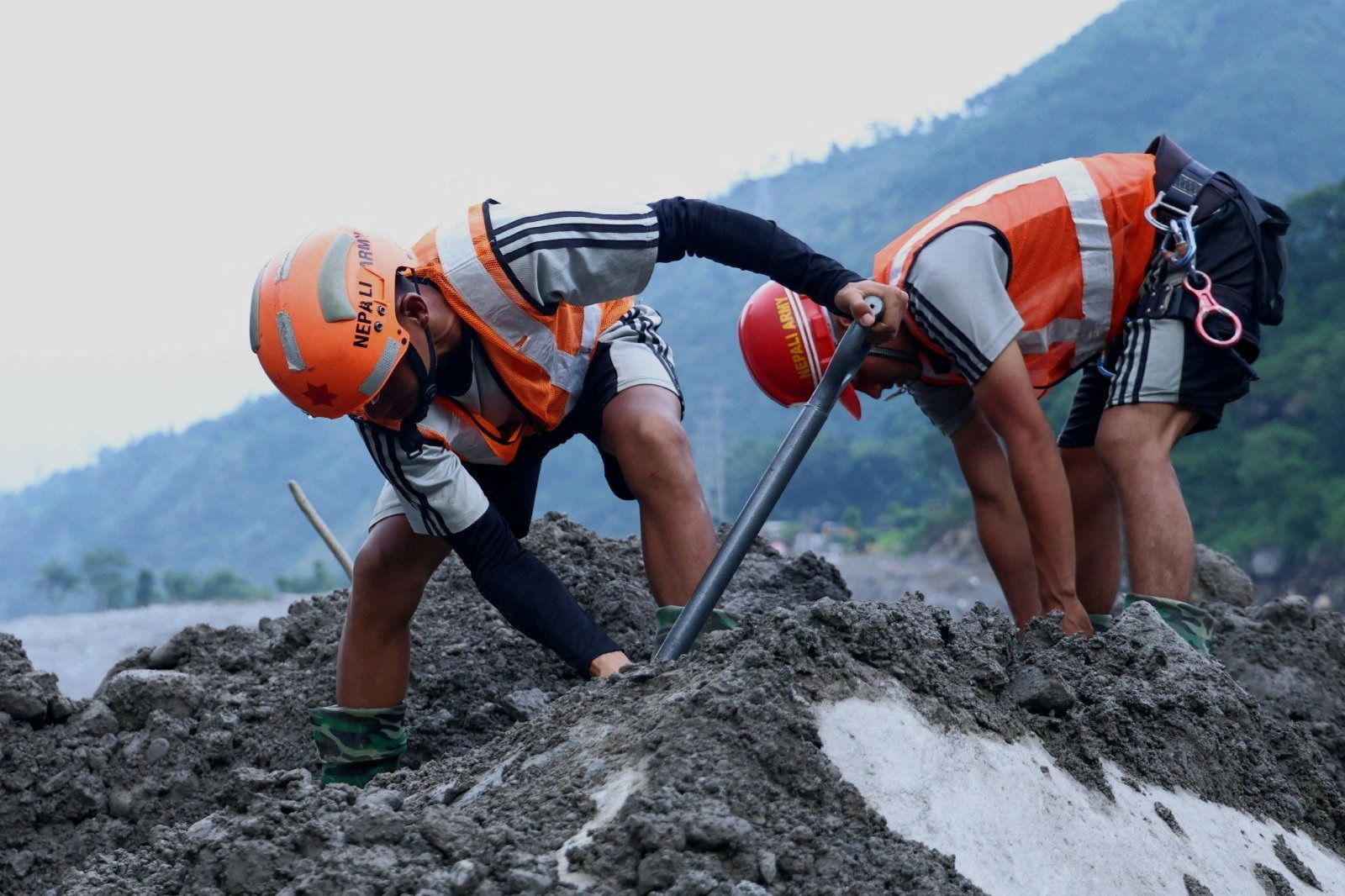
She kept calling and calling – countless times – but her husband never picked up. The woman, who CNN has given the pseudonym Lili, said her husband had spoken with a friend at 8:27am on Wednesday. That was roughly 10 minutes before an enormous landslide careened down a mountain in Nepal, generating an explosive flood wave that ripped through a border area with China and continued into Nepal. Lili hasn’t heard from her husband, who was working on a Chinese construction project in the South Asian country, since. Hers is one of many families across China desperate for information about loved ones who were in the area when disaster struck, including dozens of Chinese nationals who are believed to have been working across the border in Nepal. Now, these families are wondering whether rescue efforts in Nepal are reaching their loved ones – and are urgently calling for more proactive updates on the progress of those efforts from within China. Several family members of such workers traveled to Lhasa, the capital of China’s Tibetan Autonomous Region, on Monday to seek more information from the state-backed construction firm employing their relatives – and to urge the company to step up rescue efforts and share more information. Families are also asking for local officials in Tibet to help expedite rescue efforts at project sites in Nepal, according to a draft letter to authorities seen by CNN. More than 1,000 people have been confirmed dead and thousands remain missing after Wednesday’s catastrophe, according to authorities in both China and Nepal. Families from both countries – and around the world – are desperate for news of loved ones in the area, which was also a popular route for international tourists. While updates on the numbers of those rescued or confirmed dead have been frequently released on the Nepal side, information has moved much more slowly coming out of China – prompting questions about transparency. Beijing has defended the release of information from its remote disaster area as open and timely. Inside China, news coverage in the country’s tightly controlled media environment has been dominated by state media reports and focused on the efforts of emergency responders at the China-Nepal border area. The experiences of the Chinese families, who are among those waiting for news, have had limited visibility. “Our family is in anguish,” Lili told CNN, adding that her children had stayed in their bedrooms since they learned that their father was missing. CNN is using pseudonyms in order to protect the families’ identities due to the sensitivities of speaking to foreign media. Lili’s husband, who is in his fifties, had been working on the reconstruction of Nepal’s Syabrubesi-Rasuwagadhi highway, a road stretching through part of northern Nepal to the border with China. Its construction is run by Chinese state-backed engineering firm Tibet Tianlu Company – one of several Chinese firms participating in infrastructure projects across Nepal. After the disaster struck, the company deployed its specialists as well as relief supplies and heavy machinery, while its leadership visited the hard-hit Gyirong port area in Tibet, where rescue efforts are underway, Tibet Tianlu Company said in online statements. But Lili and family members of other workers on that project worry that rescue efforts are being hindered by the location of the project – in Nepal, but close to the Chinese border. “It’s still the families themselves who are organizing and trying to get the rescue efforts moving — going to talk to the (company) leaders, asking them to coordinate with the Nepali government,” Lili said. The sister of another worker on the same highway project told CNN that she believes Nepali rescue workers had not yet been able to reach the area where the project is located. “We haven’t received any information at all … our whole family is extremely worried,” she said. In a draft letter addressed to government officials in Tibet seen by CNN, relatives of 24 of the workers on the highway project expressed concern of a gap in “cross-border rescue efforts.” “Local rescue resources and manpower in Nepal are severely limited and unable to reach the core area to conduct searches. On our side, restrictions arising from the border mean that Chinese rescuers are temporarily unable to cross into the site to carry out rescue operations directly,” said the letter, which CNN has not confirmed was delivered to officials. “We sincerely ask you to understand the families’ anguish… and take concrete steps to get rescue operations underway,” it said. The families also called for authorities to require the company to establish a regular update mechanism for the progress of search and rescue operations, so that “information is transparent and timely.” When reached by phone, a person from Tibet Tianlu’s Board Secretary Office said a team had been set up to handle the situation following the disaster and the company was in touch with families that had arrived at their offices on Monday. When asked about any plans for company rescue efforts on the Nepal side, the person said she “hadn’t received any information” about this. Cross-border disaster Around 100 Chinese nationals are unaccounted for in the disaster-affected area on the Nepal side, according to China’s Foreign Ministry. They are among what Nepali authorities said are more than 500 foreign nationals missing in country overall as of Monday night. China’s Foreign Ministry on Monday said the country was “making every effort to search for and rescue people reported missing both in China and abroad.” All Chinese nationals who had been reached in the disaster zone in Nepal had been safely evacuated, it added, without giving specific number. Chinese workers, as well as official lenders and construction firms, have played a key role in the build-out of Nepal’s roads, hydropower and other projects in recent years, including under the auspices of Chinese leader Xi Jinping’s flagship Belt and Road global infrastructure drive. Since the disaster, family members of workers from at least three projects in Nepal, including two hydropower projects, have been in touch with one another, CNN has learned, exchanging information and concerns online – as they await official information. Among them, a man in his 20s CNN is calling Jun said his father had been working at the Upper Trishuli-1 Hydroelectric Project in Nepal. The project is one of roughly a dozen hydropower facilities that have become a focal point for rescue efforts. More than 500 workers remained missing at Upper Trishuli-1 as of the latest update from the Independent Power Producers Association Nepal. The project is being built by a Korean engineering firm, with a subsidiary of Chinese state-backed energy giant PowerChina also involved. “What I really can’t understand is why Chinese rescue teams aren’t going over to the Nepalese side to help search for our Chinese nationals,” Jun said. China has sent emergency aid supplies to Nepal and is sharing satellite and hydrological data to aid rescue efforts, as well as providing assistance with DNA identification. Over the weekend, it dispatched nine rescue tunnel experts to the country to advise on efforts to locate workers that may be trapped in hydropower project tunnels. But the lack of information is agonizing for family members like Jun, who said he had last spoken with his father, who is in his forties, during a regular family video call earlier this month. When the mudslide struck on August 26, Jun and his family didn’t pay much attention to the news until the following day, he said, when a labor agency called to tell them that his father went missing. Jun then found his father could no longer be reached by phone. When China for the first time on Sunday opened up two dedicated hotlines for Chinese families seeking information, Jun said he called multiple times, but the line was always busy. He’d already been in touch with the Chinese embassy in Nepal and the hydropower project manager but hasn’t been able to get information about his father’s whereabouts. He said he wants to know the status of the search efforts – “it’s already been such a long time, right? It’s already… it’s the sixth day already,” he said Monday. A ‘timely manner’ That painful count is also being done by families of those who were believed to be at Gyirong port in China when it was hit by a wall of floodwaters on Wednesday morning. The impact obliterated buildings there. No survivors have been reported found since rescue workers arrived Friday afternoon at the port, according to accounts from rescue workers cited by state media. Updates about the missing have been slow to emerge from the area, which cannot be reached by road. The risk of additional flooding and the fact that the area is now covered by thick mud are factors impacting the speed of rescue and recovery efforts there. Information about the area has been dominated by reports from state media, in addition to official government updates. That’s part of a usual playbook by Chinese authorities who look to closely control information flows and ensure data confirmation ahead of its release – part of efforts both to crack down on fake reports and shape public opinion. According to China’s latest update from Sunday, there were 16 dead and 546 people missing on its side of the border. More than 250 foreigners are among the missing, local authorities in Tibet said. Chinese authorities have released new figures on the confirmed dead and missing five times since the disaster, as of Tuesday morning. Independent aid groups are not involved in operations, while foreign journalists are restricted from Tibet without special permissions. CNN is also aware of comments from journalists from outlets that are not China’s national-level official media suggesting they have been barred from reporting in Tibet. Censors have been keeping close watch on online platforms, removing disaster-related videos posted by ordinary users and reprimanding at least a dozen people authorities accused of spreading fake news about the scale of the disaster. During major national incidents, the Chinese government is widely seen as swift to crack down on any forms of dissent or organized efforts to respond or share information outside official channels. In response to a question about assertions that China was not being forthcoming about the scale of the disaster within its borders, a spokesperson for China’s Foreign Ministry said on Thursday China has been “releasing information openly, transparently and in a timely manner.” But for family members of those who were working in Gyirong port – as with those waiting for information from Nepal – the wait for confirmation of what happened is interminable. Some have taken to social media in recent days to call out for information from any other sources. “Seeking help from locals at Gyirong port,” one person posted on the social media platform RedNote last week. “My cousin, who serves as a border guard there, has been out of contact. What should we do? He has two children at home.”
Topics in this story
Gathered from external sources. Rights to this text belong to whoever originally published it.