Oregon’s 1989 dam diverted water to one landowner’s pond; its 2020 removal kept his water right via a pump and reopened 1.8 miles of creek for coho salmon
The removal of a 1989 dam on Kelley Creek, Oregon, has restored migratory paths for coho salmon and maintained water rights for a local landowner through pump technology. This environmental restoration project opens 1.8 miles of vital habitat, promoting biodiversity and sustainable land use.
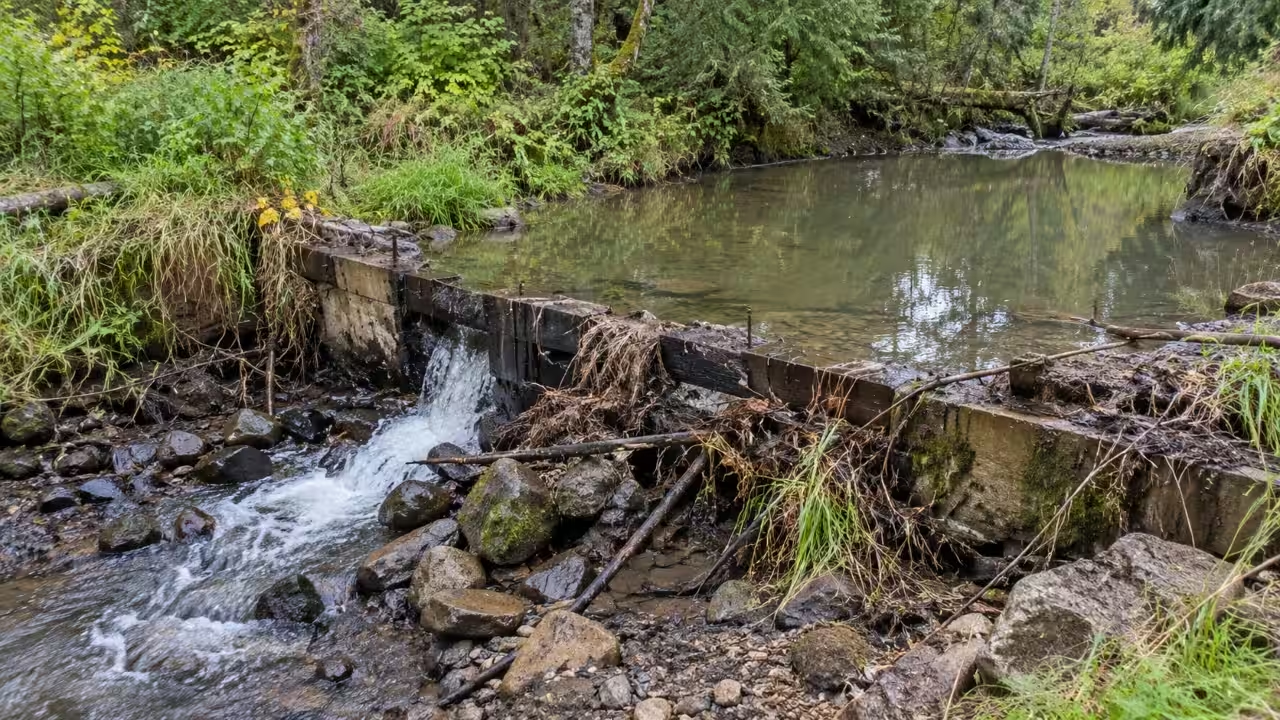
A dam built across Kelley Creek in 1989 in Oregon blocked migrating fish from reaching upstream habitat for three decades while diverting water into a private owner’s pond. The structure was nearly six feet tall, and it reportedly obstructed fish passage through the lower part of the creek, a tributary within the Johnson Creek watershed near Portland. In August 2020, the Johnson Creek Watershed Council (JCWC) removed the dam and substituted its gravity-fed water diversion with a pump, thus allowing the landowner to continue using his water right. 1.8 miles of accessible habitat as the project’s target was identified by the Clackamas Partnership. This was intended to be an opening route that would benefit coho salmon, steelhead and Pacific lamprey. Subsequent environmental DNA observation detected coho salmon at the former dam site, thus providing evidence of their presence extending beyond the barrier.A dam that blocked fish passage for three decadesThe dam was built at river mile 0.5 on Kelley Creek with the intention of holding water upstream and feeding a gravity-powered diversion into an off-channel pond. While the structure served the estateowner’s water needs, the structure spanned the creek and prevented fish like salmon, steelhead and lamprey from migrating into upstream habitat. The Clackamas Partnership classified this as a complete barrier to salmonid passage. Kelley Creek and its tributaries include habitat used by migratory fish, which made the obstruction a priority for restoration efforts in the wider Johnson Creek watershed.In 2015, the planning for fish-passage improvements began. Following this, in 2017, JCWC secured funding from the East Multnomah Soil and Water Conservation District, allowing consultants to explore options for bettering the passage. A 60% engineering design was reportedly completed in November 2018. The team initially considered ways to construct a route that fish could use to bypass the structure. However, when presented with the alternatives, the landowner reportedly suggested removing the dam altogether. That proposal moved the project towards eliminating the barrier while preserving the pond’s water supply.Meanwhile, engineers designed a submersible pump station downstream of the former barrier, near the pond, to replace the gravity-fed diversion. The Clackamas Partnership reported that the Oregon Water Resources Department approved a formal amendment to the water right’s point of diversion and waived the associated processing fee. This pump provided the means of physically drawing water. Therefore, the dam could be removed without requiring the landowner to abandon the existing water use.Removing the barrier and restoring the channelIn August 2020, the removal of the dam was finished. Prior to the demolition, teams slowly lowered the impounded water, exposing mudflats and giving Pacific lamprey buried in the sediment an opportunity to emerge so they could be captured and relocated. This gradual drawdown was aimed at reducing harm to aquatic life during construction. Following the dam’s removal, engineers installed an engineered streambed in the former structure’s footprint to reduce the risk of the channel eroding downwards or cutting sideways into its banks.The replacement water-diversion system also required some changes to the stream channel. Engineers built a riffle downstream to help maintain the pool needed for the pump intake. A screened intake was installed to lessen the risk of fish being drawn into the diversion, while a boulder weir helped direct the flow towards the centre of the pool and keep the screen clear of debris. These features allowed water withdrawal to continue without recreating the original barrier to fish migration.Furthermore, the restoration work included measures to protect the creek beyond the former dam site. According to JCWC, a fence along the stream to prevent livestock from entering the channel was installed alongside plans for riparian revegetation. The department believed that keeping livestock away from the creek can help protect streambanks and newly planted vegetation from trampling. Together, the channel reconstruction and streamside protection measures were intended to improve the stability of the restored reach and support its use by aquatic species.Beyond the former barrier, coho salmon were detectedThe project’s targeted performance measure listed 1.8 miles of accessible stream habitat along Kelley Creek. Its fact sheet identifies coho salmon, steelhead and Pacific lamprey as focal species. In a separate JCWC project documentation in 2020, it was reported that fish passage had been restored to a cumulative total of nearly three miles of Kelley and Mitchell creeks.Subsequent monitoring showed that coho salmon were present at the former dam site. The council’s environmental DNA programme, which analyses genetic material collected from stream water, reported coho salmon DNA at the site where the dam had been removed. The council later noted that coho detections at the site had continued across its sampling efforts.You use AI every day. Now get your AI Quotient. Take the AIQ test.
Topics in this story
Gathered from external sources. Rights to this text belong to whoever originally published it.