Pakistan suspends Iran border trade, amid violence on both sides
Islamabad cites security concerns, while Tehran points to technical issues as Pakistan mediates between Iran and the US.
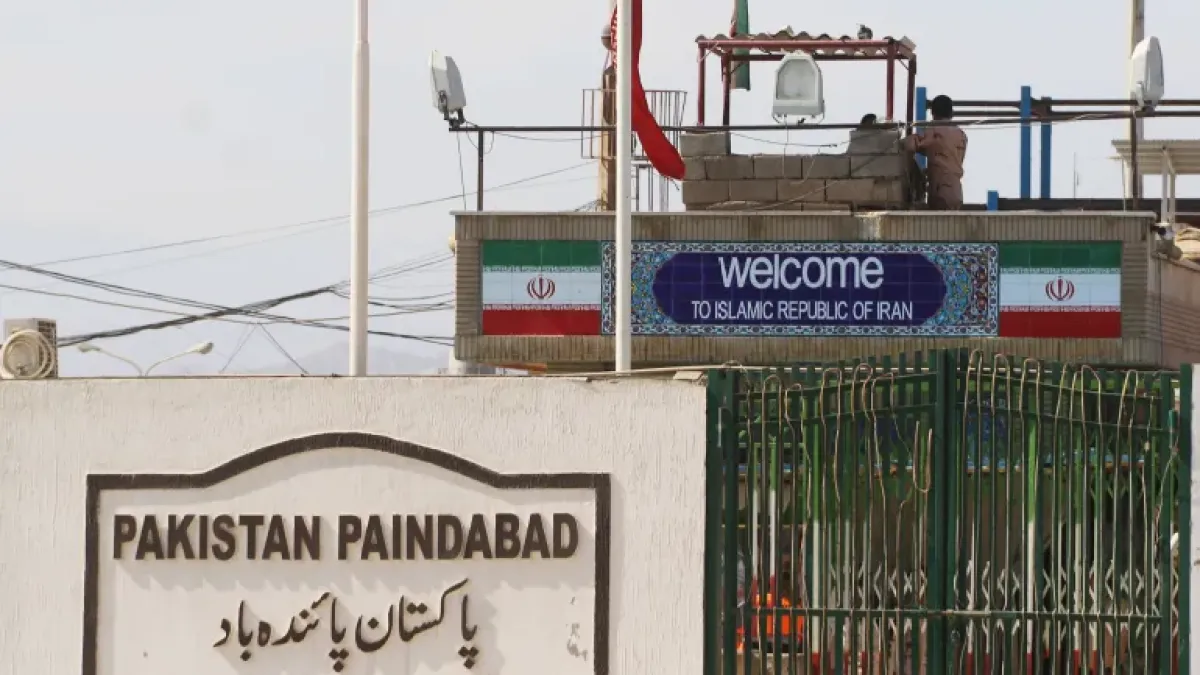
Islamabad, Pakistan — Pakistan has halted trade with Iran at the Taftan and Gabd-Rimdan crossings in Balochistan province, leaving freight stranded on both sides of the border.
The suspension decision emerged on Saturday, as the Quetta Chamber of Commerce and Industry (QCCI) in the provincial capital said about 2,000 trucks were stuck on both sides.
Passenger traffic at Gabd-Rimdan has continued, reported the Iranian news agency WANA.
Pakistan’s federal government has not commented publicly. Al Jazeera received no response from authorities in Balochistan, as both Islamabad and Tehran have offered different explanations for the border closure.
Bakhtiar Ismail, deputy commissioner of Chagai district, where the Taftan crossing is located, described the move as a security measure.
“Pakistan-Iran border closure is a temporary measure to improve border management to support counterterrorism efforts. The border will be opened as soon as effective measures are in place,” he wrote on X on Saturday.
Shahid Rind, an aide to Balochistan’s chief minister on political and media affairs, wrote on X the same day that the closure was meant to address security concerns, prevent smuggling and make the border system more effective.
Iran’s Foreign Ministry spokesman, Esmaeil Baghaei, gave a different explanation.
“Due to certain technical issues and the necessity of implementing precautionary measures, cross-border movement and exchanges have been temporarily halted,” he said, according to the IRNA state news agency.
Imtiaz Baloch, a Quetta-based independent researcher who focuses on security in Balochistan, said security might be only part of the explanation.
“Although Pakistani officials have cited security concerns, the decision to close the border appears to be motivated by broader strategic considerations, with security as a possible factor amid economic sanctions on Iran,” he told Al Jazeera.
Javad Heiran-Nia, who heads the Persian Gulf Studies Group at the Center for Scientific Research and Middle East Strategic Studies in Iran, said Tehran’s wording could cover several issues.
“In my view, these expressions could refer to operational and administrative problems at border crossings, customs procedures, the verification of trade documents, financial transactions, or tighter security controls,” he told Al Jazeera.
Pakistan has mediated between Washington and Tehran since the US-Israeli war on Iran began on February 28. Islamabad brokered a ceasefire on April 8, but it collapsed within days. The US subsequently blockaded Iran’s southern ports.
With Iranian ports blocked, an April 25 Commerce Ministry order allowed third-country goods to be trucked to Iran along six routes ending at Gabd and Taftan.
In June, Pakistan and Qatar brokered the Islamabad Memorandum of Understanding, signed electronically by US President Donald Trump and Iranian President Masoud Pezeshkian.
It called for the reopening of the Strait of Hormuz, lifting the blockade and 60 days of talks on a lasting settlement.
The agreement lasted about a month. In July, Iran said it was no longer bound by parts of the deal after the US resumed attacks and its naval blockade.
Washington has since widened its sanctions. On August 24, Treasury Secretary Scott Bessent announced a campaign called Operation Economic Outcast, extending sanctions to shipping, gold, aviation and digital assets.
Earlier this month, Pakistan’s Foreign Office spokesman Sajjad Haider Khan said Pakistan would continue to comply with all applicable sanctions regimes, without specifying which.
Official bilateral trade between Iran and Pakistan is not massive – about $2.8bn in 2023-24, including $684m in Pakistani exports, according to the Federation of Pakistan Chambers of Commerce and Industry (FPCCI). Analysts say decades of US sanctions on Iran are a major factor.
But the US and the pressure it imposes on countries like Pakistan are not the only factors that influence Islamabad’s approach towards the border with Iran.
Balochistan, Pakistan’s largest province, covers 44 percent of the country with a population of almost 15 million in the 2023 census.
The country’s poorest province, which borders Iran, has seen several uprisings since 1948. The latest, led by Baloch nationalist rebels, has continued for two decades.
The rebels accuse the state of exploiting local natural resources while communities remain deprived.
The number of attacks has risen sharply this year. The Pakistan Institute for Conflict and Security Studies (PICSS), an Islamabad-based think tank, recorded 62 security personnel killed in Balochistan in July, up from six in June. In September, it counted 225 attacks by armed groups nationwide, the highest monthly figure in 12 years.
At least 20 police personnel were abducted from a van in Mastung district on Friday.
Two days later, an army major was killed by an improvised explosive device in Gwadar district, said the military’s media wing, Inter-Services Public Relations (ISPR).
Violence too in Chagai, the remote Balochistan district bordering Iran. Four travellers, including a customs official, were abducted from a coach there earlier this month.
Security analyst Imtiaz Baloch said Pakistani officials have long blamed the violence on porous borders.
“However, the issue goes beyond border permeability alone. Although armed groups remain active in the region, their mobilisation appears to be directed towards specific targets, and there is currently no clear indication of a broader mobilisation of armed groups on either side of the border,” he said.
Iran’s Sistan-Baluchestan province, just across the border, has also seen repeated attacks on security forces.
On October 9, Nosrat Eftekhari, a senior official in the provincial police command, was killed by a roadside bomb near Zahedan, Iranian media reported. The killing followed several other security-related incidents.
Days later, on October 14, the commander of a women’s unit of the Basij paramilitary force was shot dead outside her home in Mehrestan district, Tasnim news agency reported. Another officer was killed in a separate attack on a police vehicle in the same district.
A coalition of Baloch armed groups formed last December, with Jaish al-Adl, a Sunni Baloch armed group established in 2012, as its main member, has claimed some of those attacks in Sistan-Baluchestan province.
Tehran has long accused the group of operating from Pakistan, but Islamabad has repeatedly said it has no organised presence on Pakistani soil.
Heiran-Nia cautioned against linking the attacks directly to Pakistan.
“It is important to distinguish between the presence of armed groups in Pakistan and evidence that they crossed the border to carry out a specific attack,” he said.
Tehran-based political analyst Seyed Reza Hashemi Jebeli said Tehran wanted the Pakistani government to do more to prevent cross-border attacks.
“The key issue for Tehran is that Pakistan should meet its commitments to prevent anti-Iranian armed groups from operating in border areas,” he told Al Jazeera.
Tehran’s accusations are not new. After Jaish al-Adl claimed an attack in December 2023 that killed 11 Iranian police officers, Iran’s then foreign minister urged Pakistan to take action.
On January 16, 2024, Iran carried out missile and drone attacks in Panjgur, another border district. Pakistan said the attacks killed two children. Two days later, Pakistan struck targets in Iran’s Sistan-Baluchestan province, killing at least nine people. Intense diplomacy calmed tensions on the border and the neighbours agreed to expand security cooperation.
Heiran-Nia said a prolonged closure of the border crossings could test Pakistan’s role as mediator between the US and Iran.
“If the border dispute remains unresolved, Tehran may question whether Islamabad can simultaneously maintain productive relations with Iran and cooperate with Washington’s pressure campaign,” he told Al Jazeera.
Topics in this story
Gathered from external sources. Rights to this text belong to whoever originally published it.