Meet Yashasvi Solanki, the Haryana girl who made history as the first woman officer from India’s Army, Navy or Air Force to become President’s ADC
Voices of Power News: In May 2025, Lieutenant Commander Yashasvi Solanki created history by becoming the first woman officer from any of India's three armed forces, the Arm.
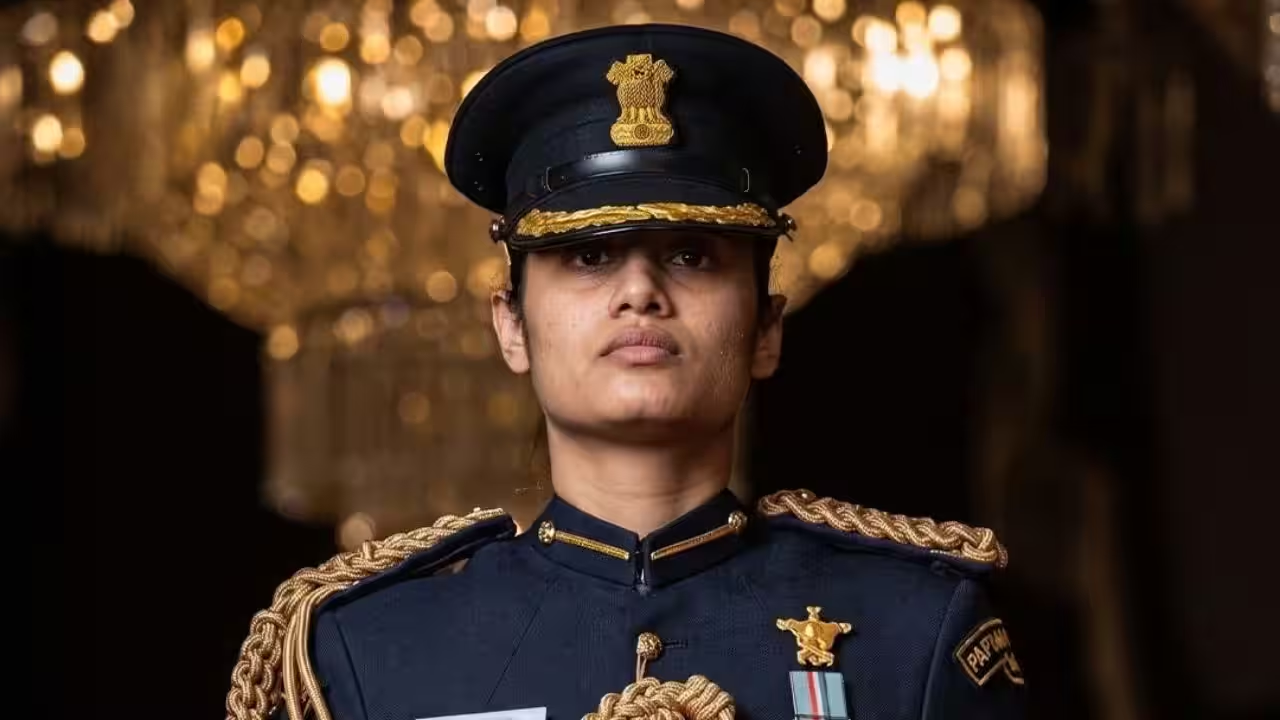
In May 2025, Lieutenant Commander Yashasvi Solanki created history by becoming the first woman officer from any of India's three armed forces, the Army, Navy, or Air Force, to be appointed Aide-de-Camp (ADC) to the President of India. The President is traditionally assisted by five ADCs at any given time, three from the Army and one each from the Navy and the Air Force, a role that has for decades gone almost entirely to men. Solanki was formally presented with the prestigious aiguillette on May 9, 2025, officially marking her appointment for a tenure expected to last between two and a half to three years. Speaking about the unexpected nature of the opportunity, she has said in interviews that becoming the President's ADC was never something she had specifically dreamed of or planned for, largely because it hadn't seemed within reach. Her appointment came after a rigorous selection process, including an interaction with President Droupadi Murmu herself and the necessary security clearances, followed by a period of orientation before she formally took up her duties.From district-level sports to the Naval Armament DivisionSolanki hails from Haryana, where her early life was shaped by fairly ordinary, disciplined surroundings. Before her defence career, she was known for her sporting ability, competing at the district level in both badminton and volleyball, activities that reportedly helped build the same discipline and focus she would later carry into her military service. She joined the Indian Navy in 2012 through the Short Service Commission, entering the Logistics Branch. Over the years that followed, she built a steady, well-regarded service record, eventually rising to become a technical officer in the Naval Armament Division based in Hyderabad. Officers selected for the President's ADC role typically bring at least five to seven years of strong, consistent service behind them, and Solanki's journey through logistics and technical postings gave her exactly that kind of grounded, hands-on experience within the Navy before this historic appointment.What the role actually involvesAs ADC, Solanki is now responsible for closely coordinating the President's official engagements, staying briefed on visiting dignitaries and upcoming events, and accompanying the President during state functions, investiture ceremonies, and diplomatic meetings. She has spoken about the level of preparation the role demands, noting that she and her colleagues must stay updated on who is meeting the President ahead of every engagement, since the President can ask about any of it at short notice. Her appointment reflects a broader, gradual shift already underway within the Indian Armed Forces, including the Navy's evolving policies around allowing women to command warships and take on more cross-service responsibilities. It is worth noting that Solanki's milestone did not remain unmatched for long. In July 2026, Major Navya Shekhawat of the Army Service Corps became the second woman officer overall and the first from the Indian Army to be appointed ADC to the President, an appointment that built directly on the path Solanki had opened up a little over a year earlier.A milestone that continues to inspireSolanki's rise from a district-level sportsperson in Haryana to standing beside the President of India at Rashtrapati Bhavan is more than a personal career milestone; it reflects a slow but real shift in how India's armed forces are opening up their most prestigious ceremonial and protocol roles to women. For young women considering a future in the defence forces, her journey offers a clear, tangible example that roles once considered firmly out of reach are steadily becoming achievable through consistent, disciplined service.
Topics in this story
Gathered from external sources. Rights to this text belong to whoever originally published it.