Author Mitch Albom runs an orphanage for 56 children in gang-controlled Port-au-Prince; more than 50 teachers and staff continue caring for them behind its guarded walls
Mitch Albom’s orphanage in Haiti, Have Faith Haiti, shelters 56 children in gang-controlled Port-au-Prince, with more than 50 teachers and staff caring
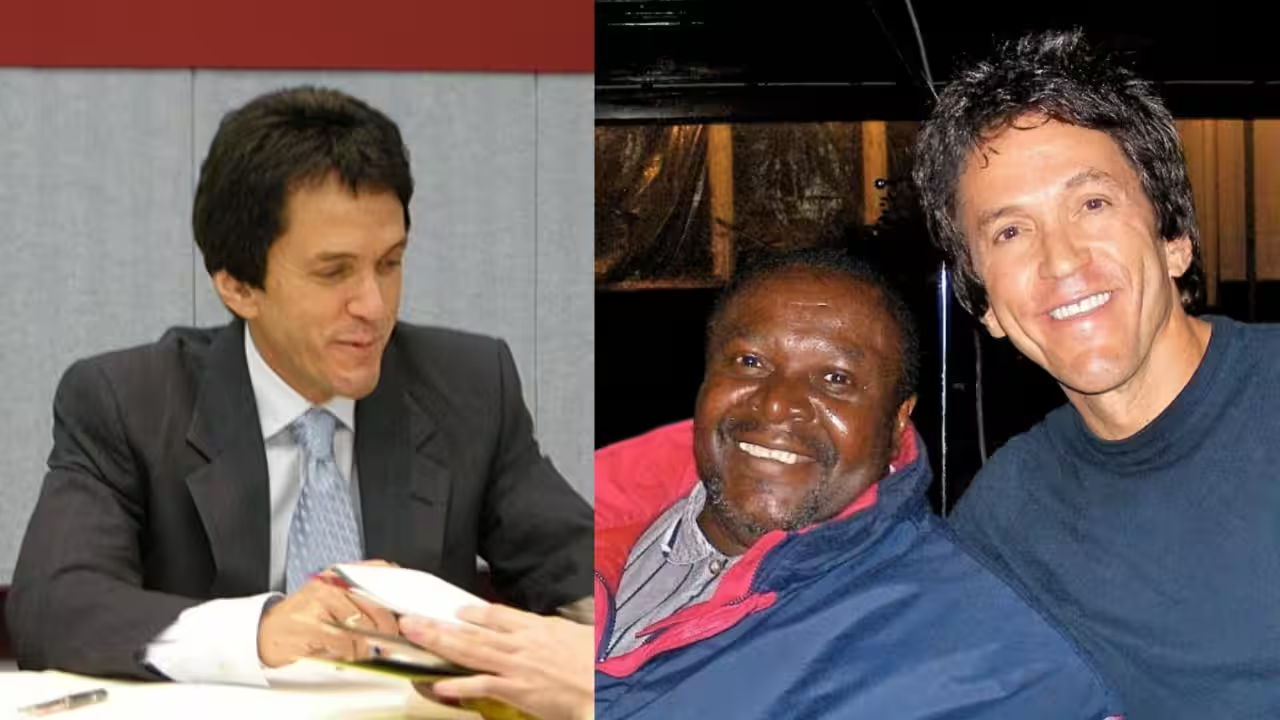
Mitch Albom’s orphanage in Haiti, Have Faith Haiti, shelters 56 children in gang-controlled Port-au-Prince, with more than 50 teachers and staff caring for them behind guarded walls. The bestselling author and his wife, Janine, take in abandoned infants, toddlers with disabilities and children begging in the streets. The city around them is a place where murder, rape and robbery are common, with hungry children standing just beyond the gate. The couple largely pay for the home themselves, and its stated mission is safety, nourishment, education and opportunity for impoverished children and orphans, plus stability for the staff and their families.How Mitch Albom helped repair a Haitian orphanage after the 2010 earthquake ended up running itThe earthquake of 2010 killed some 200,000 people and left more than a million homeless. Albom arrived in its aftermath and helped repair a Christian orphanage run by an elderly pastor, even though Albom himself is Jewish. The pastor, then 84, said he had no money to keep the place going. Albom told CBS News he blurted out an offer to run it himself, wondering how hard it could be.Janine Albom described the aim as giving the children a childhood, something that has been stolen from so many people outside the walls. Albom told the broadcaster that even a drop in the bucket matters if he and his wife can ease the hunger he sees beyond the gate.Helicopter flights, bulletproof convoys and a steel-doored bunker, the security behind the wallsInternational flights cannot safely land in the Haitian capital, so Albom flies every month to Cap-Haïtien. A helicopter run by a private security company then carries him to Port-au-Prince, where heavily armed guards drive him to the orphanage in a convoy of bulletproof vehicles.The journey reflects how far the country has fallen. Haiti’s government effectively collapsed in 2021 after the assassination of President Jovenel Moïse, and it has had no elected government since. Gangs now control as much as 90% of the area, and the United Nations estimates that more than a million people have been displaced by violence.From outside, the orphanage, with its 30-foot walls, barbed wire and guard towers, resembles a prison. Security is one of the biggest challenges for Yonel, the Haitian director. He runs surprise emergency drills in which the children grab “go bags” and hurry to a concrete bunker with steel doors. It holds a generator, a month’s supply of food and water, and cameras for watching the outside.Seven acres, no televisions and small classes, childhood spent inside the compoundMost of the children have not left the 7-acre compound in more than four years. They play, do chores, attend church and go to school without stepping outside. Lessons are taught in both French and English to prepare pupils for college, and classes are small. A child who struggles receives a customised lesson plan.There are no cellphones or televisions, and no computers for personal use. Albom told the broadcaster that this lets him see childhood in a purer form than in the United States, and that the children’s attention spans are remarkably long compared with those of American children.Not every child is an orphan, who is admitted, and the stories of those who grew up thereMany of the children were brought to the home by a desperate parent or relative who could not afford to feed them. Albom said the orphanage has to set conditions, because otherwise hundreds upon hundreds of children would arrive. It accepts a child only if there is one parent rather than two, if there is no proper home, or if illness is involved.The children’s stories show why. Bettinie, 17, arrived as a baby after her father died in the earthquake and her mother could not cope. Lorvens, also 17, came at three, malnourished. Gina was five when her father gave her up. She told CBS News that she “felt abandoned” and was frightened by the many new faces staring and smiling at her.Yonel understands that feeling. He was left at the original orphanage 36 years ago, aged five. Almost all the children now call him “father”, and he told the broadcaster that they need that connection, so he puts himself there for them.Sixteen graduates, scholarships abroad and a promise to come back and work unpaid for two yearsOver the past eight years, 16 pupils have finished high school at Have Faith Haiti, and every one received a scholarship to an American college or university. Each has also agreed to return and work at the orphanage for two years without pay. Albom said they are not going to America to take jobs but to seize an opportunity they cannot have at home, then come back and improve their country. Have Faith Haiti’s own website describes a pathway to college or vocational training for its graduates, who return home as changemakers and leaders.Sixteen Haitian college students spent their winter break in December 2025 at Albom’s home in Michigan. Bianka said she wants to bring education back to Haiti because leading a government or landing a good job requires it. Widley hopes to enter politics, though he acknowledges the turbulence and risk that come with it.Slow security deployment, cut American aid and uncertain visas cloud the next graduates’ futuresHaiti’s outlook remains unclear. In September 2025, the United Nations, with American backing, authorised a force of 5,500 international troops to support the overwhelmed Haitian police, yet fewer than 1,000 had been deployed. The United States has also reduced its financial obligations to Haiti by more than 50%.The uncertainty reaches the orphanage’s own students. Six were due to graduate that spring and would first spend a year volunteering in Haiti before applying for scholarships. Even with a scholarship in hand, a visa is not guaranteed. Albom remains hopeful, saying that children given something beautiful, calm and hopeful will aspire to those qualities.According to the Have Faith Haiti website, the orphanage is operated by A Hole in the Roof Foundation, a nonprofit founded by Albom, an author and journalist. In a message on the site, Albom writes that he has seen nowhere with greater despair, or greater hope, than Haiti.The website invites support in several ways: a monthly giving community called La Perle, one-off donations and volunteering. It also hosts Albom’s newsletter, “Life at the Orphanage”.You use AI every day. Now get your AI Quotient. Take the AIQ test.
Topics in this story
Gathered from external sources. Rights to this text belong to whoever originally published it.