A Vermont dam built around 1920 for a youth-camp pond held 24,000 cubic yards of sediment; removal opened 26 miles of stream habitat for brook trout
The removal of Camp Wihakowi Dam in Northfield, Vermont, has opened 26 miles of stream habitat for brook trout, restoring ecological balance and improving river safety after decades of sediment buildup. This project underscores the importance of river conservation efforts and their impact on local ecosystems and communities.
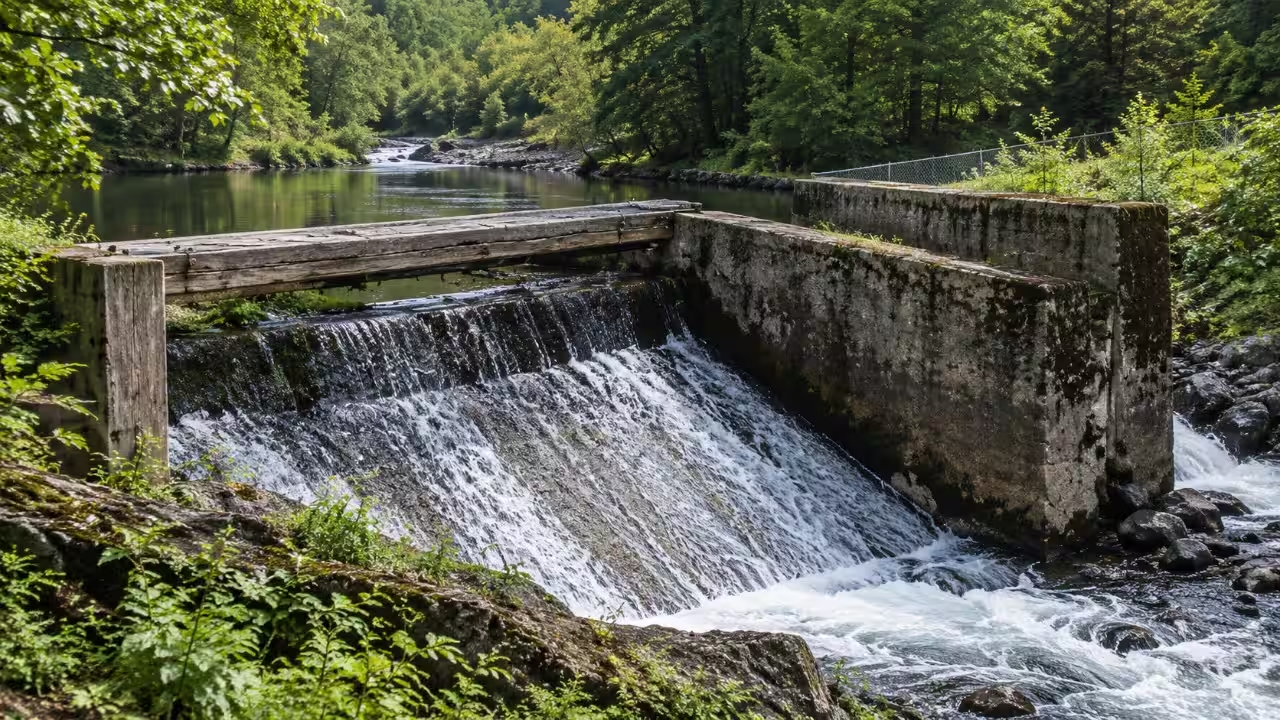
The Camp Wihakowi Dam stood on Bull Run in Northfield, Vermont, where it had created a pond for a youth summer camp around 1920. By 2020, the breached concrete structure was responsible for accumulated sediments, restrictions on fish movement and damage to nearby land during flooding. Its removal was coordinated by Friends of the Winooski River with local landowners Lisa and Jonathan Burr and several conservation and government organisations. According to Vermont Business Magazine, the project involved a 100-foot-long dam at the former camp, which had become The Woods Lodge, an inn and retreat centre. The objective of the removal was to improve river conditions, address safety concerns and reconnect stream habitat for native fish, including brook trout.Sediment accumulation and the risks associated with the structureThe dam’s condition had implications for both the surrounding property and the river system. A partial breach during the late twentieth century had not eliminated the obstruction, and sediment continued to accumulate behind the remaining concrete. The Eastern Brook Trout Joint Venture identified the structure as a barrier to aquatic organism passage and recorded concerns about flooding, erosion, and sediment reaching the Dog River.As per the account from the Friends of the Winooski River project, Bull Run flows north from Roxbury into the Dog River at Northfield, and the watershed covers approximately 9.3 square miles, including 8.6 square miles upstream of the former dam. Before removal, the structure interfered with sediment movement through the channel, and material had accumulated upstream, while erosion affected downstream sections. Heavy rainfall, including storms following the dam’s partial breach, had been associated with flooding and damage to land and infrastructure.During a sudden breach, sediment retained behind the dam stood to move downstream and threaten river habitat. It also stood to destabilise the downstream reaches and ultimately travel towards Lake Champlain. Removing the structure therefore addressed a combination of river-management, property-safety and ecological concerns rather than fish passage alone.Engineering work restored river connectivity and floodplain accessThe removal project was initiated by Friends of the Winooski River in 2018 and commissioned MacBroom, Inc. to undertake a feasibility study and prepare the design. The permit and fundraising started in 2019, before Hilltop Construction carried out approximately twelve weeks of excavation during the summer of 2020. The financial and technical support came from the Eastern Brook Trout Joint Venture, Lake Champlain Basin Program, The Nature Conservancy, US Fish & Wildlife Service, Vermont Department of Environmental Conservation, and Vermont Natural Resources Council.The planned excavation involved 24,000 cubic yards of accumulated sediment, a quantity that the project account compared with more than 1,500 full dump trucks. The impounded material had to be removed so as to restore the channel and minimise the risk of an uncontrolled sediment release.The Vermont Natural Resources Council reported that the project would reconnect 26 miles of aquatic habitat and remove the final barrier to the Dog River headwaters. Subsequently, the Eastern Brook Trout Joint Venture described the completed project as reconnecting approximately 26 miles, roughly six miles of Bull Run and 21 miles of upstream habitat, inclusive of smaller tributaries. The restoration allowed the river to regain access to its floodplain and provided space for water to spread during high flows and supported channel stability. The removal of the barrier enabled native brook trout to reach additional upstream habitat, including colder sections of the watershed that can provide refuge as summer temperatures rise.The project continued beyond the demolition and excavation work aspartners undertook further work in 2021 on the pedestrian bridge, access road and former pond area to support recovery and stabilisation. Monitoring indicated that the river was flowing freely, sediment transport had returned to more natural conditions, and vegetation was becoming established across the restored floodplain.You use AI every day. Now get your AI Quotient. Take the AIQ test.
Topics in this story
Gathered from external sources. Rights to this text belong to whoever originally published it.