After Sandy flooded Staten Island in 2012, 184 Oakwood Beach homeowners asked New York to buy the whole neighbourhood; the state paid pre-storm prices and planned to restore the land as a wetland storm buffer
Explore how the Oakwood Beach community on Staten Island banded together for one of the country's first state-led managed retreat programs following Hurricane Sandy, seeking safety from recurring floods.
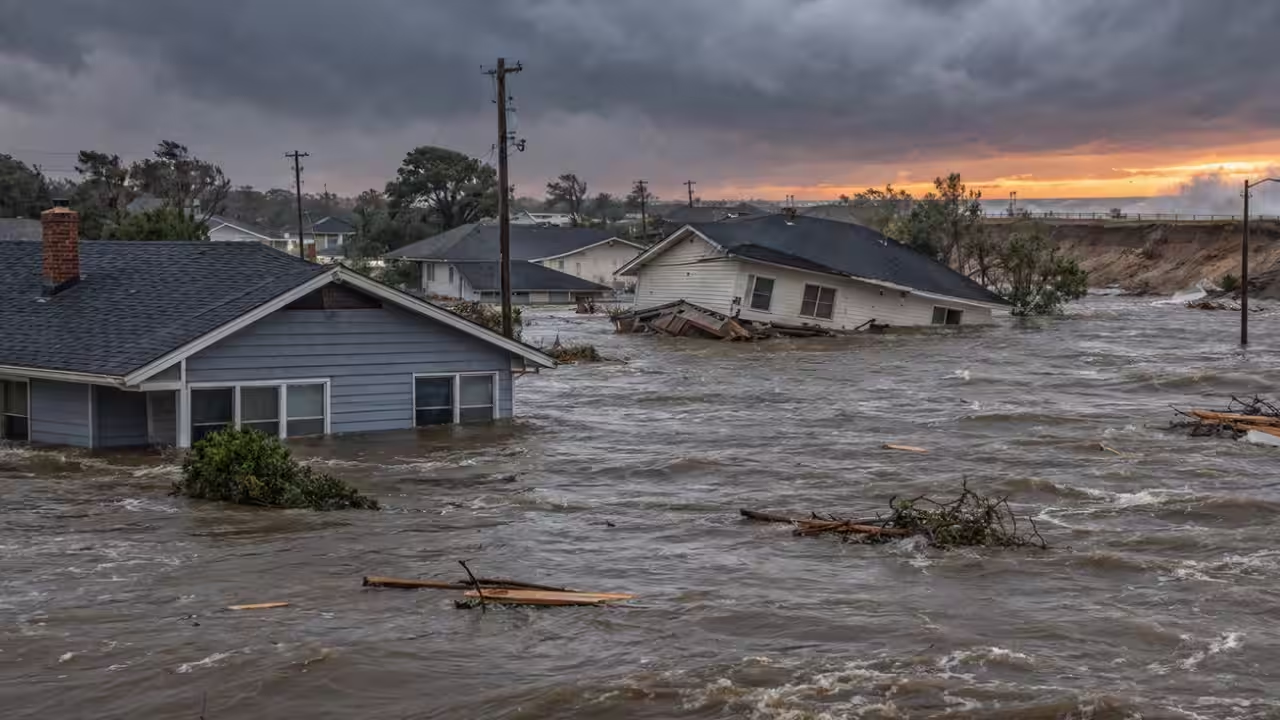
Imagine a whole street deciding to leave together. That's what happened in Oakwood Beach, a small community on the southern coast of Staten Island, after Hurricane Sandy hit the New York City region on 29 October 2012. A 2025 case study in Frontiers in Climate by Columbia University researchers Hannah M. Dancy, Syeda Kainaat Jah and Joshua L. DeVincenzo said the buyout that followed was regarded as one of the first state-led managed retreat programmes in the country. Managed retreat means relocating people from risky land on purpose.A neighbourhood used to floodingSandy was not the first disaster for Oakwood Beach. A 2016 article from the Lincoln Institute of Land Policy noted that the area had already survived a nor'easter in 1992 and flooding due to Hurricane Irene in 2011. Its lowest part sits beside marshland, and floodwater collects in a bowl-like region on the South Shore. During Sandy, the storm surge topped the coastal boulevard and damaged the berm between the neighbourhood and the Atlantic Ocean. Houses were washed away from their foundations while others were flattened. The overall death toll from the storm on Staten Island was 23.Neighbours who organised fastResidents did not wait for help to arrive. After the storm of 1992, they had formed a Flood Victims’ Committee to ask for better flood protection. The berm built afterwards was not completed until ten years later. After Sandy, they moved quickly. At a community meeting early on, one organiser asked whether people would support a buyout, and almost everyone there said yes. Residents formed the Oakwood Beach Buyout Committee and began working on an application for a state buyout. Almost all residents signed the petition presented by the committee. The committee also asked people where they felt safe living. Residents then created their own “green dot” maps to show they did not want redevelopment on the flood-prone land.What the state offeredThe state's NY Rising Program labelled Oakwood Beach as an enhanced buyout area. Homeowners were paid the pre-storm value of their homes, along with other incentives for participating in a group, the Lincoln Institute article notes. Marketplace reported in October 2013 that 184 out of 185 homeowners had applied, with the amount being offered at pre-storm value plus 10 percent. A state storm recovery official told the news outlet that the homes would be demolished and the land left vacant. This would provide Staten Island with a natural barrier against flooding. The same article also estimated that a 100-year flood, with projected sea level rise by 2050 factored in, could cause $216 million worth of damage across 1,837 properties in Oakwood Beach.Did the wetland plan work?Researchers at Columbia University said part of the land that was bought was supposed to be restored ecologically as a natural storm surge buffer. They argued words like “natural” and “restoration” were left too open. In 2015, a New York State Assembly bill included wording that placed recreation areas under natural ecosystems. The authors wrote that this wording now allows soccer fields with concrete foundations on land originally reserved for natural floodplain functions. They added that some lots were transferred from the state to the city in 2021 and were sold to unknown entities in 2023. The authors could not locate a long-term environmental plan. Initially, experts praised the programme as a successful retreat, the study observed, but residents now see a return to an unprepared pre-disaster status quo. Researchers also said future storms are likely to strike New York more often and even more intensely because of climate change. For communities facing similar risk, the story shows how quickly residents can mobilise and why clear wording and long-term follow-up matter.You use AI every day. Now get your AI Quotient. Take the AIQ test.
Topics in this story
Gathered from external sources. Rights to this text belong to whoever originally published it.