China broke free trade, answer isn’t tariffs
Mind Field News: All wars aren’t fought with guns and bombs. The biggest ones of our time have weaponised tariffs, export bans and tech transfer curbs. We call these w.
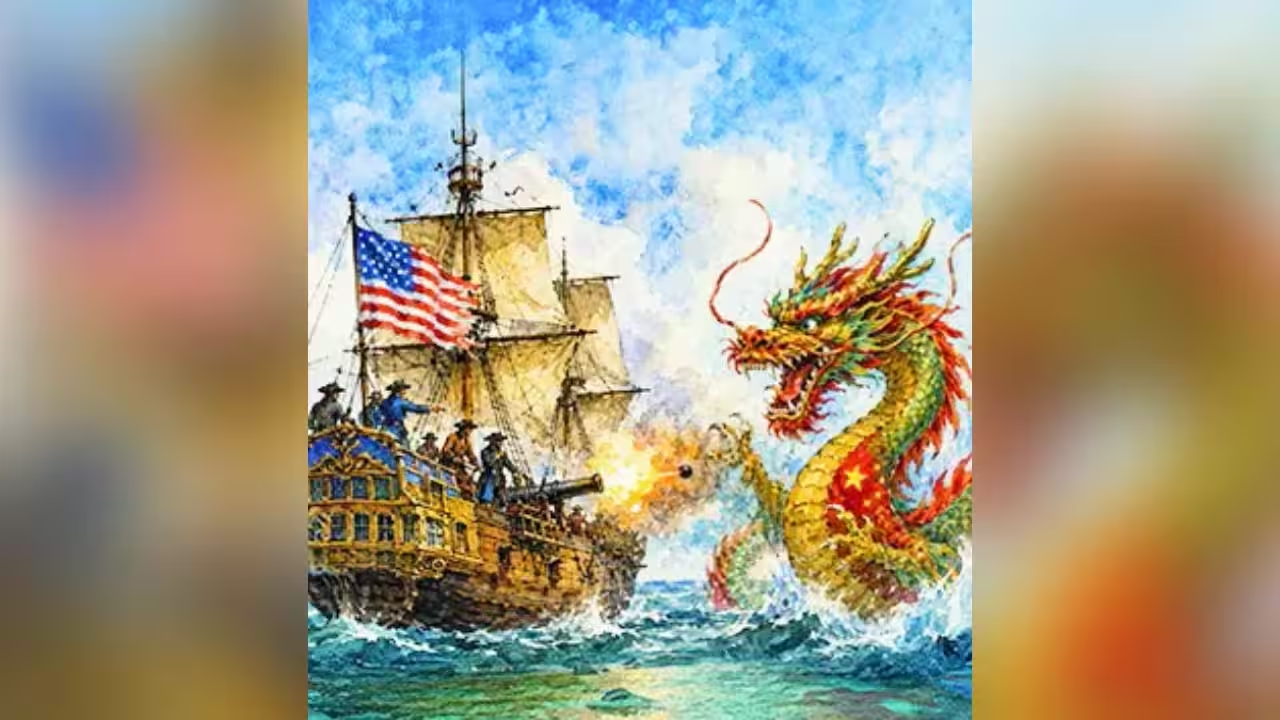
All wars aren’t fought with guns and bombs. The biggest ones of our time have weaponised tariffs, export bans and tech transfer curbs. We call these wars trade wars. But make no mistake, they aren’t being fought over dollars and cents. The goal, yet again, is hegemony. Question is why, after a 70-year free-trade consensus, world’s turned to trade tribalism. Also, if trade wars are unavoidable, how do you win them? Soumaya Keynes and Chad P Bown have some answers in their book, How to Win a Trade War: An Optimistic Guide to an Anxious Global Economy.Since public memory is short, Trump seems the obvious culprit, for he’s fixated on tariffs from the start of his second term last year. But Keynes, a Financial Times columnist, and Bown, chief economist with US State Dept under Biden, say it was China that really broke the rules-based order that underpinned free trade. Key to that old world – the authors are convinced it’s irretrievably lost – was the willingness to be interdependent. But the ‘Made in China 2025’ policy upended that system in 2015 with a clear aim to dominate important industrial sectors of the future with market share targets, they say. Then came the ‘Dual Circulation’ strategy, clearly intended to end Chinese dependence on the rest of the world while increasing other nations’ dependence on it.China got there, Keynes and Bown say, by turning off the safety switch of economic systems. Ordinarily, overproduction leads to a price crash, which penalises further production. But in China, overproduction is rewarded. That’s why Europe’s car industry, for example, is in a crisis. European buyers are getting cheap Chinese cars that German or French carmakers can’t compete with on price. This is an existential threat for Europe’s biggest industry. And other industries across the world are in the same spot. Which means jobs, social stability and national security are at risk. Hence, the authors say, more trade wars are inevitable.But that does not mean tariffing everyone like Trump, because “import barriers are like party drugs, with an initial rush and then a comedown”. China’s strategy of starving rivals of key inputs also has its limitations: “export controls are like trying to keep an unruly teenager indoors”. Keynes and Bown cite the example of 19th-century Britain’s control over telegraph cables. Britain wasn’t letting Germany build a parallel network, so Germany found an answer in wireless radio. Likewise, whether it’s America’s control on advanced chips or China’s control on rare earths, they’ll work only in the short term.To really win a trade war, Keynes and Bown say, start by preparing the key players: govt, companies and people. Why people? Because trade is never a people’s priority. “In Brexit, just 6% of Britons thought their country would benefit in terms of trade and economy by being outside EU.” And when simple things like toys and asthma inhalers – imported, of course – start getting expensive, people lose all their zeal for a trade war.To prep seriously, identify your vulnerabilities, and use subsidies to produce what you can, and stockpile what you can’t. Only then wade into the war, taking care not to alienate your allies. The authors say victory in a trade war is pyrrhic, but you’ll know you won if you “lose less than your rival” and “minimise” your wounds.Catch the latest World News and Live updates. Download the TOI app.
Topics in this story
Gathered from external sources. Rights to this text belong to whoever originally published it.