Christa Pike is conscious and speaking as she recovers from failed execution, her lawyers say in new update on her condition
"She's still in the hospital on a ventilator, critically ill," attorney Stephen Ferrell said. "We don't really know the prognosis yet and may not know for se...
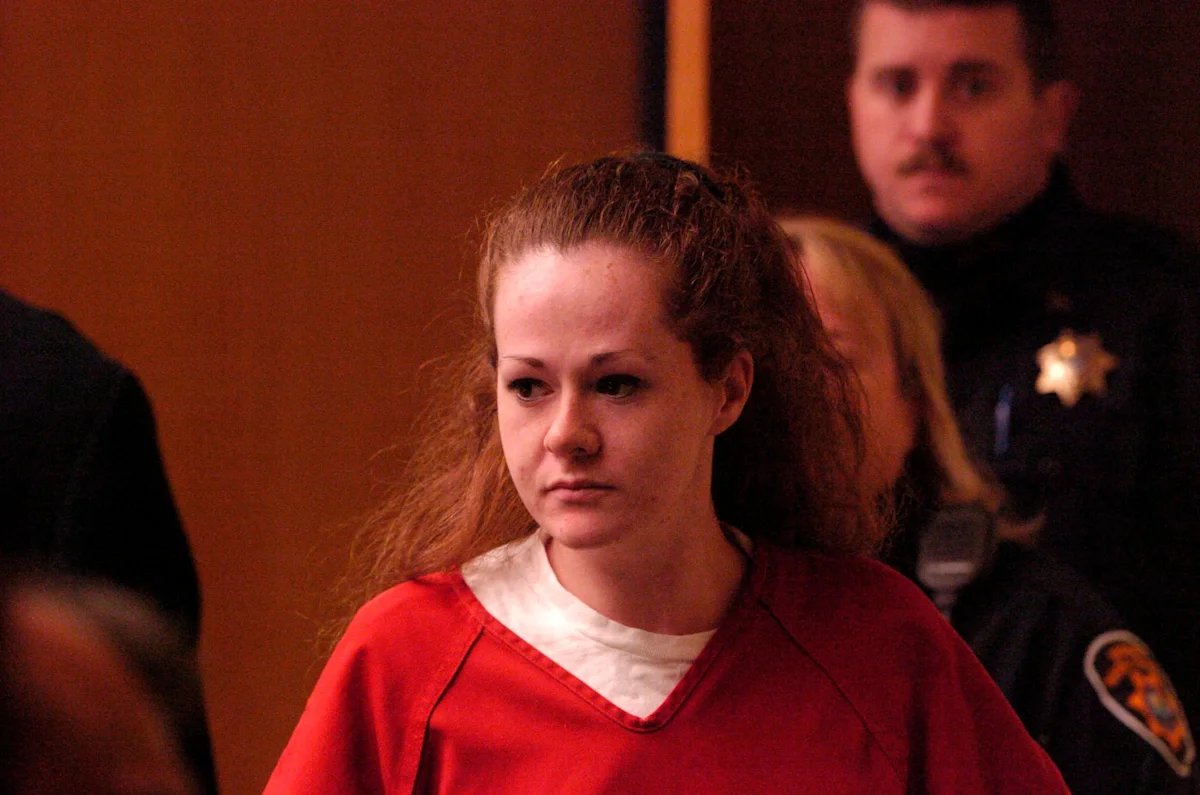
Christa Pike is conscious and speaking in the hospital after surviving Tennessee's attempt to execute her last week, her lawyers said Tuesday.
"Against all odds, Christa Pike is conscious, speaking, and continues to receive critical medical care. Despite the severe damage she endured to her arms, she is still handcuffed and shackled to the bed. Her recovery is medically unprecedented. Her prognosis remains unclear but, at a minimum, we expect a long recovery," her legal team wrote in a statement released to the media.
Pike had been unconscious and in critical condition in the days after two doses of pentobarbital failed to end her life on Wednesday, Sept. 30, according to her attorneys.
Dr. Joel Zivot, a medical expert who has consulted with Pike's legal team, told the Associated Press that the latest update "bodes well for a good recovery," but said that the full picture of her long-term health won't be clear for some time.
"She has recovered to a certain degree that she's able to be off a ventilator and able to speak, but in no way would I announce her free of further serious risk," he said. "There's still a lot of bad things that can happen here."
Fallout from the failed execution has brought intense scrutiny to Tennessee's execution procedures. Gov. Bill Lee suspended the one remaining execution scheduled for this year and announced that the state's top prison official would be stepping down.
In a statement, Correction Commissioner Frank Strada said resigning was "in the best interest of Tennesseans" while an independent review examines what happened on Sept. 30.
Strada will leave at the end of October, and an interim commissioner will be named later, Lee said.
Pike's lawyers said the resignation "is justified, but it does nothing to help Christa now."
"What happened to her Wednesday reflects a systemic failure that goes far beyond any one person," they said in a statement, according to ABC News.
"I think at the very least the governor should commute Ms. Pike's death sentence to a life sentence," attorney Stephen Ferrell said on CNN's State of the Union on Sunday. "We don't know what her physical state will be, but it is clear that she has endured a torturous attempt at executing her."
Pike, 50, was sentenced to death in 1996 for the murder of her classmate, Colleen Slemmer. Her execution was scheduled to be carried out after 30 years on death row. But the execution was called off after the drugs she was administered did not kill her. She was taken to the hospital, where she received life-saving care.
Both of Pike's arms were "swollen, burned, and blistered" when she arrived at the hospital, her lawyers wrote in a legal filing. Her lawyers believe the IV lines were placed incorrectly or her veins burst, so that some or all of the drug went into the tissue of her arms instead of her bloodstream.
The filing asks a state court to order the Tennessee Department of Correction to preserve all evidence from the execution attempt.
"Last night was not just inefficient, it was cruel, and it was torturous," attorney Randy Spivey said the day after the execution attempt. "It was also predictable."
Spivey said Pike's legal team warned the state of Tennessee and the courts that her medical condition of thrombocytosis "would cause her to suffer an agonizing death." They said it could increase clotting and pain during the execution process and that her veins are difficult to access. Pike's attorneys said the state and the court dismissed their client's concerns.
In audio recordings obtained by the New York Times , Pike had said two weeks before she was due to be executed that she was concerned about the lethal injection, citing a recent botched execution attempt in Tennessee of Tony Carruthers in May, when staff were unable to locate a vein. "Tony Carruthers lived out my worst nightmare," Pike can be heard saying in the audio, which was shared by her lawyers.
"I do not have good veins,' she said. "And I don't want to go through that."
"She was not seeking to delay her execution," attorney Stephen Ferrell told reporters on Oct. 1. "She was seeking to have that execution performed humanely and as quickly and as painlessly as possible."
Following the failed execution, Lee ordered "a comprehensive, third-party review to determine exactly what occurred" and said that another execution scheduled for Dec. 3 later this year had been paused.
"This is a tragedy," he said. "There is no one who wanted what happened last night to happen. It's deeply disturbing to me that this has happened in this state."
Pike's attorneys said in response that the governor's independent review doesn't go far enough after being in solitary confinement for more than 20 years and the botched execution attempt. "Christa has endured punishment greater than any other person in the history of the American death penalty," Spivey said. "The governor must commute Christa's sentence now.
May Martinez, the mother of Pike's victim, Colleen Slemmer, told NBC News the execution attempt had been a "mess," adding, "They didn't say anything, and then, all of a sudden, they asked all the victims to leave. We didn't know anything until we got up to the office and saw the commissioner. And he said that it didn't work ... and she's on her way to the hospital."
U.S. Sen. Marsha Blackburn, the state's Republican candidate for governor, said Tennessee should look at other forms of execution. "If it's lethal injection, if it is electric chair, what we do know is we have to find a way to do this — and do it successfully," she told The Associated Press.
Tennessee officials have not said whether they will try to execute Pike again, or explained what went wrong.
Her condition could complicate any future attempt. Under Supreme Court precedent, a person can't be executed unless they have a "rational understanding" of why they are being put to death, the New York Times reported . Dr. Joel Zivot, an Emory University anesthesiologist retained by Pike's defense team, told the BBC it is "very possible" she suffered a brain injury because resuscitation was delayed.
Pike's lawyers have asked Lee to commute her sentence to life in prison. Lee had denied her clemency before the execution attempt.
President Trump questioned how the execution could have failed, telling reporters it "shouldn't be very difficult," according to AFP . United Nations human rights chief Volker Türk urged Tennessee not to try again.
What happened during the execution attempt?
Pike had been scheduled for execution at 10 a.m. Wednesday for killing Slemmer in 1995, at the age of 18. She would have been the first woman executed in Tennessee in more than 200 years.
An appeals court stopped the lethal injection just an hour before it was to start, a stay that was subsequently overturned by the U.S. Supreme Court.
Media witnesses said officials raised the curtains to the execution chamber at 7:27 p.m., showing Pike strapped to a gurney. "I'm going to leave this world the way I spent most of my life, and that is in love," she said in her "last" words.
However, Pike remained conscious after the first dose. Nashville Banner reporter Steven Hale said she lifted her head off the gurney at 7:54 p.m. She also reportedly asked prison officials if her arm was supposed to feel that way.
Tori Gessner, a journalist with WKRN News 2 in Nashville, said Pike was seen pointing at her arm and asking, "Does this happen like that?"
By 8:26 p.m., witnesses reported that the second dose of pentobarbital had been administered.
Pike continued to be heard snoring behind the closed curtain until the microphone was cut off at 8:53 p.m. At that time, an announcement was made to escort media witnesses out of the area.
Pike's legal team said in a statement to the Tennessean newspaper on Wednesday night, "We take no pleasure in being right, but the concerns raised by Ms Pike proved to be true: difficult vein access, blown veins, degraded pentobarbital, no emergency medical care available when things inevitably go wrong, all under a protocol that remains veiled in secrecy."
Robin M. Maher, executive director of the Death Penalty Information Center, said what Pike experienced was "singular and unparalleled."
Seven other people have survived medical problems caused by an execution team's failure to access a vein to administer lethal injection drugs, but no one has remained alive after receiving the drugs used in such executions, she said.
"I've witnessed, I believe, five executions in Tennessee," Gessner said. "Nothing about today was normal, typical at all, and the court delay was just the tip of the iceberg."
A source told NBC News that there was no medical oxygen or mask in the execution chamber, meaning they had to be brought in from a prison clinic. Some of the medication had worn off by the third time staff checked on Pike, the source added.
The Tennessee Department of Correction said that it "followed every step of the state's lawful, established execution protocol approved by the attorney general's office."
The state's execution protocol calls for a secondary set of drug syringes to be administered "if the inmate is not deceased" after the first set. It does not specify what happens if the subject is still alive after the second set.
Lawyers for Pike filed an emergency motion late Wednesday with the Tennessee Supreme Court seeking to immediately halt and stay the execution, saying she was in "unnecessary agony" and that the execution was violating her right to be free from cruel and unusual punishment. They also filed motions in the Sixth Circuit and a district court.
Pike was sentenced to death in 1996 after being convicted of first-degree murder of Colleen Slemmer the previous year on the University of Tennessee Agricultural campus.
According to legal documents filed with the Supreme Court , Pike "tortured, and killed Colleen Slemmer" on Jan. 12, 1995 because Pike "just felt mean that day." Pike is reported to have cut Colleen's throat multiple times and crushed her skull with a piece of asphalt.
Pike was also convicted of attempted first-degree murder after trying to strangle fellow inmate Patricia Jones in 2001.
Strada took over Tennessee's Department of Correction in January 2023 after serving as deputy director of Arizona's prison system. In late 2024, he announced Tennessee would switch to a single execution drug, pentobarbital.
Death penalty lawyers told the Guardian that Pike's was the fifth "botched" execution Strada had overseen in two states since 2022. That count includes Tennessee's failed attempt to execute Tony Carruthers in May, when staff couldn't find a vein, and three 2022 executions in Arizona in which teams struggled to place IV lines.
Kit Thomas, a death row attorney, told the Guardian that training requirements for execution teams were loosened under Strada. "He reduced the training requirements and we've seen disastrous results," Thomas said.
A day before announcing the resignation, Lee defended the department, telling reporters, "So far as we know, the Department of Correction followed exactly the protocol that was outlined."
According to the Death Penalty Information Center (DPIC), there were 75 botched lethal injections between 1982 and 2010. Compared to other methods, lethal injections face complications at a significantly higher rate. There have been a number of botched executions since 2010 that don't appear in the DPIC's tally.
Most of these were executions that went wrong in some way, but still ended in death. But there are seven known instances in which an execution failed entirely. One of them was earlier this year in Tennessee, when staff were unable to find a vein to administer the lethal drugs to inmate Tony Carruthers.
More than 20 pharmaceutical companies have also refused to have their products used in executions, which has left states struggling to find the drugs they need to perform lethal injections. In some cases, they have experimented with unproven alternatives, with disastrous results.
An Oklahoma prisoner named Michael Lee Wilson said he could feel his "whole body burning" as he was being executed using a controversial drug cocktail in 2014. There have also been instances of prisoners gasping for air , heaving and coughing , convulsing and being subjected to "three hours of pain" before finally dying.
In April 2022, Tennessee called off the execution of Oscar Smith about an hour before it was scheduled to begin after the state discovered that its lethal injection drugs had not been properly tested. An independent investigation found that the state had repeatedly failed to follow its own drug-testing protocols between 2018 and 2022.
Tennessee then revised its protocol, resuming executions in May 2025 and using a single, lethal drug: pentobarbital.
There's also growing evidence that lethal injection may not provide a peaceful death even when everything appears to go right.
Difficulties with lethal injections have led some states to revive previously discarded execution methods. South Carolina carried out three executions by firing squad last year. There had been three total firing squad executions in the U.S. in the previous half-century combined.
There were 47 executions in 2025 , according to the DPIC, higher than the recent average of fewer than 30 per year. These included the lethal injection of South Carolina inmate Marion Bowman , who received twice the intended drug dose, and Tennessee inmate Byron Black , who reportedly showed sustained cardiac activity for nearly two minutes after prison staff pronounced him dead.
Topics in this story
Gathered from external sources. Rights to this text belong to whoever originally published it.