A San Francisco couple built a Buddhist meditation sanctuary in their backyard, but a planning complaint put it at risk
A San Francisco couple is fighting to save their Buddhist meditation sanctuary after an anonymous planning complaint raised concerns about violations of
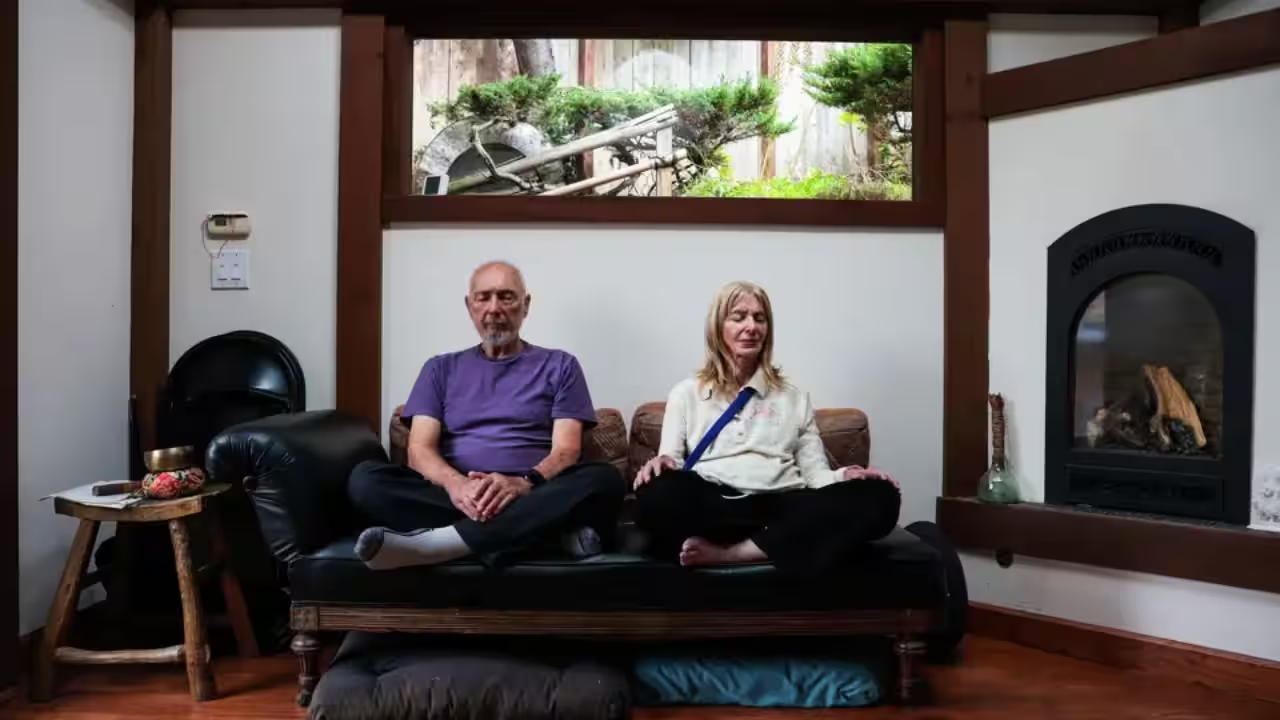
A San Francisco couple is fighting to save their Buddhist meditation sanctuary after an anonymous planning complaint raised concerns about violations of city building rules. Sam Geffner and Mar Rodin built the backyard retreat in their Noe Valley home, completing construction around 2008. The structure, inspired by traditional Japanese architecture, features a meditation room, skylights and deep roof eaves. After using the space for more than a decade, the couple faced the prospect of demolishing it or altering its design. Having spent nearly $30,000 on architects and lawyers, they are now hoping a proposed change to city planning rules will save their sanctuary.Why did a San Francisco couple’s meditation sanctuary face a complaintAccording to the San Francisco Chronicle, the sanctuary stands behind the couple’s rainbow-painted house on Clipper Street in San Francisco. Gently curving stone steps lead to a meditation room built into the sloping hillside, with two skylights allowing natural light into the space. Sliding glass doors open towards a rocky grotto where koi fish swim.The building’s design draws on traditional Japanese architecture, featuring timber framing, a high roof and wide eaves. Geffner has meditated there for nearly 20 years and described its purpose to the San Francisco Chronicle, saying, “It’s a space that separates you from the everyday world.” The couple regard the structure as a refuge connected to their Buddhist meditation practice.Geffner and Rodin began considering a redesign of their backyard around 25 years ago. They hired landscape designer Kent Gordon England, who designed the meditation room and koi pond. According to Geffner, England assured them that they did not need to worry about obtaining permits for such a small addition.Construction was completed around 2008, and the couple used the space for more than a decade without encountering problems. That changed in 2019, when an anonymous complaint was made to San Francisco’s Planning Department alleging that the structure violated city rules. Geffner described the experience as “a rude awakening”, while Rodin said, “We were really trusting in our cowboy.” England did not respond to the newspaper’s request for comment.Why did San Francisco’s meditation sanctuary violate planning rulesSan Francisco’s planning code regulates the size and design of backyard buildings. The rules are intended to preserve open spaces within city blocks and protect natural light and ventilation for neighbouring properties. The couple’s architect acknowledged at the hearing that the room exceeds the height and floor-area requirements.One of the central issues is the building’s roof overhang. The planning code permits a maximum roof overhang of 12 inches, whereas the sanctuary has eaves extending four feet beyond its walls. Those deep eaves are an important feature of the building’s traditional architectural design and part of the couple’s argument for retaining it.After years of uncertainty, Geffner and Rodin appealed to the city’s zoning administrator for an exemption in the summer of 2026. At a hearing, an architect representing the couple argued that an exception should be considered because the structure is built into a hillside and is used as part of their Buddhist faith.Explaining the significance of the design, Geffner told the hearing, “In Buddhist tradition, the peaked roofs and deep eaves are understood as this building’s primary way of signalling this is a sacred, protected space.” The couple also sought support from their neighbours, going door to door and distributing a 13-page packet of photographs documenting the backyard and meditation room. Geffner said they received more than 30 letters of support.How could new zoning rules protect San Francisco’s backyard sanctuaryThe dispute has attracted the attention of Rafael Mandelman, the supervisor representing the district that includes Noe Valley. At a meeting of San Francisco’s Board of Supervisors in September 2026, he introduced a proposed change to the planning code that would allow backyard structures built before 2010 to remain, provided they fell within the scope of the proposed measure.The proposal would extend an existing provision that grandfathered in backyard buildings constructed before 2003. If approved, the revised cut-off date would cover the couple’s sanctuary, which was completed around 2008. Mandelman said the length of time a structure had existed without causing a problem should be considered when deciding whether it needed to be removed.“You look at it and think, ‘That can’t be right,’” Mandelman said of the couple’s predicament, according to the San Francisco Chronicle. He added that it should not be necessary for homeowners to spend years and substantial sums of money trying to secure permission to keep such a structure. The newspaper reported that the number of backyard buildings that could qualify under the proposed change was not yet clear.Patrick Hannan, a spokesperson for San Francisco’s recently merged planning and building inspection departments, said planning staff had worked with Mandelman on the proposal. In a statement quoted by the newspaper, Hannan said, “Our job is to balance priorities when they conflict in the real world.” He described the proposed amendment as “a targeted way to let the small meditation space stay while ensuring that the interior-block open space will be preserved.”What happens next in the backyard sanctuary zoning disputeThe zoning administrator, Corey Teague, told the couple at the hearing that he would consider their arguments and respond later. According to Hannan, Teague has remained in regular contact with the couple’s architect, although Geffner and Rodin had not received a final decision at the time of the San Francisco Chronicle report.Mandelman’s proposed ordinance is expected to go before the full Board of Supervisors in the coming months. If it passes, it would supersede the zoning administrator’s determination on the matter. If it does not pass, the couple could still receive an exemption from the zoning administrator. They would also have the option to appeal an unfavourable decision, although that process would probably increase their costs.Why are San Francisco residents struggling with building permitsThe case comes amid wider difficulties faced by San Francisco residents navigating the city’s planning and building regulations. The San Francisco Chronicle reported that even Supervisor Myrna Melgar, a former president of the San Francisco Planning Commission, had previously described struggling to establish whether she needed a permit to replace a backyard gazebo.For now, Geffner and Rodin intend to continue using the meditation room while they await the outcome of the planning process. The sanctuary has remained part of their lives for decades, and its future depends on the outcome of the proposed code change or the decision on their exemption request. Reflecting on the role meditation plays in dealing with uncertainty, Geffner told the San Francisco Chronicle, “Meditation is a way of bringing a little control over what’s out of control. Reminding you not to take it too seriously.”You use AI every day. Now get your AI Quotient. Take the AIQ test.
Topics in this story
Gathered from external sources. Rights to this text belong to whoever originally published it.