Christa Pike's botched execution fuels questions over whether lethal injection is the 'more humane' way to put people to death
Complications with lethal injections have led some states to revive older execution methods, including the firing squad.
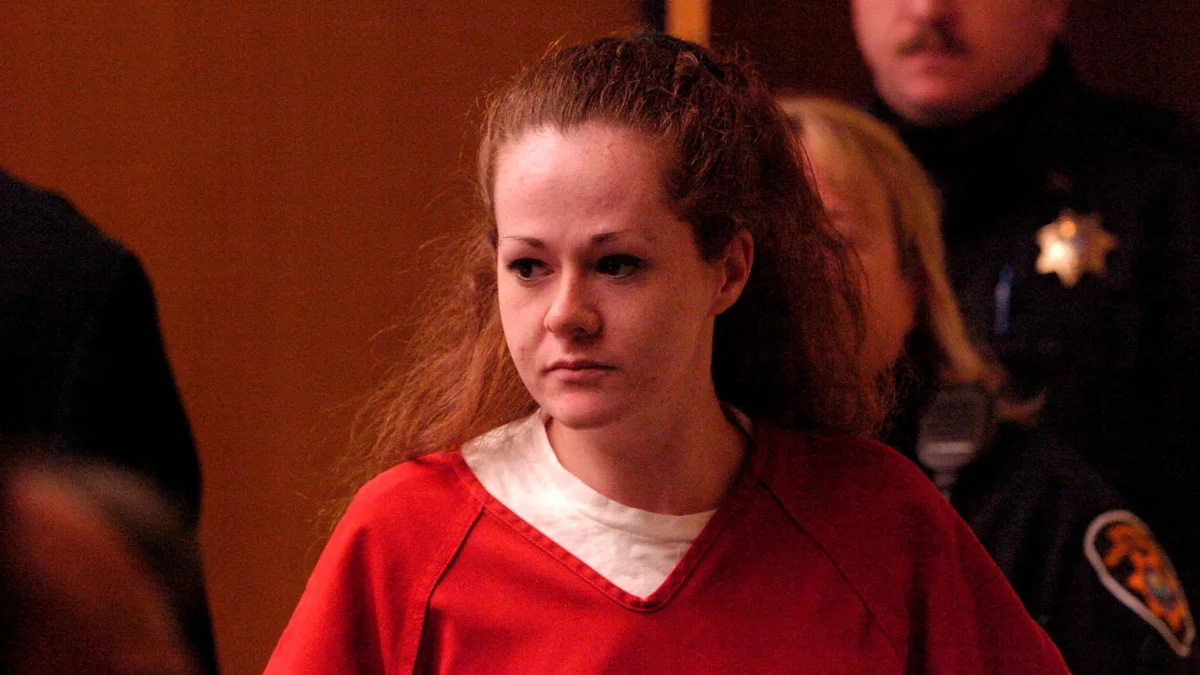
The failed execution of Christa Pike in Tennessee on Wednesday has added new fuel to the longstanding debate over the death penalty in the United States. It has also drawn new scrutiny to the question of whether lethal injection, the nation's primary method of execution for the past 40 years, is truly a "more humane" alternative to other ways of putting someone to death.
Pike was given a death sentence in 1996 after being convicted of killing her classmate, Colleen Slemmer, in an attack she carried out with her then boyfriend. After 30 years on death row, and a last-minute legal battle that temporarily delayed her execution, Pike was scheduled to be put to death on Wednesday night.
However, the two doses of pentobarbital she was given proved not to be fatal. According to witnesses, Pike remained alive and snored loudly for 40 minutes after the drugs were administered. Eventually, the execution was called off and she was taken to the hospital for treatment.
Pike's attorney Randy Spivey reported Thursday afternoon that she was in critical condition and receiving "life-saving care." She was unconscious and placed on a ventilator in the hospital, according to a filing by her legal team on Friday.
Spivey admonished the state for going forward with lethal injection despite his warnings ahead of time that a blood-clotting disorder called thrombocytosis "would cause her to suffer an agonizing death." Pike's attorneys had asked the courts to permit her to die by hanging, but the request was denied.
"The state of Tennessee has shown once again that they are not capable of carrying out an execution consistent with basic human dignity," he said. "Last night was not just inefficient, it was cruel and it was torturous. It was also predictable."
Tennessee Gov. Bill Lee suspended all other executions in the state and called for a "comprehensive, third-party review to determine exactly what occurred."
Pike is the first person in modern U.S. history to survive the administration of lethal injection drugs, according to the nonprofit Death Penalty Information Center . Seven other attempted lethal injections have failed, but in each case, the execution was called off due to difficulties finding a vein to administer the drugs.
The doctor who administered Pike's failed execution was reportedly involved in the state's previous botched lethal injection earlier this year.
Lethal injection has been by far the most common form of execution in the United States since it was first introduced in the early 1980s, thanks largely to the view that it provides the quiet, non-violent death that other methods do not. But Pike is just one of many examples that contradict that belief, showing that lethal injections can sometimes be complex, error-prone and at times cause extreme suffering.
For centuries, executing someone inherently meant subjecting them to a violent death, either through hanging, the electric chair, firing squad or the gas chamber.
It wasn't until the 1970s, in the wake of a Supreme Court ruling barring "cruel and unusual punishment," that states began seeking less violent methods of executing prisoners.
The first law legalizing lethal injection was introduced by an Oklahoma lawmaker who opposed the death penalty entirely, but felt the state should at least find an alternative to what he called the "dirty deed" of electrocuting a person to death. Supporters of legalizing lethal injection described it as a "more humane" alternative to electrocution. The first lethal injection was carried out in 1982 in Texas. Injection soon became the primary method of execution throughout the country.
Nearly 90% of the 1,693 executions carried out in the United States over the past 50 years have been by lethal injection. Lethal injection is the primary execution method in 25 of the 27 states that allow the death penalty. Only nine states use the electric chair or gas chamber.
For decades, the primary approach was to inject the condemned person with a three-drug cocktail designed to put them to sleep, paralyze them and then stop their heart. In theory, this would mean that they died without experiencing any pain.
But the procedure is also much more complex than some other execution methods, which increases the chances that something can go wrong. Between 1982 and 2010, there were 75 botched injection executions that featured "unanticipated problems" or "unnecessary agony for the prisoner," according to research by Amherst College professor Austin Sarat. Lethal injections face complications at a significantly higher rate than any other execution method.
There's also growing evidence that lethal injection may not provide a peaceful death even when everything appears to go right. In 2020, NPR looked at the autopsies of more than 200 people who had died by lethal injection. It found that the overwhelming majority of their bodies showed signs that the prisoners likely endured what one medical expert described as "a circus of suffering" before dying that wasn't visible to witnesses.
More than 20 pharmaceutical companies have also refused to have their products used in executions, which has left states struggling to find the drugs they need to perform lethal injections. In some cases, they have experimented with unproven alternatives, with disastrous results.
An Oklahoma prisoner named Michael Lee Wilson said he could feel his "whole body burning" as he was being executed using a controversial drug cocktail in 2014. There have also been instances of prisoners gasping for air , heaving and coughing , convulsing and being subjected to "three hours of pain" before finally dying.
Mounting awareness of the shortcomings of lethal injection has led to calls for the revival of execution methods that had previously been largely abandoned.
"While there should be a thorough review of what happened and why the process failed, the answer is simple: bring back the electric chair and deliver justice for these victims swiftly," Republican Sen. Marsha Blackburn, the current GOP nominee to become Tennessee's next governor, wrote on social media Thursday.
Some legal scholars have made the case that firing squads, for all of their brutality, may be the least inhumane way to put someone to death. That includes liberal Supreme Court Justice Sonia Sotomayor, who wrote in a 2015 opinion that "such visible yet relatively painless violence may be vastly preferable to an excruciatingly painful death hidden behind a veneer of medication."
Early last year, a convicted murderer in South Carolina named Brad Sigmon became the first person to die by firing squad in the U.S. in more than 15 years. The state carried out two more firing squad executions before the end of the year. All three inmates chose to die by firing squad. Sigmon's lawyers told the Associated Press that he chose to die by firing squad to avoid the "monstrous" results of a botched lethal injection.
Five other states also allow the use of firing squads. That includes Idaho, which recently made it the state's primary method of execution . The Department of Justice announced in April that it would add the firing squad to its list of potential execution methods in federal death penalty cases.
Another novel execution method, nitrogen gas, was used for the first time in Alabama in 2024.
Though research suggests these other methods are less prone to error than lethal injections, there are still many examples of how things can go horribly wrong.
Past electrocutions have involved inmates catching fire or surviving multiple waves of shocks before dying.
Mikal Mahdi, a man who was killed by a firing squad last year, appeared to suffer tremendously before dying. He reportedly cried out after being shot, groaned twice and continued to breathe for more than a minute before falling motionless. A later autopsy showed that only two of the three bullets that were fired at Mahdi hit him, and neither of them struck his heart as intended.
The first person executed with nitrogen gas spent two minutes making "thrashing spasms and seizure-like movements" before falling still and wasn't declared dead until 10 minutes later. A later execution using the same method took more than 30 minutes to take effect and involved the inmate taking a long series of "heaving breaths."
It's unclear whether Wednesday's botched lethal injection will lead Tennessee to consider other execution methods in the future.
Topics in this story
Gathered from external sources. Rights to this text belong to whoever originally published it.