Predators are descending on the national park gateway town of Moab
Predators are moving into Moab, the gateway town for national parks in southeast Utah, as extreme drought pushes bears and even mountain lions closer to people. Since late spring, officials and residents have reported a sharp rise in bear sightings, with some animals appearing thin, malnourished and drawn to town by scarce food in the mountains. On Aug. 16, wildlife officials responded to a 15-year old female bear near Moab's baseball field, and the animal was tranquilized and later euthanized. Another bear, a 6-year old male weighing about 300 pounds, was also euthanized after being found near the town's middle and high schools. A separate bear was later captured on a backyard camera in Spanish Valley, and a bear near Moab's middle school was tranquilized and relocated on Aug. 17. Officials say drought and a late-spring freeze have reduced food sources in the La Sal Mountains, where bears usually live year-round, and residents have also reported bears eating late-season peaches. Moab has also reported several mountain lion sightings in Spanish Valley since Sept. 6, and officials say the big cat appears to have moved on.
On Aug. 23, I was hiking along a stream outside Moab with my partner and two dogs when we encountered the unexpected sight of fresh bear scat. Over the next mile, we came upon a dozen more, some so fresh as to still be wet.
This video created with the assistance of AI.
In the six years I've lived in Moab, I've only ever seen two bears, and only one in the town itself. Yet it was clear that at least one bear had taken up residence in this canyon, just a few miles from one of the area's more popular trailheads.
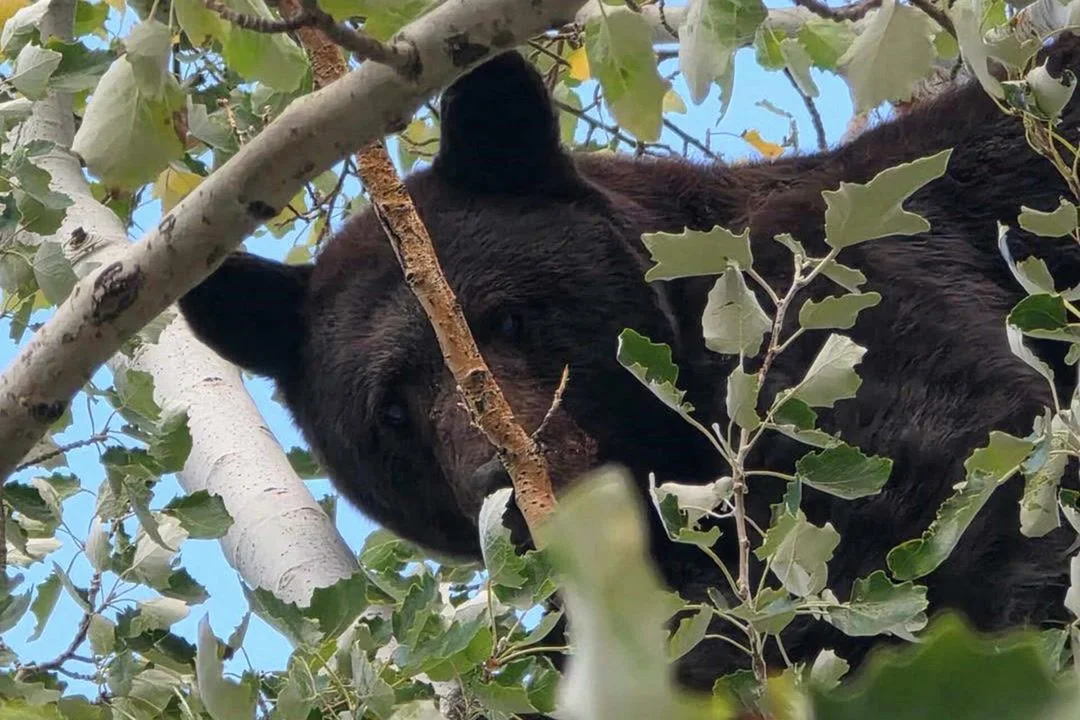
We avoided exploring dead-end side canyons, but as we were moving quickly downstream, we heard the tell-tale sound of a branch snapping. A massive brown bear leapt from the streambed just 30 feet away, its darkened rump bleached yellow from the sun. I felt a surge of panic, even as the bear was clearly trying to avoid us. The bear circled around us in a wide arc, moving back the way we'd come. My legs shook for minutes afterward.
My experience marks just one of a dozen or so encounters Moab locals have had with large predators in recent weeks, leading the town's city council to declare that Moab is in the midst of a "bear situation." Across the southwest, extreme drought is driving larger mammals, including not just bears but potentially mountain lions too, out of the mountains and into towns in search of an easy meal.
"The late-spring freeze and current drought conditions have impacted the production of food sources that the bears rely on," Brandon Behling, the conservation outreach manager at the Utah Division of Wildlife Resources, or DWR, told SFGATE. "The shortage of these food sources are a contributing factor of why we are seeing more bears venturing into towns and populated areas. They are searching for food."
Read our stories ad-free on the new SFGATE app .
In a typical year, DWR officials might respond to just a handful of calls regarding bears in town. Yet this year, Behling said their team has already handled at least eight calls in Moab, including four calls over the course of just two days last month.
On Aug. 16, the Grand County Sheriff's Office spotted a 15-year old female bear in a tree near Moab's baseball field. She was tranquilized and later euthanized. Shortly after, another bear was seen near the town's middle and high schools. An animal control officer located the bear - a 6-year old male weighing about 300 pounds - and that animal was similarly euthanized. Later that evening, a large bear was captured on a backyard camera in Spanish Valley, a suburb to the south of Moab.
The next day, Aug. 17, Moab's middle school was placed on lockdown for several hours while DWR officials responded to another bear in the vicinity. The animal, an 8- to 10-year old female, was tranquilized and later relocated.
Before that weekend, Behling said DWR had responded to three incidents and received eight sighting reports locally. But in addition to the eight bears DWR has responded to, SFGATE is aware of at least four more sightings that were not reported to authorities, including my own experience.
Samantha Zimmerman, a local artist and scientific illustrator, was hiking with a friend the evening of Aug. 28 when the pair's dog began growling. Behind and below them, a seemingly young bear turned and fled at their approach, heading back upstream.
"In the 15 years I've lived here, I've seen maybe five bears, but all up in the mountains," Zimmerman told SFGATE. "The ones up there are much larger, much fluffier and much fatter than the ones I've been seeing around town."
Behling said the bears are seemingly being drawn to town due to a lack of food high up in the La Sal Mountains outside town, where bears typically live year-round, feeding on berries, plants, roots, nuts and insects.
An unusually warm winter followed by a late-spring freeze means the mountains have produced far less food than they normally would, and many of the bears seen in town have appeared thin and malnourished. Several have been older females with almost no teeth, and DWR biologists believe the bears may be coming into town seeking soft fruit from local orchards. Residents have reported bears gorging on late-season peaches left on trees.
Asked about the criteria used to determine whether to euthanize an animal, Behling said officials weigh the animal's physical condition and the likelihood it may return to the area where it was first captured. The decision to euthanize the older female, for example, was made because of the wear to the animal's teeth, suggesting she could no longer forage effectively. Males are more likely to return to an area, and DWR policy calls for relocating bears only where there is a reasonable probability they will not return to the capture site. With favorable habitat scarce this year, DWR chose to euthanize the male bear they captured on Aug. 16.
"Our staff got into the wildlife profession because we love wildlife. We enjoy managing and protecting animals so Utahns can get outdoors and enjoy them," he said. "Having to euthanize an animal is really hard and is not a decision we make lightly."
Moab is not the only place experiencing an uptick in human-bear encounters, either. Indeed, numbers are on the rise across the southwest. Statewide, Behling said the DWR is dealing with twice as many bear issues this year as last year, and in New Mexico , Colorado and California , bear encounters have similarly been on the rise.
The situation is strange enough that on Aug. 25, Moab's police chief, Lex Bell, was called in to brief the City Council on the town's "bear situation." During his briefing, Bell said that after talking with longtime residents, he concluded that these recent sightings amount to "more than they've ever had."
Bears are not the only large carnivores being sighted in town. Beginning on Sept. 6, residents in Moab reported several sightings of a mountain lion in Spanish Valley that is alleged to have killed at least one sheep. Footage of the big cat was posted in local Facebook groups, and the animal appears to have moved on.
"DWR biologists believe it was a young mountain lion that was just traveling through the area," Behling told SFGATE. "The late freeze and drought can affect other wildlife species, but the impacts aren't uniform across all species."
At this time of year, bears are bulking up ahead of their winter hibernation and should soon return to the mountains. The National Oceanic and Atmospheric Administration has predicted "wetter-than-normal precipitation conditions" for southeast Utah as a potentially historic El Niño develops in the Pacific. If the bears can survive the winter, they may have an easier time finding food next spring.
In the meantime, residents and visitors should secure their trash and strive to keep their campsites clean. If you encounter a bear, do not approach it. Stand your ground, stay calm and give the bear a chance to leave. If a black bear attacks - an extremely rare occurrence averaging less than one death per year in North America - always fight back.
We love national parks just as much as you do, so we have a newsletter that covers them from top to bottom. Sign up here.
Topics in this story
Gathered from external sources. Rights to this text belong to whoever originally published it.