Michael Keaton's 1992 Batmobile, built on a chassis from two Chevrolet Impalas, is heading to auction with an estimate of up to $7 million
The 1992 Batmobile associated with Michael Keaton’s Batman is heading for auction this November, with Julien’s Auctions estimating that the screen-used
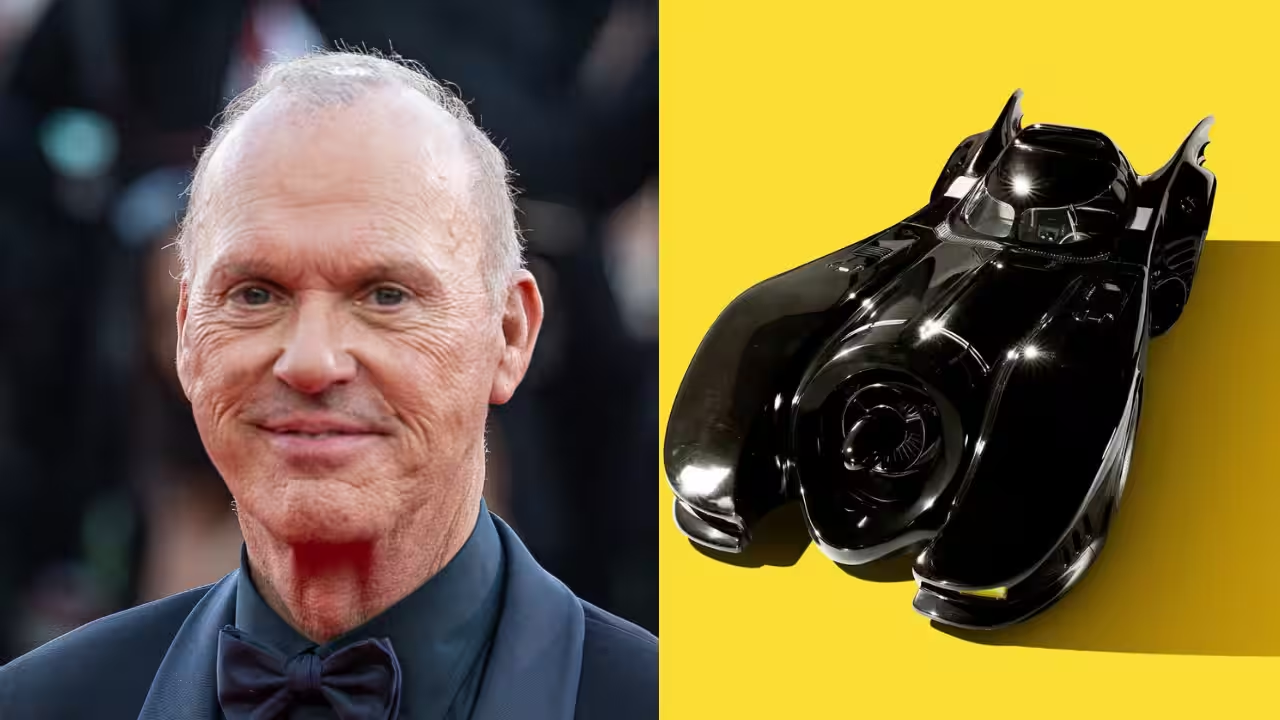
The 1992 Batmobile associated with Michael Keaton’s Batman is heading for auction this November, with Julien’s Auctions estimating that the screen-used vehicle could sell for between $5 million and $7 million. Built for Tim Burton’s Batman Returns, the car was constructed around a chassis made from two Chevrolet Impalas, then transformed into the long, low-slung machine seen on screen. Its upcoming sale puts one of the most recognisable film cars of the 1990s back in the spotlight, more than three decades after it appeared alongside Keaton’s version of the character. The auction will also include other Batman costumes, props and production material from the franchise’s film and television history.How two Chevrolet Impalas became Michael Keaton’s BatmobileThe car began with something considerably more ordinary than its finished appearance suggested. Its chassis was formed by combining parts from two Chevrolet Impalas, providing the underlying structure for the vehicle that would eventually become Burton’s Batmobile.As reported by Julien's Auctions, Carl Casper, the automotive designer and builder behind the project, was responsible for turning that foundation into the distinctive machine required for Batman Returns. Much of the exterior was shaped by hand, while the front end was designed around a jet-turbine-inspired nose. The result was deliberately unlike a conventional production car, with its long body and enclosed cockpit helping establish the visual identity of Burton’s Gotham.The vehicle was not simply a prop placed in the background. It was built to serve as Batman’s principal mode of transport within the film, making it one of the production's most recognisable physical objects.Michael Keaton’s car returns to the auction marketKeaton drove this version of the Batmobile in Batman Returns, which reached cinemas in 1992. The second film retained the darker visual language of its predecessor while introducing a different collection of characters and settings around Bruce Wayne.For viewers who associate Keaton’s Batman with the Burton films, the car is closely tied to that period of the franchise. Its shape became part of the character’s screen identity rather than simply an accessory to the costume. Julien’s Auctions and Turner Classic Movies have now announced The Ultimate Batmobile Auction, with the Hero Batmobile from Batman Returns as its main attraction. Reportedly, the sale is scheduled for November 23, 2026, with bidding taking place both live and online.The Batman Returns Batmobile is estimated at up to $7 millionJulien’s has placed an estimated value of $5 million to $7 million on the Batman Returns Batmobile. That earlier record involved the original car created for the 1966 television series starring Adam West. George Barris’ Batmobile sold for $4.6 million in 2013, making it the reference point for major Batmobile sales for more than a decade. The new estimate therefore places Keaton’s screen-used car in a different financial bracket. Whether it reaches the upper end of the range will depend on bidding when the auction takes place.How the Batmobile shaped Michael Keaton’s Batman eraThe Batmobile is inseparable from the look created for Burton’s two Batman films. The 1989 movie had already moved the character away from the brighter visual style associated with the 1960s television series, and Batman Returns continued that approach. The car fitted into that setting. Its bodywork was unusually elongated, its cabin was enclosed, and the front section suggested a futuristic machine rather than a modified road car. The hand-built construction allowed the production team to create something that could exist within the stylised version of Gotham presented on screen.Michael Uslan, one of the figures behind the Batman film franchise, has also highlighted the Batmobile as part of the character’s essential screen mythology. Batman may have no superpowers, but his equipment and vehicles have long been central to how the character is represented in film.Batman’s 60-year screen history comes together at Julien’s auctionThe November sale is being presented as a wider collection of Batman-related material rather than a single-vehicle auction. Julien’s says costumes, props and other production artefacts from Batman’s film and television history will also be offered.More lots are expected to be announced before the sale. That gives the event a broader connection to the character’s screen history, spanning different versions of Batman rather than concentrating exclusively on Burton’s films. The original Batman television series starring Adam West turns 60 in 2026, linking the upcoming auction with a much earlier period in the character’s live-action history.Michael Keaton’s Batmobile could surpass the 1966 car’s $4.6 million recordThe contrast between the two major Batmobiles is striking in practical terms. Barris’ 1966 car represented the colourful television era of Batman, while Casper’s machine belonged to Burton’s much darker interpretation more than two decades later. Their auction histories now provide a useful marker of how valuable major Batman production vehicles have become to collectors. The 1966 Batmobile reached $4.6 million in 2013. The 1992 version has been given an estimate that extends to $7 million. For the Batman Returns car, the next chapter will be written on November 23. Until then, the vehicle remains a piece of film-production history that began with two Chevrolet Impalas and ended up becoming Michael Keaton’s Batmobile.You use AI every day. Now get your AI Quotient. Take the AIQ test.
Topics in this story
Gathered from external sources. Rights to this text belong to whoever originally published it.