For more than four decades, George Divoky has worked from Cooper Island’s lone cabin; by 1989, the black guillemot colony he tracked had reached 200 breeding pairs
Rest of World News: George Divoky has spent nearly 11 cumulative years on Cooper Island, which is a remote sandbar off northern Alaska, and studied a colony of Mandt’s bl.
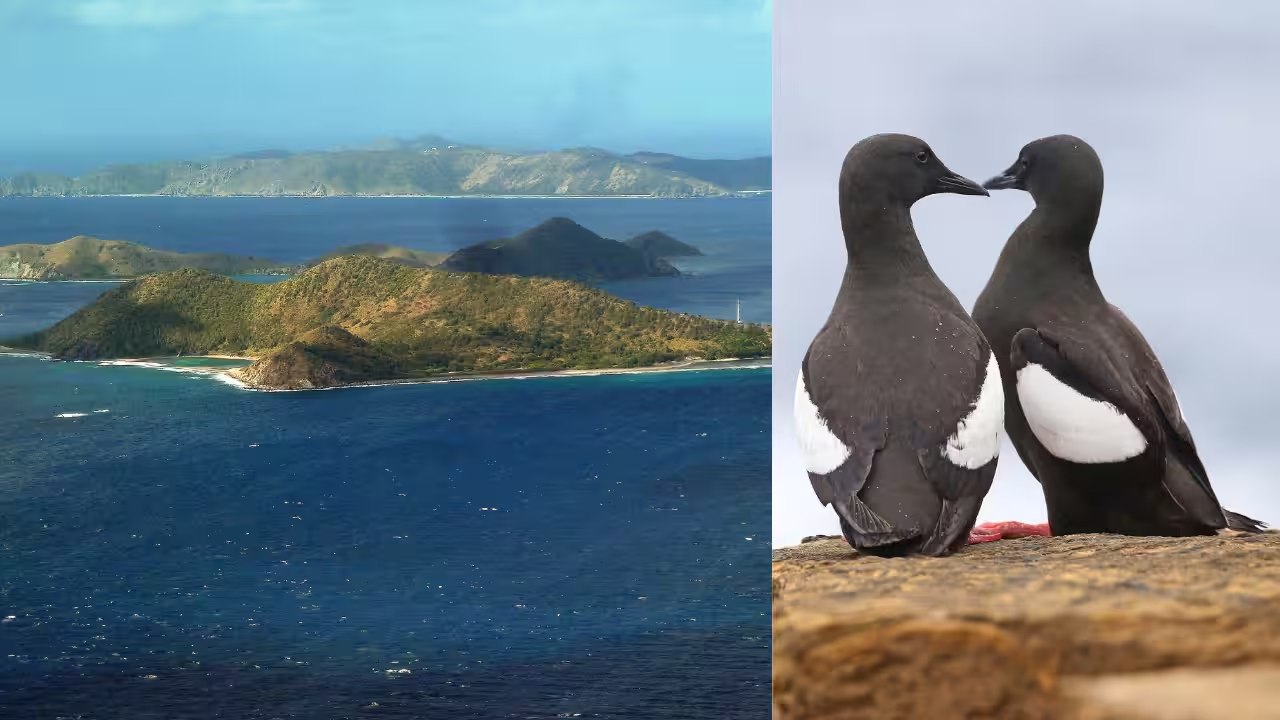
George Divoky has spent nearly 11 cumulative years on Cooper Island, which is a remote sandbar off northern Alaska, and studied a colony of Mandt’s black guillemots. He first encountered the birds there in 1972, when a Coast Guard icebreaker dropped him off for a seabird survey and he found 10 breeding pairs nesting beneath debris left behind by the U.S. Navy. By 1989, the colony had grown to 200 breeding pairs.The island is about 35 kilometres southeast of Point Barrow, now known as Utqiaġvik, and has little infrastructure. Divoky worked alone for a large part of his study, and lived in a tent during the summer and used the island's only cabin as his base. His annual visits turned a small seabird survey into one of the longest-running records of an Arctic bird colony.The colony began under discarded Navy debrisDivoky arrived in 1972, and noticed that the black guillemots were nesting in cavities beneath ammunition boxes, floorboards and wooden planks abandoned by the Navy after the Korean War. The accessible nesting sites gave him an unusual opportunity to inspect nearly every nest on the island. He began creating additional nesting cavities from the discarded material, and the number of nest sites increased, and the colony expanded. A technical record prepared by the US Environmental Protection Agency says the colony grew from 10 breeding pairs in 1972 to as many as 220 pairs in 1988, with 200 breeding pairs recorded in 1989.Divoky counted active nests, recorded breeding success and followed individual birds through banding when he began returning in 1975. Because the guillemots nested in human-made cavities, researchers could inspect the available sites and determine how many contained eggs. The arrangement also made it possible to collect unusually detailed information about individual birds, since adults and chicks were banded, while measurements of growth, feeding and reproduction were recorded during the breeding season.A solitary summer routine became long-term researchAudubon's account of his research describes 43 consecutive years of summer visits by 2017, usually with Divoky living alone in a tent.He visited each nest, checked the chicks, weighed them and recorded their measurements, and also tracked which adults returned and which birds paired with one another.The resulting dataset covered the colony through periods when its numbers rose and then declined. Friends of Cooper Island describes the research as a largely solitary effort that has continued for almost five decades, with Divoky using occasional grants and personal resources to maintain the work.The long record became useful for a reason Divoky could not have established at the beginning of the project: it captured the colony before and during a period of rapid Arctic warming.Sea ice moved farther from the birdsMandt’s black guillemots are closely associated with Arctic sea ice. The birds could feed their chicks Arctic cod, a fatty fish that gathers around the ice edge, when ice remained near Cooper Island during the breeding season. As the surrounding waters warmed and summer sea ice retreated, Arctic cod became less available near the island. The guillemots increasingly turned to fourhorn sculpin, a fish of similar size but with a bonier body that is harder for chicks to digest. Audubon reported that chicks fed sculpin grew more slowly and were more likely to starve before fledging.The EPA's documentation of the Cooper Island dataset similarly identifies changes in sea ice and associated prey as important factors in the colony's decline. It notes that the colony's breeding-pair numbers can be used as an indicator of changes in the physical environment and marine ecosystem.From 200 pairs to a shrinking colonyAudubon reported that 85 pairs bred on Cooper Island in 2017 and produced 45 fledglings from 120 hatchlings, a level of reproduction that was insufficient to maintain the population. Polar bears that once remained on sea ice began appearing more frequently on Cooper Island as the ice retreated, while horned puffins also preyed on guillemot chicks. In 2009, Audubon reported, the two predators together accounted for 80% of chick deaths recorded that year.Divoky installed predator-resistant plastic nest cases in 2011, and the new cases replaced the original wooden nest structures and gave the birds more protection from predators while preserving the researchers' access to the nests. A later Pacific Seabird Group research summary reported 100 breeding pairs in 2016, compared with the colony's 200-pair level in 1989. It also described the long-running study as an annual record dating to 1975.The cabin remains a base for the studyFriends of Cooper Island still publishes field updates and research from the project, including records from recent breeding seasons. The Cooper Island record now spans more than five decades, from a colony of 10 pairs discovered beneath abandoned military debris to a population that reached about 200 breeding pairs before declining as Arctic conditions changed. The same small island remains the place where Divoky's annual measurements have documented that shift.Catch the latest World News and Live updates. Download the TOI app.
Topics in this story
Gathered from external sources. Rights to this text belong to whoever originally published it.