Scientists analysed 640 charcoal fragments from a Spanish rock shelter and found Neanderthals may have organised different areas around ancient fireplaces
Charcoal remains from a Spanish rock shelter are offering clues to how Neanderthals organised their living spaces.
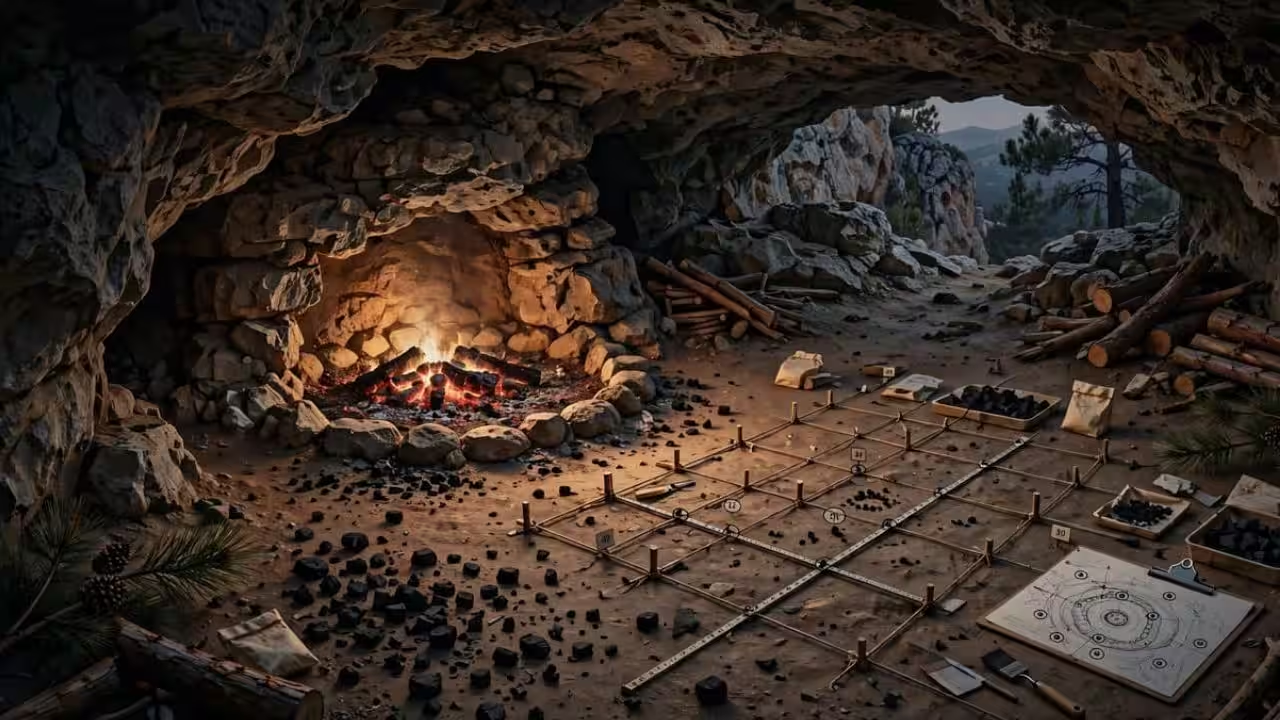
Charcoal remains from a Spanish rock shelter are offering clues to how Neanderthals organised their living spaces. Researchers examined 640 charcoal fragments from level Ra at Abric Romaní, a site near Capellades in Barcelona. Their analysis found a concentration of charcoal around hearths in the northern sector, while the southern sector contained smaller and more isolated patches.According to research published in the Journal of Paleolithic Archaeology titled “The Use of Space in Neanderthal Campsites: Evidence from Spatial and Taphonomic Analyses of Charcoal Remains from Level Ra of Abric Romaní (Barcelona, Spain)”, the charcoal fragments were concentrated around hearths in the northern section, while the southern section contained smaller, more scattered accumulations.Charcoal fragments reveal differences in Neanderthal activity around fireplacesThe researchers mapped charcoal fragments recovered during excavations from 2019 to 2022 and compared their locations with hearths and signs of natural alteration. The northern sector contained 495 fragments, many in broad concentrations overlapping with hearths near the shelter wall. The southern sector held 145 fragments in smaller, more isolated patches with less consistent overlap with hearths.The team used spatial analysis to examine whether these differences reflected human activity or later natural movement. After accounting for signs of water-related alteration, the distribution still suggested different uses of the two areas.Wood fragments offer clues about Neanderthal fuel collectionWood identification showed that mountain pine accounted for about 75% of the charcoal record. The researchers grouped several mountain pine species because their wood anatomy makes them difficult to distinguish. They noted that Neanderthals probably collected fuelwood from the area around the shelter, where pine was abundant.The charcoal’s condition was consistent with deadwood in varying states of decay, probably including many branches. Compression wood was common, a feature that can occur in branches as well as in trees growing under stress. The team said further analysis would be needed to distinguish branches from trunks more clearly.Water-related changes affected charcoal remains across the shelterThe charcoal had also been affected by natural processes after it was deposited. Researchers identified mineral concretions and other changes linked to water carrying dissolved minerals through the shelter. These alterations were proportionally more common among fragments from the southern sector, complicating the interpretation of its smaller charcoal patches, although the northern squares, near the wall, had higher absolute counts of altered fragments.The study found that water-related processes affected specific parts of the site, but overall post-depositional disturbance was low to moderate. The team considered human activity the main influence on the charcoal’s distribution, while acknowledging that natural processes could explain some patterns.What do the charcoal remains reveal about ancient activity at the shelterAccording to the researchers, the southern charcoal patches may indicate discrete hearth-cleaning events, during which burned remains were moved a short distance away from fireplaces.They also considered whether the deposits formed during separate visits, with later groups reusing existing hearths. The charcoal alone cannot distinguish between these possibilities. The team recommended studying the distribution of stone tools, bones, and sediments alongside the hearths to build a picture of activity at the shelter. Such evidence could help establish whether charcoal was displaced in one occupation or accumulated across several.You use AI every day. Now get your AI Quotient. Take the AIQ test.
Topics in this story
Gathered from external sources. Rights to this text belong to whoever originally published it.