Nearly 39,500 tonnes of illegally dumped household and construction waste cleared from Hoad’s Wood, Kent; £15.5 million clean-up required 2,500 lorry-loads to remove rubbish piled up to 15 feet high
Nearly 39,500 tonnes of illegally dumped household and construction waste have been removed from Hoad’s Wood, an ancient woodland in Kent, England,
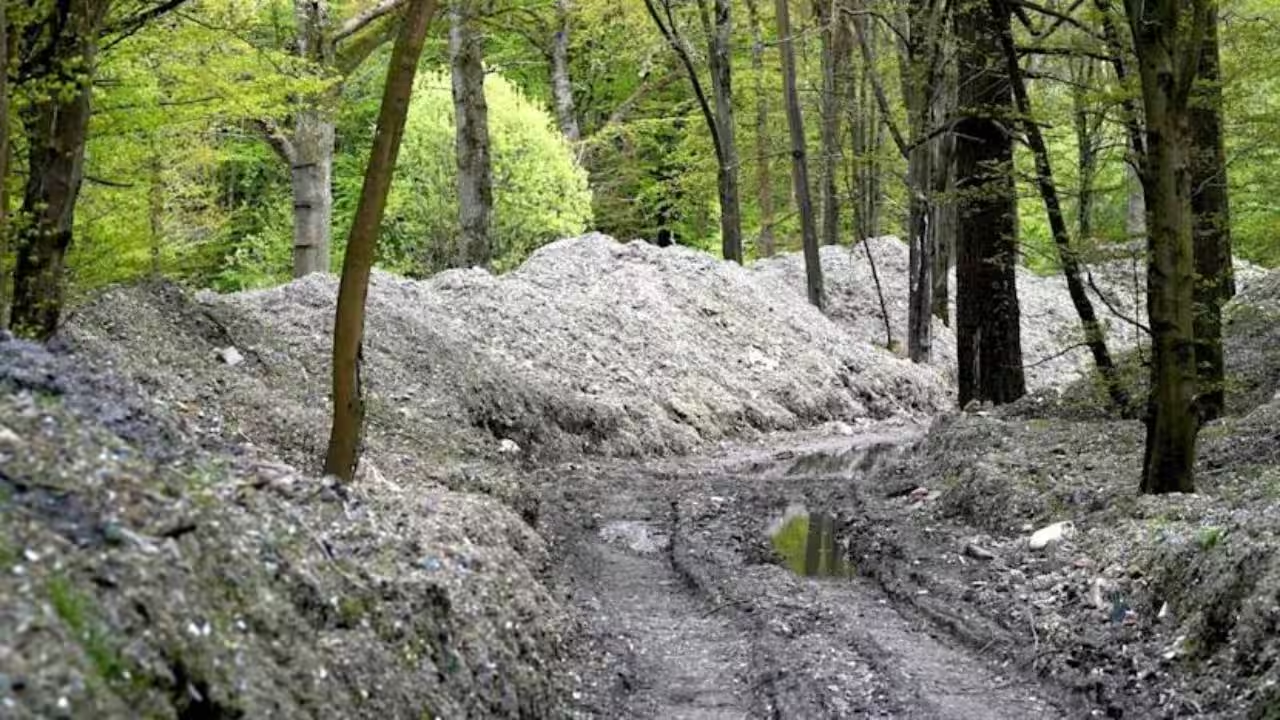
Nearly 39,500 tonnes of illegally dumped household and construction waste have been removed from Hoad’s Wood, an ancient woodland in Kent, England, following a 15-month clean-up operation expected to cost around £15.5 million. The Environment Agency announced the completion of the operation, describing the protected site as one of the most severely affected waste dumps its officials had encountered.The clean-up, which began in June 2025, required approximately 2,500 lorry-loads to transport the waste away from the woodland in Ashford. Acumen Waste Services Ltd and more than 50 specialist workers took part in the Environment Agency-led operation, which aimed to limit further environmental damage and help the site recover.Hoad’s Wood is designated a Site of Special Scientific Interest (SSSI) because of its ecological importance. However, organised criminals reportedly used the protected woodland to dump waste from 2023, with piles reaching heights of up to 15 feet before authorities intervened.‘Arguably the worst waste dump I’ve seen’Matthew Higginson, an Environment Agency area environmental manager who has worked in waste regulation for more than a decade, described the damage at Hoad’s Wood as appalling.Recalling the condition of the site when officials first arrived, Higginson said the woodland had turned grey in areas where waste had accumulated. The smell was “quite revolting”, trees had died and black liquid from decomposing rubbish was running into the surrounding environment.“The look of it was bad, but the smell and the complete scale of environmental impact was quite staggering,” he said.Higginson described Hoad’s Wood as “arguably the worst waste dump I’ve seen”, highlighting the scale of the challenge facing the teams tasked with restoring the protected woodland.The Environment Agency said the clean-up was particularly complex because the work had to be carried out in a sensitive and changing natural environment. Environmental regulators, local authorities, project managers, waste specialists, archaeologists and nature experts worked together to ensure the operation supported the site's long-term recovery.How the £15.5 million woodland restoration was carried outBeyond removing the waste, the teams undertook work designed to restore the woodland’s natural water systems and improve conditions for wildlife and vegetation.Natural ditches were cleared to allow water to flow through the area again. Interconnected ponds were also created in places where excavators had to remove buried pockets of rubbish, helping to encourage the return of a wet woodland environment.Foliage from trees was brought in to decompose naturally and condition the soil, providing additional support for plant growth.Higginson said it had initially been difficult to imagine what the site would look like after the work, given the extent of the damage. He described the final outcome as “really, really satisfying”.Local residents and campaign groups who visited Hoad’s Wood during the week of the announcement also praised the restoration work, according to the Environment Agency.Despite the completion of the main clearance operation, public access to the woodland will remain restricted to give the natural environment time and space to recover.Criminal investigation into organised waste dumpingThe Environment Agency launched a criminal investigation into the illegal dumping in 2023, working alongside the Joint Unit for Waste Crime and Kent Police to identify those suspected of involvement. Three men were arrested last year as part of the investigation.The arrests came amid growing concern about large-scale waste crime across the UK, where illegal dumping has caused significant environmental damage and prompted costly clean-up operations.The Environment Agency has identified several major waste sites for priority action because of their scale, the risks they pose to nearby communities, the environmental damage involved and links to persistent non-compliance and organised criminal activity.These include Hoad’s Wood, Bolton House in Wigan, Kidlington in Oxfordshire and Midland Road in Bradford.A separate £6 million operation to clear the Kidlington site near the River Cherwell was completed in August.UK government steps up crackdown on waste crimeThe clean-up at Hoad’s Wood comes as the government intensifies efforts to tackle illegal waste dumping, which authorities say has increased across the country in recent years.Ministers have announced a series of measures aimed at strengthening enforcement. These include greater use of drones to identify illegal activity, a larger role for mayors and police, higher fines for illegal dumping and expanded powers for regulators to confiscate criminals’ assets to help cover the cost of their actions.A new Waste Crime Crackdown Group, chaired by Environment Secretary Dame Angela Eagle, is also intended to bring regulators and law enforcement agencies together to dismantle organised waste crime operations.You use AI every day. Now get your AI Quotient. Take the AIQ test.
Topics in this story
Gathered from external sources. Rights to this text belong to whoever originally published it.