In 2014, a retired Scottish businessman thought his detector had found a spoon, then uncovered 100-plus Viking treasures; the hoard was acquired for nearly £2 million
UK News: A retired Scottish businessman discovered more than 100 Viking treasures in a field in 2014, leading to a valuation of nearly £2 million for the Galloway Hoard, which offers insights into Viking trade and culture.
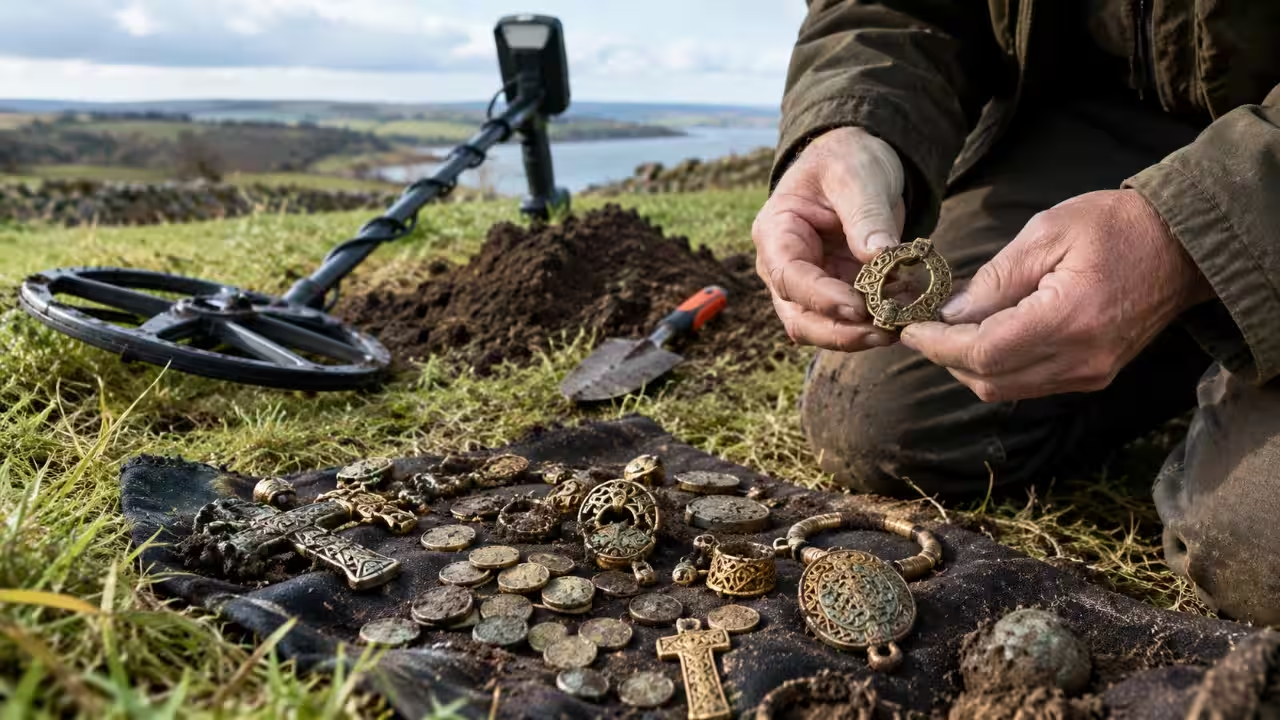
A routine afternoon of metal detecting in a Scottish field turned into a major archaeological discovery when a retired businessman uncovered a buried collection of Viking-age treasures. What first looked like an old spoon turned out to be part of a hoard of gold, silver, jewellery, religious objects and rare textiles buried for more than a millennium. The discovery would eventually lead to a reward of almost £2 million for the detectorist.According to National Museums Scotland, Derek McLennan discovered the Galloway Hoard in September 2014 at Balmaghie in Kirkcudbrightshire, Dumfries and Galloway, after receiving permission to metal-detect on the land. The hoard contained more than 100 objects and was buried around AD 900. It included more than 5kg of silver, gold and other materials, with objects originating from Ireland, Anglo-Saxon kingdoms and areas as far away as Asia. In 2017, the hoard was allocated to National Museums Scotland after the museum raised £1.98 million to acquire it for the nation.From a suspected spoon to a buried treasureWhen McLennan was scanning with the metal detector in the ploughed field, he got some response from the soil. When he recovered the first item, it seemed ordinary at first, but after turning it over he realised it could be linked to the Viking era. At first sight, he thought it was a silver spoon.According to The Guardian, it soon became apparent that the find was much bigger than just the one item. More than 100 items were unearthed at the site and included silver ingots and arm-rings, brooches, a gold bird-shaped pin, a gold ingot, and a highly decorated silver-gilt vessel. The silver Christian cross with its distinctive enamelled decoration shows that the find was more complex than a simple Viking treasure.The way the objects were buried added important context to the discovery. Researchers found separate bundles and caches, with objects wrapped in materials including leather and textiles. Some of these organic materials survived remarkably well, providing archaeologists with evidence about how the objects were prepared before burial. Research published in the Journal of Archaeological Science examined traces of textiles preserved in corrosion products on metal objects from the hoard. The work demonstrated how even tiny remnants of fabric can reveal information about how artefacts were wrapped and deposited.A collection with unexpected originsOne of the most striking artefacts is a rock-crystal flask set in elaborate gold. It has been established that the rock crystal was actually cut in an earlier period and was probably made in the Roman era, before it was used in the making of the later artefact. The flask had been placed in a leather bag lined with silk.An additional unique find is the presence of silk. The National Museums Scotland also states that the hoard included the earliest examples of Scottish silk along with wool and linen. These finds matter because organic artefacts rarely survive for long in archaeological hoards. This evidence cannot be gained from studying only gold and silver. The hoard also includes unusual items that complicate ideas about Viking wealth. Alongside precious metals, glass beads, crystal stones, peculiar pendants, and even soil balls with traces of gold have been found. A recent interpretation has added another clue. A runic inscription on one of the silver arm-rings has been interpreted as meaning “This is the community's property”, although researchers stress that the reading contains uncertainties. Researchers say the inscription may indicate that at least part of the hoard belonged to a community rather than a single individual.Nearly £2 million for the discoveryAccording to the National Heritage Memorial Fund, the Galloway Hoard was valued at £1.98 million in 2017, with the Queen’s and Lord Treasurer’s Remembrancer allocating it to National Museums Scotland on the condition that the museum raised the required amount. The acquisition was funded by the National Heritage Memorial Fund, the Art Fund, the Scottish Government, charitable trusts and members of the public. McLennan's discovery has since become part of a much larger research story. The objects are being examined using conservation, scientific analysis, X-rays, CT scanning and other techniques to reconstruct their individual histories and understand why they were brought together.The story has since travelled far beyond Scotland. In 2025, the Galloway Hoard was transported to Adelaide for its first overseas exhibition, forming a link with Australia, as the metal detector that McLennan was using was produced by Minelab, a company from Adelaide. What began with a detector reading and a spoon-like object turned into a treasure that had lain untouched for about 1,100 years. It offers a snapshot of movement, trade and beliefs in the Viking era.Catch the latest World News and Live updates. Download the TOI app.
Topics in this story
Gathered from external sources. Rights to this text belong to whoever originally published it.