Crews pulled hundreds of young silver carp from an Illinois River pool just 80 miles from Lake Michigan; their size points to possible spawning farther north
Rest of World News: Young silver carp have been discovered in the Illinois River, just 80 miles from Lake Michigan, indicating potential spawning upstream and raising concerns over the invasive species' spread towards the Great Lakes.
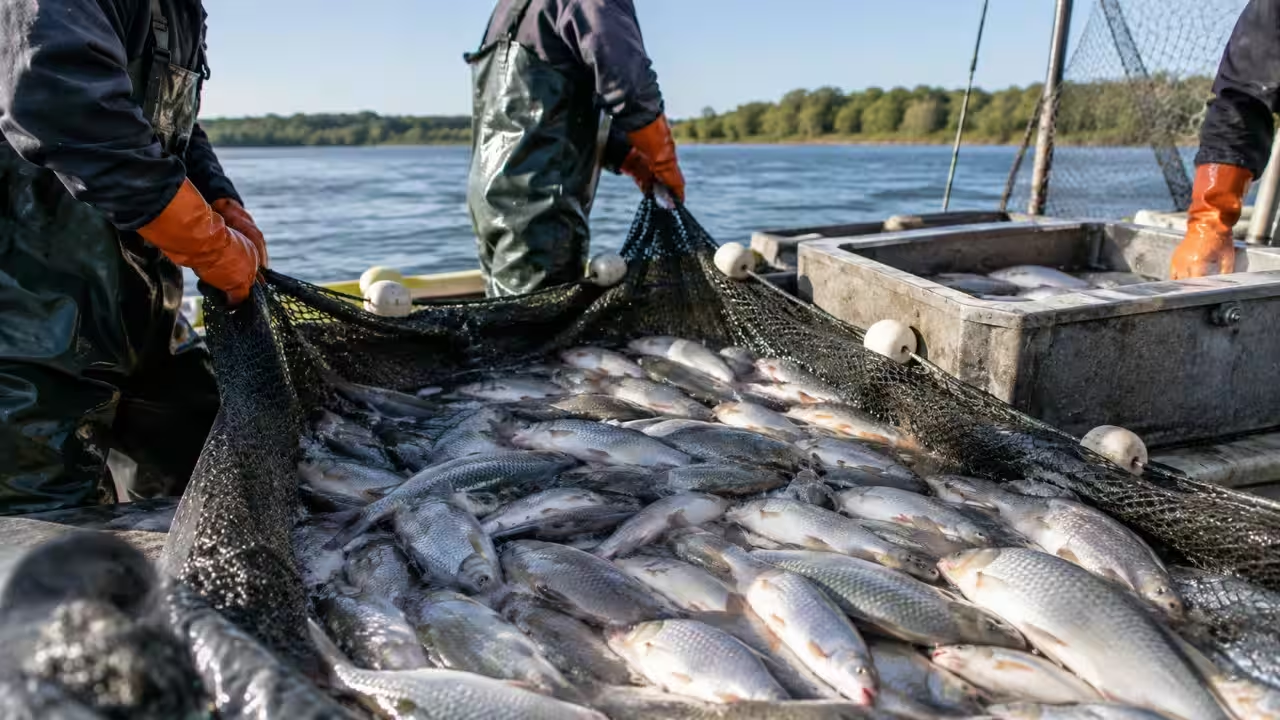
Hundreds of young invasive silver carp have been pulled from the Illinois River at a location where their presence carries a different significance from the discovery of another adult fish. The fish were only a few inches long, suggesting that reproduction may have occurred farther upstream than previously documented and bringing the invasive species closer to Lake Michigan. According to WTTW Chicago, sampling crews with the Illinois Department of Natural Resources removed hundreds of young silver carp, measuring about 4 to 6 inches long, from the Marseilles Pool of the Illinois River. The site is only about 80 miles from Lake Michigan. While adult invasive carp had previously been detected this far north, the discovery of juveniles is significant because their presence indicates that spawning has occurred, potentially farther upstream.Why the young fish matterAdult silver carp have been detected in the upper Illinois River before, so their presence alone does not necessarily indicate that the fish have established a breeding population in a new stretch of river. Young fish are different because they provide evidence that reproduction and survival are occurring somewhere in the surrounding river system.According to the US Geological Survey (USGS), silver carp spawn in turbulent rivers, where their eggs and larvae drift downstream with the current before the young fish move into slower or still-water areas suitable for development. As a result, finding juveniles does not necessarily identify where spawning took place. The fish could have originated farther upstream, with their early life stages carried downstream before reaching nursery habitat. That is why scientists are now trying to work backwards from the young fish. IDNR said crews are increasing monitoring in the upper river and its tributaries, while additional electrofishing is being conducted in backwater habitats where juvenile carp can gather. Researchers also plan to examine the microchemistry of captured fish, which may provide clues about where they developed.Officials said the discovery followed flooding and warm water conditions that were favourable for carp spawning. But the finding alone does not establish that a new reproducing population has already become established in the Marseilles Pool. Fish biologists generally look for multiple life stages, including both adults and young fish, when assessing whether a population has become established.A fish built for moving through riversSilver carp are particularly difficult to contain because their life cycle is well suited to large river systems. The US Geological Survey also notes that the fish require flowing water to reproduce successfully, and that their eggs and larvae can drift downstream before the young fish move into quieter areas to develop.The Illinois River has already seen an extensive invasion farther south. According to the Illinois Department of Natural Resources, multiple life stages of invasive carp have been documented along much of the river, while adult carp have also been detected farther north in the Starved Rock, Marseilles and Dresden Island pools. The discovery of juveniles in the Marseilles Pool is significant because it shows young fish farther upstream than previously documented. The Illinois River is also connected to the Chicago Area Waterway System, providing a potential pathway to Lake Michigan. If silver carp reach the Great Lakes, they could compete with native fish for plankton, an important part of the aquatic food chain. This is because silver carp are filter-feeders and depend on plankton for food.The barrier and the race to keep carp outThe discovery has increased urgency around efforts to prevent invasive carp from moving farther north. At the centre of those efforts is the Brandon Road Interbasin Project near Joliet, Illinois, a planned system of technologies designed to stop or deter invasive species while allowing commercial navigation to continue.The $1.15 billion project uses several layers of protection rather than relying on a single barrier. The US Army Corps of Engineers describes Brandon Road Lock and Dam near Joliet, Illinois, as a critical pinch point where layered technologies can help prevent invasive carp and other aquatic nuisance species from moving upstream towards the Great Lakes. The project moved into its construction phase after Illinois and Michigan signed a partnership agreement with the USACE in July 2024, allowing $274 million in federal funding and $114 million in state funding to support the first of three construction increments.Construction was halted by the US Army Corps of Engineers in late July 2026, although officials did not publicly provide an explanation for the stoppage. The pause lasted for more than a month and drew growing criticism as invasive carp were detected farther north in the Illinois River. On September 3, the administration lifted the stop-work order, allowing construction of the Brandon Road project to resume.Researchers’ first step is to determine how widespread the young fish are and where they came from. This means teams are sampling not only the Marseilles Pool but also nearby streams and other river habitats. There is still a long way to go from the Marseilles Pool to the lake, along with barriers designed to slow invasive species. Still, the new information changes the direction of the research because for more than ten years researchers had detected adult carp in the upper Illinois River without finding juvenile fish in such northern locations.Catch the latest World News and Live updates. Download the TOI app.
Topics in this story
Gathered from external sources. Rights to this text belong to whoever originally published it.