The missing bow of a World War II cruiser was found 675 metres underwater, nearly 83 years after a torpedo tore it off
The missing bow of USS New Orleans, a US Navy heavy cruiser damaged during the Second World War, has been discovered nearly 83 years after a Japanese
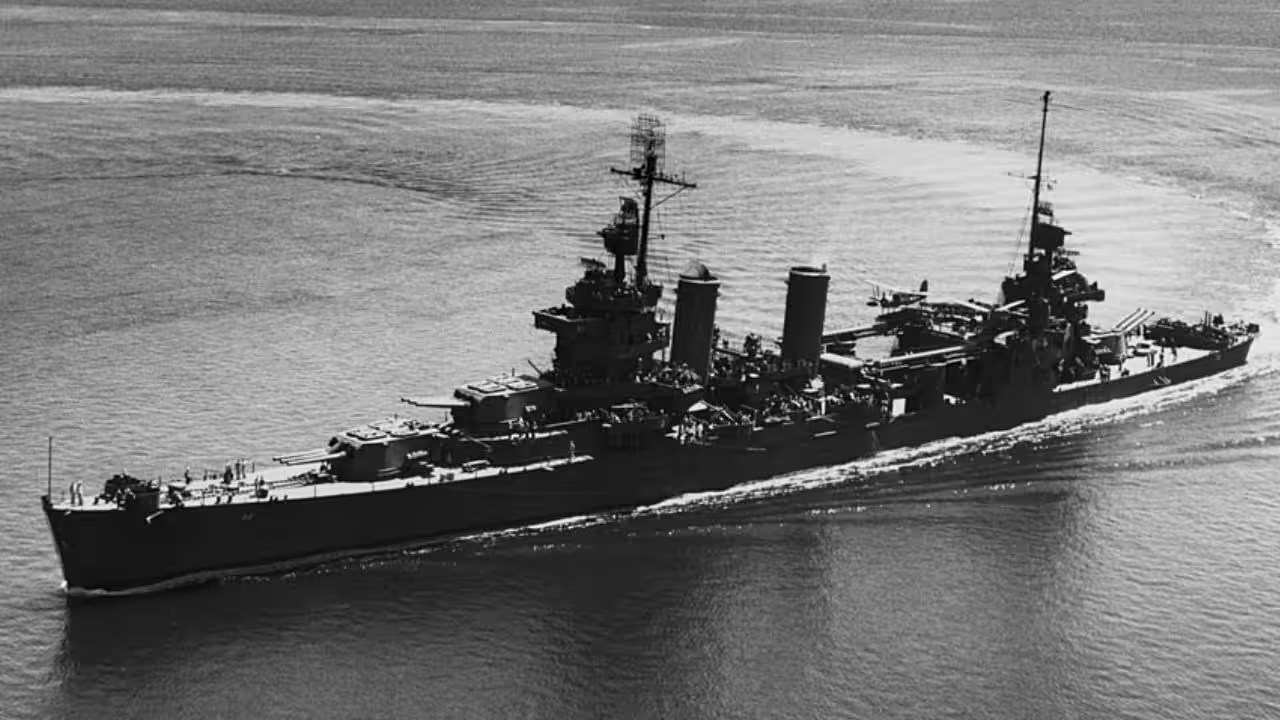
The missing bow of USS New Orleans, a US Navy heavy cruiser damaged during the Second World War, has been discovered nearly 83 years after a Japanese torpedo tore it away. The wreckage was located at a depth of approximately 675 metres in Iron Bottom Sound near Guadalcanal in the Solomon Islands on 7 July 2025.According to the US Naval History and Heritage Command, scientists and explorers aboard Exploration Vessel Nautilus used a remotely operated vehicle to examine the site after an uncrewed surface vessel identified a target during seafloor mapping. The discovery revealed the long-lost section of a warship that survived catastrophic damage during the Battle of Tassafaronga in November 1942.How scientists discovered the missing bow of USS New OrleansThe discovery was made during the Maritime Archaeology of Guadalcanal expedition, led by the Ocean Exploration Trust (OET). The team combined seafloor mapping with deepwater imaging to locate and examine the missing section of USS New Orleans.The University of New Hampshire’s uncrewed surface vessel DriX first identified a target during mapping operations. Explorers then deployed a remotely operated vehicle (ROV) to investigate the location. During a four-hour dive, archaeologists aboard the vessel and remote experts examined the wreckage in real time.They studied structural details, paintwork, and the arrangement of the anchors to establish the identity of the remains. Experts from former combatant nations also contributed to the investigation. The combined evidence confirmed that the wreckage belonged to USS New Orleans.How a Japanese torpedo tore off the cruiser's bow in 1942USS New Orleans suffered catastrophic damage on 30 November 1942 during the Battle of Tassafaronga. A Japanese Long Lance torpedo struck the ship forward of turret No. 2, detonating the forward magazines and tearing away nearly one-third of the vessel, including its bow.More than 180 sailors were killed in the blast. Despite the extensive destruction, the surviving crew carried out extraordinary damage-control efforts and ultimately saved the ship. Three sailors were posthumously awarded the Navy Cross for their actions.Despite the extensive damage, USS New Orleans managed to return to the United States under its own power, travelling stern first, for permanent repairs. The cruiser later returned to service and took part in several more campaigns before the war ended. Its survival made it one of the most severely damaged US cruisers of the Second World War to survive.Researchers use deep-sea technology to identify the lost cruiser sectionThe discovery provides an opportunity to remember the sacrifice of the crew who kept USS New Orleans from sinking after the torpedo strike. Samuel J. Cox, a retired US Navy rear admiral and director of the Naval History and Heritage Command, described the ship's survival as extraordinary given the extent of its damage.The discovery concerns a Second World War heavy cruiser, and its historical significance lies in documenting the vessel's wartime damage and survival. The expedition also demonstrates how researchers can combine mapping technology, remotely operated vehicles and expert analysis to investigate deepwater wrecks that have remained undiscovered for decades.Only 30 sunken warships have been found in Iron Bottom SoundIron Bottom Sound, near Guadalcanal in the Solomon Islands, was the site of five major naval engagements between August and December 1942. Allied and Japanese forces lost more than 20,000 personnel, along with 111 naval vessels and 1,450 aircraft, during the fighting.Only 30 of the military ships lost in the deep waters of Iron Bottom Sound had been located at the time of the announcement, leaving many others undiscovered. The search for the missing bow of USS New Orleans was part of a wider expedition led by Ocean Exploration Trust (OET) president Dr Robert Ballard.The mission brought together several partners, including NOAA Ocean Exploration, the US Naval History and Heritage Command, the Government of the Solomon Islands and the University of New Hampshire's Center for Coastal and Ocean Mapping/Joint Hydrographic Center. Representatives from Japan, Australia, and New Zealand also supported the expedition.You use AI every day. Now get your AI Quotient. Take the AIQ test.
Topics in this story
Gathered from external sources. Rights to this text belong to whoever originally published it.