France unrest: Why Macron govt's proposed law for action against rioters is facing criticism
A proposed French law that would require rioters to pay up to €10,000 ($11,150) for the damage they cause has drawn criticism from human rights groups and
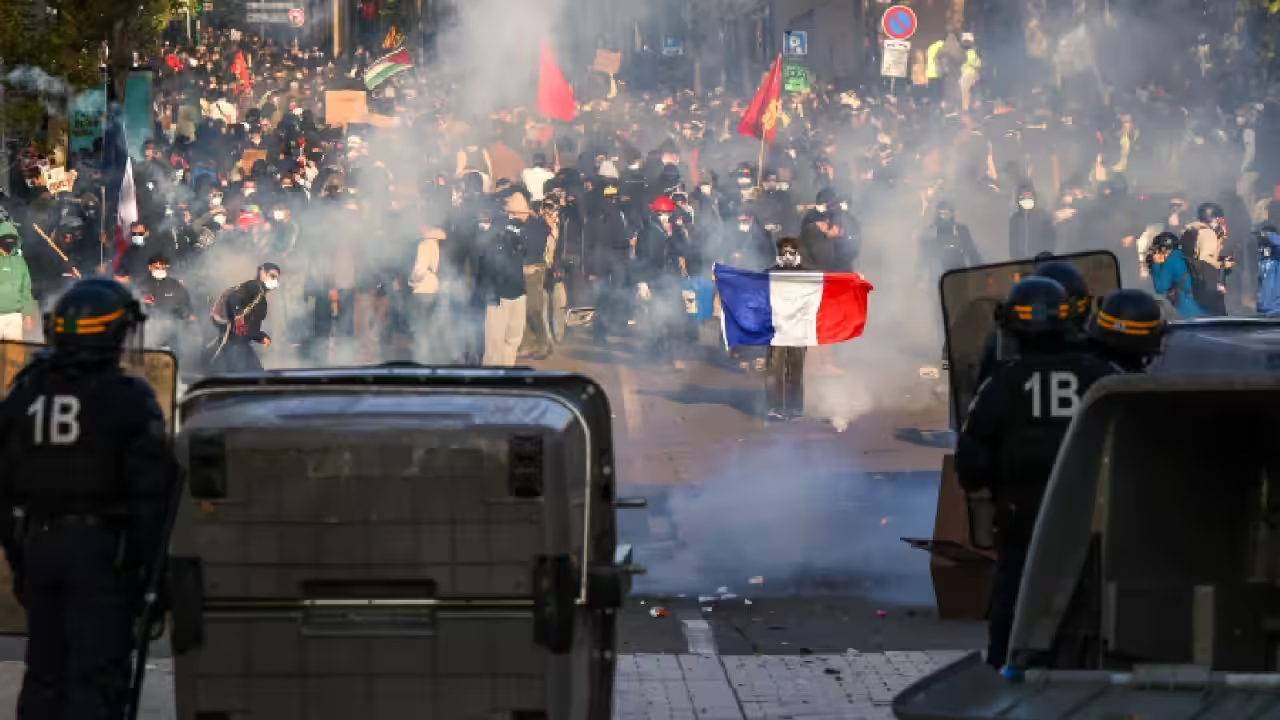
A proposed French law that would require rioters to pay up to €10,000 ($11,150) for the damage they cause has drawn criticism from human rights groups and some lawyers, who argue that it threatens the fundamental democratic right to protest.President Emmanuel Macron’s government, facing pressure to contain France’s worst unrest in years, says the proposed law is necessary to compensate victims of vandalism that often accompanies protests, including the looting and rioting witnessed on October 17.Critics, however, argue that the draft legislation is so broadly worded that peaceful demonstrators who happen to be near incidents of violence could also be held legally liable and face prosecution.“Violence and property damage can occur on the fringes of a protest without the vast majority of peaceful, legitimate demonstrators having any involvement,” said Hanna Bouchareb, a Paris-based lawyer who represented some of those accused of rioting in fast-track trials following the October 17 unrest, Reuters reported.“It’s very problematic because it undermines the right to protest,” Bouchareb added.Interior minister Laurent Nunez, who offered to resign last week after security forces struggled to contain the unrest but was asked by Macron to remain in his post, rejected claims that the proposed law "undermines" the principle of individual accountability.“The change introduced by this draft law is the establishment of joint responsibility, not collective responsibility,” Nunez told broadcaster TF1.However, France’s Human Rights League (LDH) and a group of trade unionists disputed that distinction. In a column published in Le Monde over the weekend, they called for the proposed legislation to be scrapped.What does the draft bill sayThe draft legislation stipulates that anyone who knowingly belongs to a group would be held jointly liable for any damage caused by any member of that group.It also empowers the state to seize welfare benefits from those convicted under the law, or from their parents if the offenders are minors, to help cover the costs of the damage.French businesses and retailers say they have suffered losses worth millions of euros due to looting and vandalism, as well as being forced to close their shops and board up windows during protests.Police tactics draw renewed scrutinyPolice faced accusations of excessive force in 2020 during anti-government “yellow vest” demonstrations. At the time, a proposed law restricting the circulation of images of police officers under certain circumstances also drew criticism before being watered down.In recent weeks, protesters have again accused police of using "heavy-handed" tactics against student demonstrators, while lawyers, including Bouchareb, have raised concerns about the fast-tracked convictions of some people accused of rioting.Supporters of the proposed legislation point to surveys indicating broad public backing for the measure. Marine Le Pen’s National Rally (RN), a far-right party and a leading contender in next year’s presidential election, has argued for even tougher measures.You use AI every day. Now get your AI Quotient. Take the AIQ test.
Topics in this story
Gathered from external sources. Rights to this text belong to whoever originally published it.