Netanyahu’s fortunes improve but without clear path to outright victory
JERUSALEM — Israeli Prime Minister Benjamin Netanyahu’s fortunes changed Wednesday as vote counting in Israel wound down, with his Likud party and coalition partners edging out the leading competitor, retired Gen. Gadi Eisenkot. Netanyahu’s Likud party was projected to hold 26 seats in Israel’s parliament, the Knesset, with more than 80 percent of the votes…
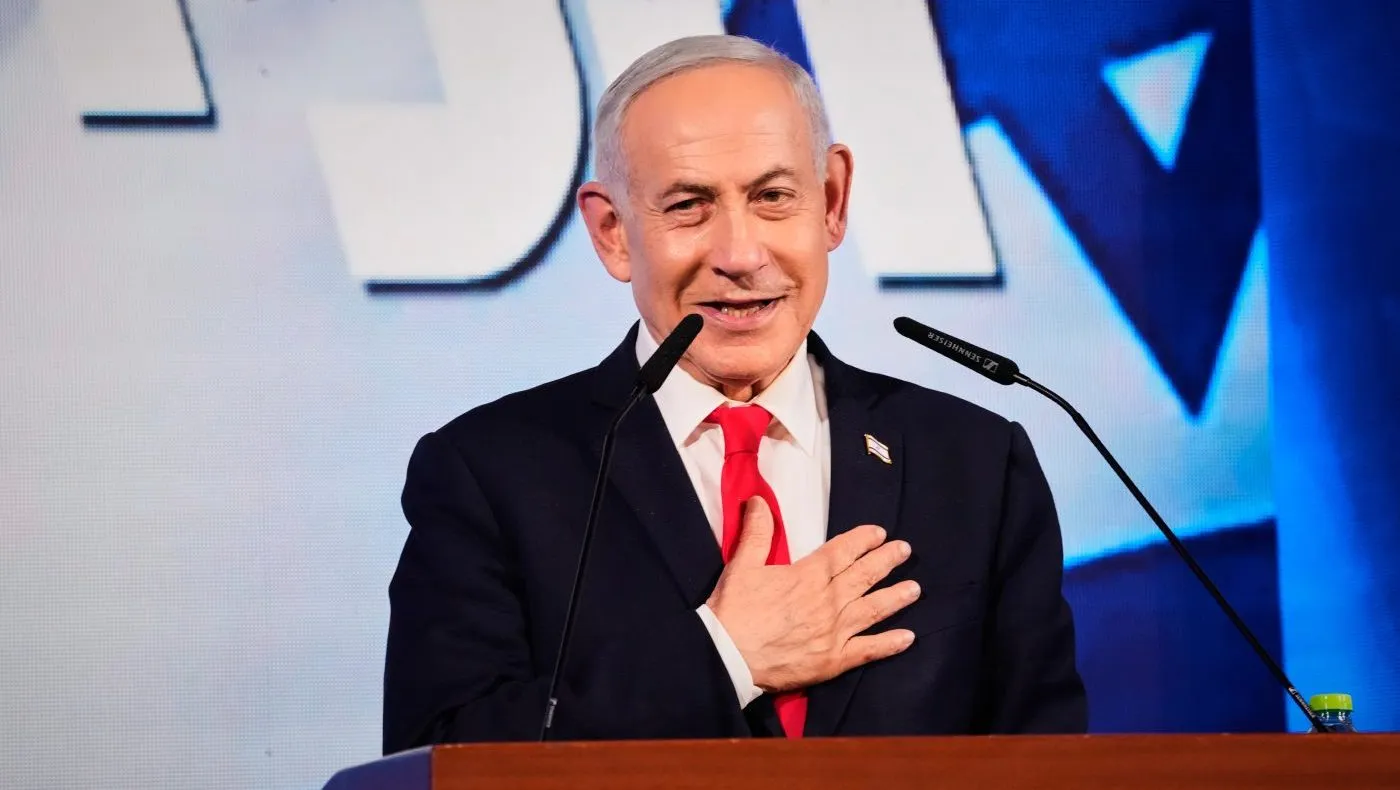
JERUSALEM — Israeli Prime Minister Benjamin Netanyahu’s fortunes changed Wednesday as vote counting in Israel wound down, with his Likud party and coalition partners edging out the leading competitor, retired Gen. Gadi Eisenkot.
Netanyahu’s Likud party was projected to hold 26 seats in Israel’s parliament, the Knesset, with more than 80 percent of the votes counted by Wednesday afternoon. That was an increase from the tallies at the initial close of polls. Eisenkot’s Yashar party is projected at 21 seats, so far.
Being at the head of the largest party in the Knesset does have political power, but Netanyahu does not have a pathway to the 61 seats needed for a governing coalition without peeling off one of Eisenkot’s likely partners. Some analysts are raising the possibility of a unity government between Netanyahu and Eisenkot.
“What will be the other way? A second election,” said Udi Tenne, strategic adviser, political analyst and campaign strategist who has worked on Israeli campaigns across the ideological spectrum.
Israeli President Isaac Herzog — who is tasked with consulting the party heads, choosing who he thinks can form a government or pushing for unity — said Wednesday that another round of elections must be avoided and urged lawmakers meeting with him to have an “open mind.”
“We must do everything we can, certainly after yesterday, to avoid another round of elections,” he said during a gathering at the president’s house in Jerusalem, The Times of Israel reported .
Herzog said he expects to receive the official election results next week, and then will begin consultations.
Tenne said Netanyahu would likely achieve a more decisive victory in a second election, building on the momentum that his Likud party came out with the largest number of votes. Voters who cast their ballots for smaller, right-wing, conservative parties that failed to cross the electoral threshold would likely turn their vote to Netanyahu.
“It’s very important to understand, the biggest party is the Likud party,” Tenne said.
But Israeli Jews might prefer a repeat election, according to polling by the Israel Democracy Institute (IDI). More than a third of respondents preferred redoing the polls in the event of a stalemate. The second most preferred option was a unity government, rotating the prime minister.
A majority of Israelis also supported appointing as prime minister the head of the party with the most votes, 61 percent, according to the IDI poll, if it means increasing the stability of the political system in Israel.
But Eisenkot is not signaling, yet, that he’s looking to partner with Netanyahu.
He and his supporters have seized on the initial election results as the public rejecting Netanyahu’s leadership. Netanyahu’s bloc has achieved about 54 seats, less than his current governing coalition of 68.
“The preliminary poll results point to complete distrust in Netanyahu and the government of October 7, of the Zionist majority and of the majority of Israeli citizens,” Eisenkot posted Tuesday evening on social platform X, as his bloc showed a slight lead over Netanyahu.
For Israeli Jews and Arabs, a minority government is a poor option. A minority government rules when a coalition has less than 61 seats and counts on a bloc of lawmakers to reach a majority in favor of legislation proposals, or at least abstain and not kill a bill vote.
There’s a variety of coalition formulations Netanyahu and Eisenkot can, separately, attempt to secure the 61-seat majority.
The strong showing of Israel’s Arab political parties, Ra’am and the Joint List, could lead Eisenkot to reverse his pledge not to partner with the Arab coalition.
The two parties together are projected to have 19 seats.
It’s an impressive display of the increased voter participation among Israel’s Arab population, which represents 21 percent of the country. It was largely driven by revulsion against Itamar Ben-Gvir, the national security minister in Netanyahu’s current government.
“I think that Ben-Gvir will go out of the government this time; he’s a racist; he wants to kill as many Arabs as possible,” said a young Muslim woman from the majority Arab village of Abu Ghosh after voting Tuesday. She declined to share her name.
“Bibi also, he killed people in Gaza, and here,” she said, using a nickname for Netanyahu. “Outside of that I don’t mind to vote for anyone else, Jewish, Muslim — what’s important is that it’s not Ben-Gvir and not Netanyahu.”
Netanyahu on Wednesday accused Arab parties of stealing votes in a post on X .
“The elections in the State of Israel were stolen by Arab parties that support terrorism and the elimination of the Jewish state through serious criminal offenses of bribery, threats, violence, forgeries, and the use of prohibited software to mobilize voters,” he wrote.
The Washington Post reported that Netanyahu’s camp is lobbying President Trump to advocate for a unity government and has leveraged excluding Ben-Gvir from that ruling coalition.
It’s in Trump’s interest to see the quick formation of a stable Israeli government and begin addressing, in earnest, his goals to remake the Middle East: Eliminate the threat from Iran; move forward peace processes in Gaza, and between Israel, Lebanon and Syria; and expand the Abraham Accords, likely with Saudi Arabia.
Ben-Gvir is viewed as an obstacle to realizing those goals. An ultra-nationalist and Jewish extremist, he wants to force out Palestinians from the West Bank and the Gaza Strip and establish Israeli sovereignty over the territory.
As national security minister, he’s refused to address rising violence by extremist Israeli settlers in the West Bank. That violence is condemned by Democrats, U.S. Ambassador to Israel Mike Huckabee and Israel’s Muslim and Arab neighbors , including members of the Abraham Accords and from countries Trump hopes to join that normalization agreement with Israel.
Excluding Ben-Gvir from a new government is viewed as key for action to take place against this group.
“If Ben-Gvir is not there, I think you’ll see a more forceful hand against them,” said Herb Keinon, senior contributing editor and analyst at The Jerusalem Post.
Trump is maintaining public support for Netanyahu. He endorsed the prime minister ahead of the election and on Wednesday shared a quote on his social media site crediting himself with preventing Netanyahu’s defeat. The message was clear, even if whom Trump was quoting was not.
Trump “only wants what is good for the Middle East, Israel and the United States of America!” the quote read.
Kelly is in Israel participating in a media trip organized by the Israel Press Club, a nonpartisan, nongovernmental organization. The Israel Press Club facilitated some interviews and paid for flights, hotels and meals.
Topics in this story
Gathered from external sources. Rights to this text belong to whoever originally published it.