During WWII, Lance Cpl. Frank Bramhall filmed a message for home; about 70 years later, his daughter saw him on screen for the first time and began asking why he had been awarded a medal
Explore the heartwarming story of Lance Corporal Frank Bramhall's message to his daughter during WWII, uncovered 70 years later, revealing his bravery and the emotional toll of combat.
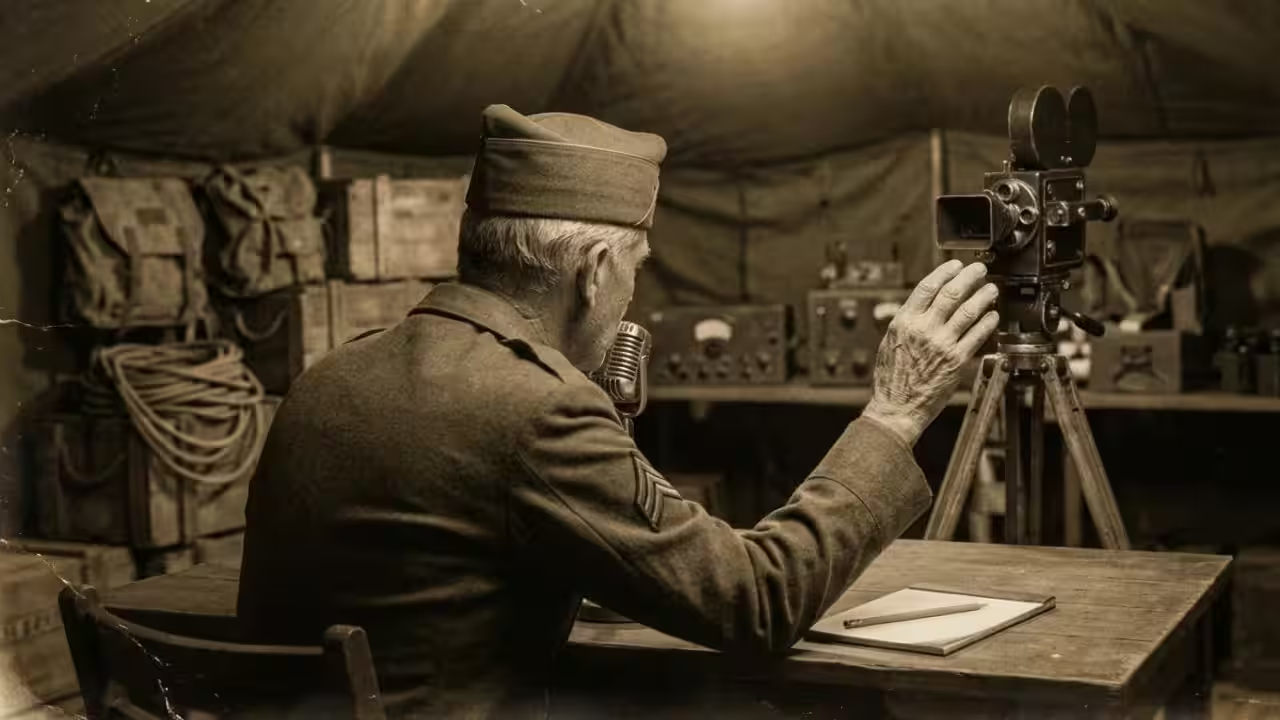
For soldiers, messages from loved ones hold a special place in their hearts. Likewise, messages servicemen sent home were deeply valued by their families. In 2016, Oxford Scientific Films joined hands with the Imperial War Museum and Manchester’s North West Film Archive to create a 1 x 60’ special titledMessages Home: Lost Films of the British Army for Channel 4. The film celebrated Britain’s 14th Army by showing the unique messages they filmed for their loved ones.The documentary featured heartwarming video messages from World War II servicemen fighting Japanese forces in Burma and India. Under those conditions, home leave wasn’t an option. Conditions were so severe that letters sometimes never reached their families in Britain. Some men left behind their pregnant wives and young children who would hardly recognize them by the time they returned. Some bid a bittersweet farewell to their companions, not knowing when they would see each other again.Camera crews were sent to film the soldiersWhile fighting for their country, the British soldiers also faced dangers hidden in the jungle. The worst danger was disease. According to Channel 4 press materials for the documentary, 40% of the 14th Army suffered from malaria. Across every thousand troops, 700 contracted one illness or another. Given the low morale, the Ministry of Defence came up with a scheme to give a much-needed boost to the soldiers in the Far East and their families back home. For the cinematic scheme, called Calling Blighty, theysent multiple Army Film and Photographic Unit [AFPU] crews to record the troops in Asia.A total of 391 segments, each running from 10 to 15 minutes, were recorded. Nearly 8,000 men and a few women sent out personal messages to their nearest and dearest. Friends and families in Britain were invited to special cinema screenings to see their loved ones on the big screen. Unfortunately, several of the men featured had died before the films reached home.Lance Corporal Frank Bramhall was awarded a medalThe documentary included messages from a father speaking to his daughter for the first time, a lovelorn gunner yearning for his sweetheart back home, and others. One of those stories involved a soldier named Lance Corporal Frank Bramhall, who sent a message to his daughter, Michele Simpson, and she saw it 70 years later. Michele and her children, Graham and Joanne, were astonished to see him on screen for the first time. At that time, Michele said her father struggled with what would now be described as PTSD (Post-Traumatic Stress Disorder).Michele was determined to uncover the details of her father’s war record and the recognition he received for his service. Frank was awarded the Military Medal (MM) for gallantry and devotion to his duty while serving with the 2nd Battalion, The East Lancashire Regiment in Burma. To find out more, Michele visited her father’s old regiment and heard that he had shown great courage in action. Michele further mentioned that she understood why his combat experiences had so deeply upset her father. She said she believed his religion was a major reason. She recalled that, as a Roman Catholic, he worried about whether he could go to heaven after killing people during the war. After the war, Frank resumed his career as a grocer, while Michele and her family lived on their family farm in Rochdale.You use AI every day. Now get your AI Quotient. Take the AIQ test.
Topics in this story
Gathered from external sources. Rights to this text belong to whoever originally published it.