In 2011, North Carolina hiker Jennifer Pharr Davis started the Appalachian Trail in Maine; 46 days later, she reached Georgia after hiking roughly 2,180 miles faster than anyone before
Rest of World News: In 2011, Jennifer Pharr Davis completed the Appalachian Trail in 46 days, setting a record after hiking roughly 2,180 miles from Maine to Georgia.
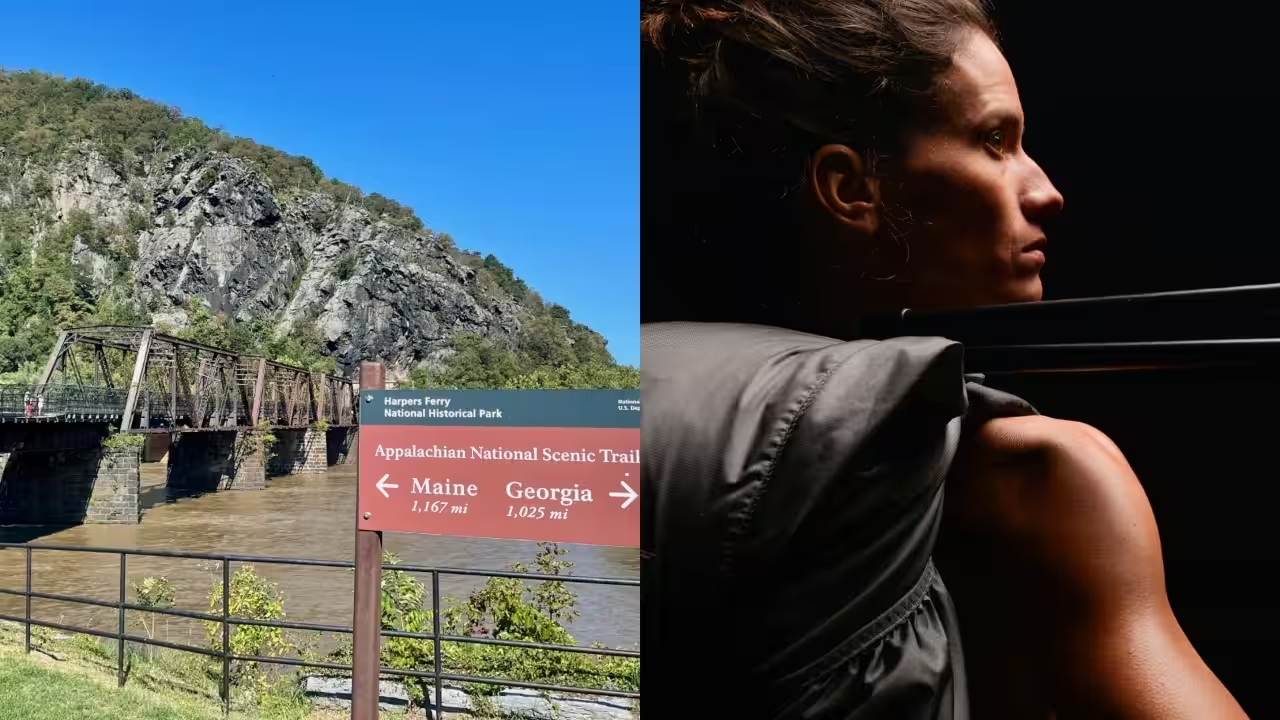
For over four decades, the Appalachian Trail’s record for quickest hiking was held solely by males, usually ultra runners who trekked thirty to fifty miles a day in closely controlled eleven to thirteen-hour periods. That pattern had held so strongly that when a person from outside the running community set out to disrupt it in the summer of 2011, few onlookers gave the attempt any credence. The result shattered decades of assumptions about who could dominate the toughest long-distance trail in the United States and how such a feat should be undertaken.But when she decided to pursue the overall record, Jennifer Pharr Davis, a hiker from Hendersonville, North Carolina, was already a seasoned Appalachian Trail veteran. In 2005, after graduating from university, she hiked the path for the first time and set the women’s speed record of 57 days in 2008. Davis’ approach was based solely on hiking rather than on the running-heavy strategy of past record holders. She trained by walking rather than running, believing that her long, steady, high-mileage walking speed, which she could maintain for sixteen hours a day, would outlast the shorter, faster bursts preferred by trail runners.A stroll strategy, not a run approachDavis began her quest on 16 June 2011 from Mount Katahdin in Maine, walking south towards Springer Mountain in Georgia, waking most days about 4:45 in the morning and hiking well into darkness. She had a support group, including her husband, Brew Davis, and veteran endurance hiker Warren Doyle, who assisted in handling logistics along the way while she concentrated on moving forward. The trail, which passes through fourteen states, six national parks and eight national forests over approximately 2,180 miles, was a punishing combination of steep climbs, root-strewn descents and unpredictable weather that made maintaining a consistent pace extraordinarily difficult, the National Park Service claimed.On her travels, Davis saw thirty-six bears, along with moose and porcupines, and witnessed every dawn and sunset of her trip. The pace increased rather than lessened as she approached the finish. She needed a sixty-mile day towards the very end of her effort, quickly followed by another day of more than thirty-six miles, to secure the record within her target window. The physical toll included blistered feet, persistent exhaustion and sleep deprivation so severe it would break most athletes well before the finish line was in sight.Beating a record set by men decades agoDavis arrived at Springer Mountain on July 31, 2011, finishing the path in 46 days, 11 hours and 20 minutes, beating the previous overall record by 26 hours and averaging almost 47 miles of trekking each day. She was not only the quickest woman, but she also became the first woman to ever hold the outright fastest known time on the Appalachian Trail, a title no woman had held in the entire history of organised speed efforts on the trail. Her achievement is listed on Fastest Known Time, an internet registry that collects and certifies such records on important long-distance trails throughout the world.Her achievement was not uniformly received. Later Davis remembered being met with disbelief from some who questioned if she had really completed the whole trip or could legitimately have maintained such a daily mileage. That scrutiny was a reflection of broader beliefs at the time about what women were capable of in ultra-endurance sport, assumptions her success helped destroy. She subsequently served three years on the board of directors of the Appalachian Trail Conservancy, the nonprofit organisation that partners with the National Park Service to maintain and protect the trail, a role that linked her first-hand hiking accomplishment to the institutional effort of preserving the footpath for future generations.Davis’ overall record would stand for four years until ultra runner Scott Jurek shattered it in 2015. Since then the outright title has returned to endurance racers. Still, her 2011 walk remains a watershed moment in the sport, credited with helping to usher in an era where women now regularly compete with and beat men across the world’s longest ultra distance trail records. For the feat, Davis was named National Geographic’s Adventurer of the Year in 2012 and went on to found her own guiding company and continue pushing physical boundaries in the years to come, including backpacking hundreds of miles while pregnant and hiking with her young children in all fifty states. Her Appalachian Trail walk is evidence that an innovative approach, built on discipline rather than raw speed, could outperform decades of established wisdom on one of the world's most demanding trails.Catch the latest World News and Live updates. Download the TOI app.
Topics in this story
Gathered from external sources. Rights to this text belong to whoever originally published it.