Delhi tightens fire safety rules for buildings: What property owners, developers need to know
News News: Buildings in Delhi will now have to follow a new set of fire prevention and safety requirements, with the Delhi government introducing an 18-category .
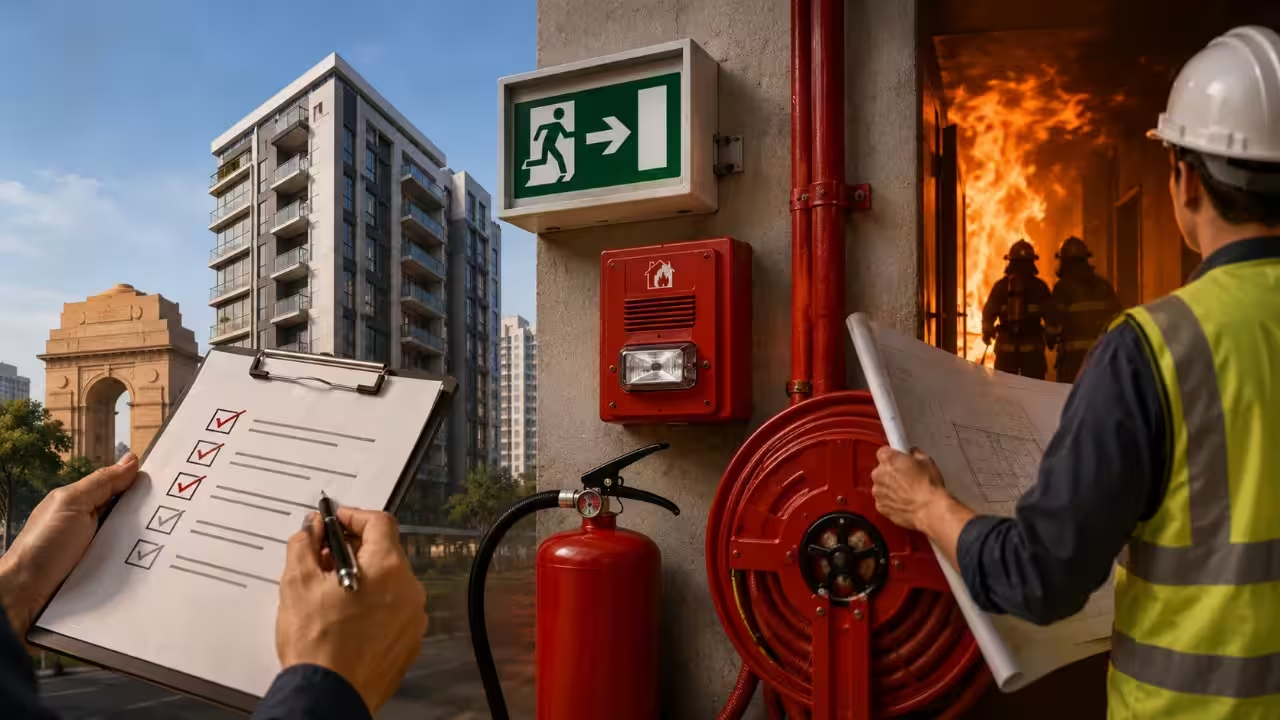
Buildings in Delhi will now have to follow a new set of fire prevention and safety requirements, with the Delhi government introducing an 18-category framework covering everything from fire-engine access and protected exits to emergency power and continuous monitoring.The Delhi Fire Service (Amendment) Rules, 2026, notified by the Home Department on August 28, link the minimum safety standards to a building's height and class of occupancy. The requirements will be governed by the Building Bye-Laws, according to PTI.Delhi home minister Ashish Sood said in a statement on Saturday that the revised rules align fire safety standards with the updated Unified Building Bye-Laws (UBBL).The changes come after several fire incidents in the city in recent months, including the Malviya Nagar hotel fire in June in which 23 people, mostly foreign nationals, were killed.The 18 categories of measures to be considered for buildings under provisions covering fire prevention, safety certification and the issuance of no-objection certificates by the Delhi Fire Services (DFS) and third-party auditors include:Fire-engine access: A minimum six-metre right of way must be available for fire engines up to the premises, with access kept free of encroachments.Exit protection: Exits must be protected through fire check doors or pressurisation, along with provisions for fire and smoke barriers, fire stops and smoke management.Detection and suppression: Depending on applicability, buildings will require fire extinguishers, first-aid hose reels, automatic fire detection and alarm systems, MOEFA, public address or voice evacuation systems, and automatic sprinkler and fire suppression systems.Hydrant network: Requirements cover internal hydrants, including wet risers and down-comers, as well as yard hydrants and ring mains.Firefighting infrastructure: Fire pump houses must have pumping arrangements and protected access for firefighters. Captive water storage for firefighting is also specified.Emergency movement and identification: Exit signage, floor numbering and reflective tape marking in corridors leading to exits are among the prescribed measures.Fire towers and lifts: The framework includes fire towers and fire lifts for applicable buildings.Emergency power: Backup power must be provided for critical fire and life-safety systems, including pumps, pressurisation and smoke-venting systems, fireman's lifts, emergency lighting, fire alarm systems, public address systems, magnetic door-hold-open devices and lighting in fire command centres.Refuge and control facilities: Fire check floors and refuge areas are covered by the rules, while fire control rooms will have to be equipped with automated continuous monitoring systems.Where the Building Bye-Laws do not specify fire prevention or safety measures for a particular building, the DFS director can require its owners or occupiers to adopt additional measures based on standards prescribed by the fire prevention wing.The government can also relax, modify or remove specific requirements for certain classes of occupancy or buildings in special areas.The amended rules will come into force from the date on which the amended UBBL-2016 are notified by the DDA. Applications pending on that date will continue to be processed under the provisions that were in force when the applications were submitted.The amendment has also changed the terminology used in Rule 29 of the Delhi Fire Service Rules, replacing references to the "National Building Code of India" with "Building Bye-Laws".Ready to Make a Smarter Property Decision? Build Your Legacy with TOI Homes.
Topics in this story
Gathered from external sources. Rights to this text belong to whoever originally published it.