Joseph Martinek bought a Texas farm in 1911; 115 years later, his descendants donated a conservation easement protecting 470 acres of farmland, wildlife habitat and open space
US News: Martinek Farm, located outside La Grange in Fayette County, Texas, has become the county’s latest conservation success story. The property, which has .
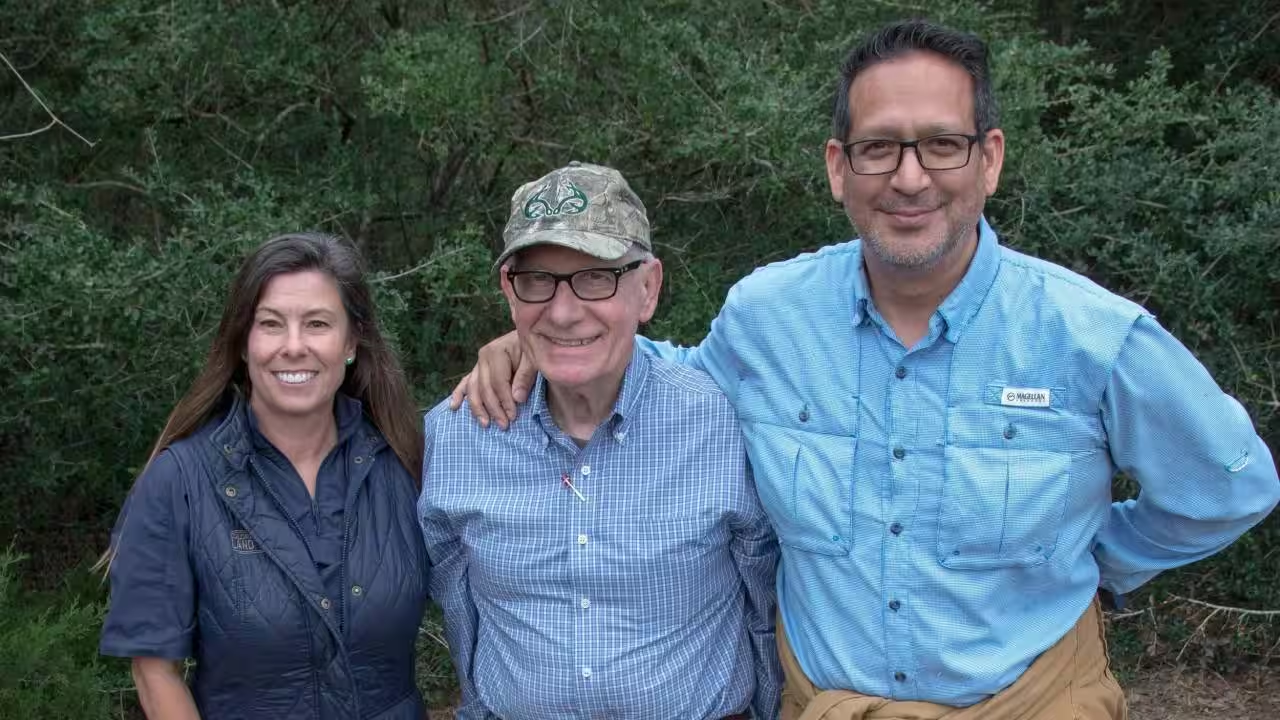
Martinek Farm, located outside La Grange in Fayette County, Texas, has become the county’s latest conservation success story. The property, which has remained connected to the same family since 1911, is now permanently protected through a donated conservation easement.The easement was contributed by longtime landowners Russell and Debbie Friemel and Ardie Friemel Holsinger in honour of their great-grandfather, Joseph Martinek, whose purchase of the property more than 100 years ago began the family’s relationship with the land.A family legacy dating back to 1911According to Texas Land Conservancy, Joseph Martinek purchased the property in 1911, establishing a tradition of farming and caring for the land that continued through generations.In the 1980s, siblings Russell Friemel and Ardie Friemel Holsinger inherited the family property. They continued its working-land legacy while maintaining the connection to their great-grandfather’s original purchase.The family began exploring permanent conservation of the property in 2021. Five years later, in 2026, the process culminated in the donation of a conservation easement.A conservation easement is a voluntary legal agreement that permanently limits certain future uses of a property in order to protect its conservation values. Importantly, the family retains ownership of Martinek Farm and can continue managing it as working land.Protecting a vulnerable part of the Colorado River basinThe 470-acre property sits in a vulnerable part of the Colorado River basin, where surrounding development and industrial activities pose growing challenges to natural habitats, scenic open spaces and water resources.Surface mining, highway-related development and oil and gas extraction are among the land uses occurring in the wider region.By placing the property under permanent conservation protection, the family has helped preserve a significant stretch of undeveloped landscape while creating a long-term safeguard for its natural resources.Ross Creek adds to the property's ecological importanceOne of the farm’s most important natural features is Ross Creek, a spring-fed waterway that contributes water throughout the year to an ecologically significant section of the Colorado River.The undeveloped land surrounding the creek plays an important role in maintaining the health of its riparian ecosystem. Vegetation and open land can help filter rainfall, reduce erosion and protect water quality while providing habitat for wildlife.The wider river system is home to several threatened or endangered aquatic species, including the blue sucker, Tampico pearly mussel, pimpleback mussel and Texas fawnsfoot mussel.Martinek Farm itself supports a variety of aquatic species, including bass, cichlid and sunfish.Farmland and wildlife habitat protected togetherThe conservation value of Martinek Farm extends beyond its waterways. Nearly half of the property’s soils meet the criteria for Farmland of Statewide Importance, making the land valuable for producing food, feed, forage and fibre.The agricultural landscape also provides a range of habitats for native species.Open oak savannah and prairie grasslands dotted with live oaks dominate parts of the uplands, while denser oak-yaupon woodlands provide cover for woodland wildlife. Along Ross Creek and its floodplains, bottomland and riparian forests create a shaded corridor connecting different upland and wetland habitats.Freshwater ponds, wetlands and other open-water areas further add to the ecological diversity of the property.A landscape with deep Texas historyMartinek Farm is also significant because of its historical and archaeological resources. The property contains archaeological evidence associated with periods ranging from the Late Paleoindian to Late Archaic periods, as well as the era of colonial settlement in Texas.The area's history is also linked to James J. Ross, an early Texas settler and member of Stephen F. Austin’s “Old Three Hundred.”A Texas Historical Marker erected nearby in 1985 notes Ross's role as a farmer, rancher, trader and merchant and describes his influence on the early settlement of the region. Ross Prairie and Ross Creek were named after him.The marker also records that Ross’s home eventually became known as the Ross/Martinek House, which was owned by Czech immigrant Joseph Martinek and his descendants for nearly seven decades.The property’s archaeological importance received further recognition in 2025, when the Texas Historical Commission designated a State Archeological Landmark at Martinek Farm.Conservation protects more than landFor the Friemel family, the conservation easement represents more than the preservation of acreage. It ensures that a property tied to their family for generations will continue to provide agricultural, ecological and historical value long into the future.The process began with conversations among family members and a land trust and involved expert advice, service providers and support from a grant through the Texas Land Trust Council.Texas Land Conservancy also acknowledged the contribution of Russell, Debbie and Ardie, describing the conservation easement as a significant gift to Texas’s natural resources, history and future generations.More than a century after Joseph Martinek purchased the land, his descendants have ensured that the 470-acre property will remain protected while the family continues to own and steward it, turning a 1911 land purchase into a conservation legacy for generations yet to come.Catch the latest World News and Live updates. Download the TOI app.
Topics in this story
Gathered from external sources. Rights to this text belong to whoever originally published it.