Shackled Maduro calls new torture allegations ‘false’ in latest hearing
Former Venezuelan President Nicolás Maduro insisted in court on Thursday that newly unsealed torture allegations against him and his wife were “false accusations.”
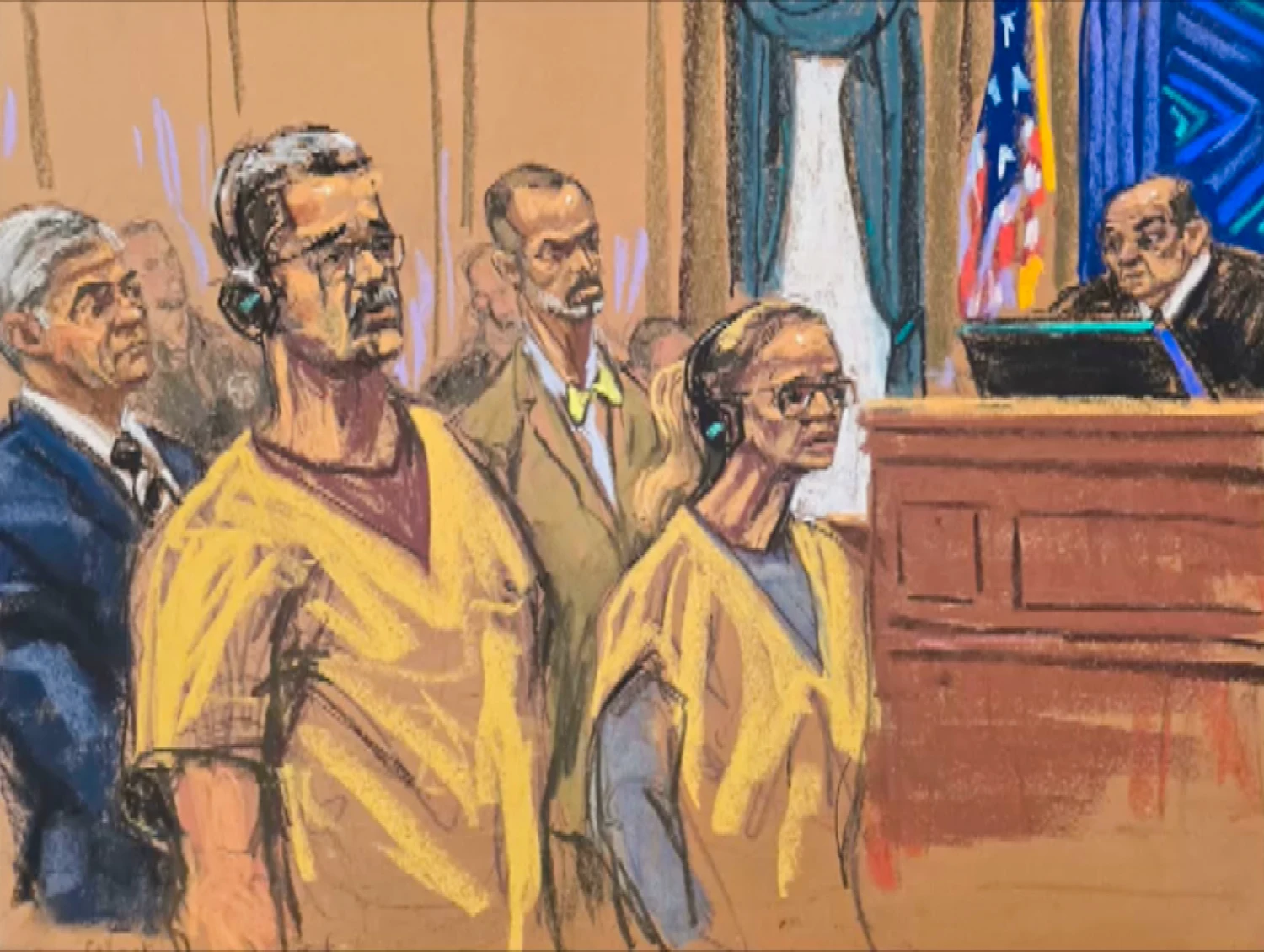
Former Venezuelan President Nicolás Maduro insisted in court on Thursday that newly unsealed torture allegations against him and his wife were “false accusations.” Maduro and Cilia Flores, both shackled at the ankles, were brought to court to face a rewritten indictment that expands from an initial set of drug trafficking charges to accuse them of leading a state-sponsored repression campaign that tortured scores of victims, including three Americans. Maduro twice defied a judge’s request that he enter a plea to the charges. The former Venezuelan leader replied through a courtroom interpreter that the indictment were based on “false accusations and false testimony.” Irked, Judge Alvin K. Hellerstein took matters into his own hands, interjecting that “a plea of not guilty will be entered on behalf of Mr. Maduro.” Flores was less combative. She said she read through a version of the new indictment written in Spanish, she told the judge through the Spanish interpreter. “I am completely innocent,” she said. “I am not guilty.” They were seized from their Caracas home by the U.S. military in a nighttime raid in January. Their trial will begin June 14, 2027, two weeks later than previously set, according to a schedule approved by the judge Thursday. As they have in the past, Maduro and Flores listened to the proceedings through headphones carrying the voice of a courtroom translator. At times, the bespectacled Maduro, who appeared thinner than in previous hearings, looked through papers in front of him and took notes on a pad throughout. Upon entering the courtroom, Maduro waved to people in the gallery and shook hands with one of his lawyers, Barry Pollack. Flores followed him and took her seat before turning to the gallery to smile at familiar faces in the front row. She also gave Mark Donnelly, one of her attorneys, a peck on the cheek. Pollack said when the charges were announced last week that Maduro, 63, denies them and “looks forward to his day in court.” Pollack agreed with the government’s request to move the trial to June 14. He told Hellerstein the new schedule was “very aggressive” given the new allegations, but added that he’s hopeful they’ll be able to stick to it. According to the rewritten indictment, Maduro oversaw a violent torture system that beat, asphyxiated, and delivered electric shocks to its victims. He is accused of personally recommending torture methods, receiving updates on specific victims’ treatment, and threatening to kill one prisoner’s child as a form of psychological torture. Flores, 70, a former attorney general, helped develop the repressive system and ordered the torture of some specific people, the indictment alleges. Maduro, who served as Venezuela’s president from 2013 until his capture in January, has been under investigation for years by the International Criminal Court over allegations of crimes against humanity, tied to his crackdown on opponents. He has always denied wrongdoing. Torture is a crime under international law and can be prosecuted outside of the nation where the abuse occurred and regardless of the victims' nationality. But the prosecution of foreign officials in the U.S. is exceedingly rare, having been tried only a few times, including against the son of Liberian President Charles Taylor, Russians responsible for war crimes in Ukraine and a former prison warden in Bashar Assad’s Syria. Earlier this year, Maduro and his wife pleaded not guilty in the U.S. drug case, which said they conspired to flood the U.S. with cocaine. Their attorneys say the case should be dismissed on immunity grounds because they were the leader and first lady of a foreign country. The revised indictment covers allegations of torture stretching back to Maduro’s ascent to power in 2013, when he took over as president from his mentor Hugo Chávez, who died of cancer that year. The couple was scheduled to return to the courtroom for another pretrial hearing on Dec. 17.
Topics in this story
Gathered from external sources. Rights to this text belong to whoever originally published it.