Watchdog criticises Norfolk Police's handling before man's death
A force should have flagged mental health services after a family called about their son, IOPC says.
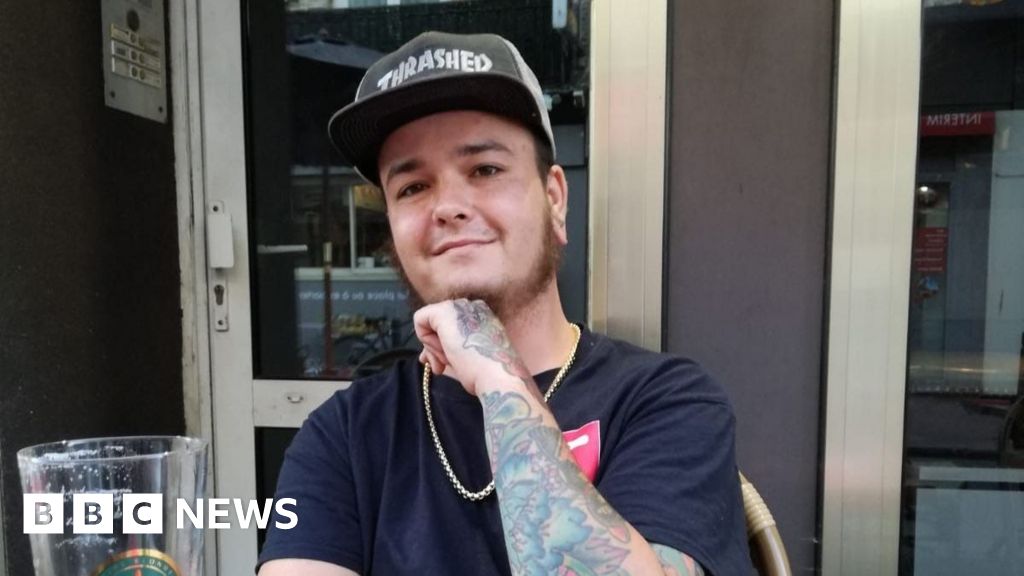
The police watchdog has criticised a force after call handlers told a family raising mental health concerns to ring a locksmith.
On 6 August 2025, Hobie Harrison's parents called Norfolk Police to request a welfare check after he failed to respond to them. He was found dead the next day.
The Independent Office for Police Conduct (IOPC) said the force's 101 call handlers should have referred the family to mental health services, but instead suggested they contacted a locksmith.
Norfolk Police said it was reviewing the findings and it had been following the force's Right Care, Right Person (RCRP) policy , which limits officer attendance at welfare calls to cases involving "immediate risk to life".
The IOPC said the call handlers should have asked more probing questions to assess Hobie's level of risk and there should have been a better explanation to his parents about why officers were not sent under its RCRP guidelines.
Hobie's parents, Mark and Roberta Harrison, made a second request for a welfare check for their son to Norfolk Police the following day. Officers attended and found the 30-year-old dead in his flat in Norwich.
In October 2025, the family made a complaint to Norfolk Police over its handling of their call.
In its report, the IOPC criticised Norfolk Police's response to that complaint after the force told the parents officers should not have attended either call, including the second one that led to Hobie's body being found.
The IOPC called that reply "unnecessary and insensitive".
Hobie had previously threatened suicide and Mark said: "We'll never know whether he was still alive when we first called and whether something could have been done.
"He might already have been dead, but we'll never know."
More stories on Right Care, Right Person:
In its findings, the IOPC said it was concerned Norfolk Police may not fully understand the risks of the policy.
David Ford, the watchdog's director of oversight and casework, said: "We have raised our concerns with the force around its interpretation of RCRP and monitoring of the initiative.
"As a result... the force has said it will undertake a review to examine whether there are any organisational learnings."
Norfolk Police said it could not comment further because an inquest has yet to take place, which is due to happen in November.
Hobie had schizophrenia and developmental trauma and was under the care of the Norfolk and Suffolk Foundation Trust Community Mental Health Team. His parents said he had a history of drug use.
The couple adopted Hobie as a child and said he had been in "good spirits" the last time they saw him before his death.
In August 2025, the family said they became concerned he had not spoken to them for more than 24 hours as he usually contacted them "several times a day".
"The non-contact was just... it didn't happen. So, it was very, very unusual," said Roberta.
The couple went to Hobie's flat but could not use their key to get inside because his key was still in the lock on the inside of the door.
"We were 100% certain he was in there and he wasn't responding, so we knew there was something seriously wrong," said Mark.
If you have been affected by any of the issues in this story, you can visit the BBC Action Line for support and information
Unsure whether they had legal authority to break in, they called Norfolk Police and told call handlers that their son had a history of self-harm and suicidal threats.
After consulting a supervisor, the staff member told them the situation did not meet the threshold for a police response and suggested they consider contacting a locksmith.
"We didn't know how to make a decision at that point or what to do quite frankly," said Roberta.
The following morning, after a second call to police, officers attended the flat and found Hobie's body.
"If the police are no longer going to come, then it has to be very clear who's got the responsibility," Roberta added.
RCRP was first developed by Humberside Police in 2019 and has since been adopted by forces across England and Wales.
The policy is intended to reduce police involvement in welfare and mental health-related incidents so officers can focus on crime and immediate threats to life.
Norfolk Police said the approach, which it introduced in 2024, had reduced officer attendance at welfare-related incidents, from 11,831 in the year before the policy was introduced to 9,229 by its second year.
The force said there was "no defined response" to welfare concerns and the appropriate pathway depended on the circumstances.
The Norfolk and Suffolk Integrated Care Board said support could involve health, social care, ambulance or police services.
A 2024 national agreement on the policy said people experiencing mental health crises should not be left without support.
Some coroners have raised concerns about RCRP. A Prevention of Future Deaths report into the death of Sophie Cotton in County Durham said the policy appeared to overlook that mental health teams could not enter locked premises.
Reports into the deaths of Paul Alexander in West Yorkshire and Andrew Hughes in Manchester also highlighted gaps in RCRP response arrangements.
Do you have a story suggestion for Norfolk? Contact us below.
Follow Norfolk news on BBC Sounds , Facebook , Instagram and X .
Topics in this story
Gathered from external sources. Rights to this text belong to whoever originally published it.