Israeli leadership rivals seek to 'bridge substantial differences' in talks
Caretaker Prime Minister Benjamin Netanyahu and Gadi Eisenkot have met after the former proposed a unity government.
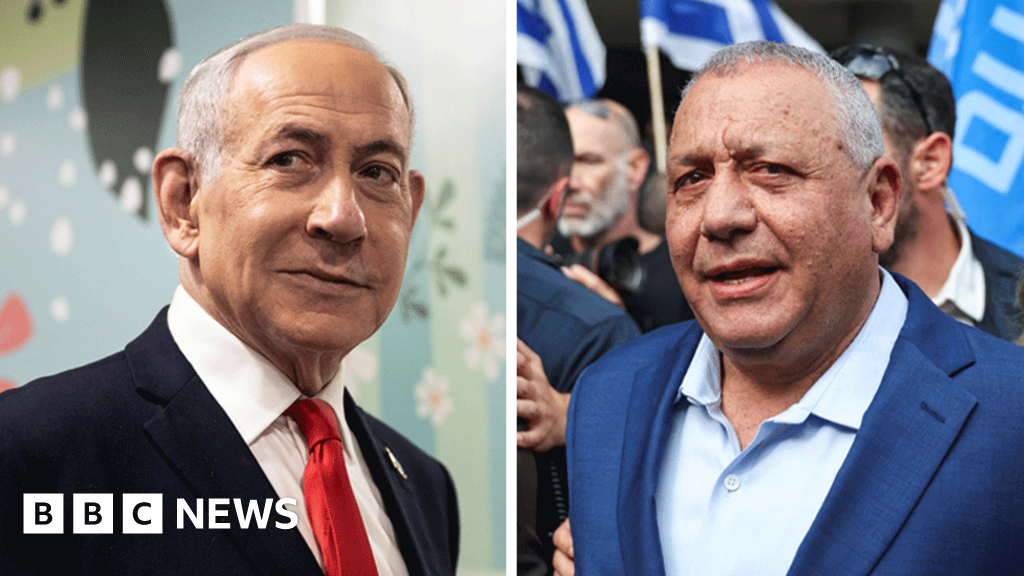
Israel's caretaker Prime Minister Benjamin Netanyahu and opposition leader Gadi Eisenkot have sought to "bridge the substantial differences between them" during talks aimed at breaking the deadlock created by last month's election.
A joint statement from Netanyahu's right-wing Likud party and Eisenkot's centrist Yashar party said the pair discussed forming a national unity government during "businesslike" talks on Sunday.
The talks came after Netanyahu proposed a government with a rotating premiership and said he would agree to Eisenkot becoming prime minister first.
Netanyahu's bloc won 53 seats in October's election, while Eisenkot's bloc of four parties won 48, leaving both short of a majority in the 120-seat Knesset.
Eisenkot has a week before a deadline to form an administration elapses on 6 December.
According to Hebrew media reports, there were still serious gaps between Eisenkot and Netanyahu's parties and no further meetings between their negotiating teams would be held.
In an X post on Saturday, Netanyahu said "my responsibility as a leader obligates me to put everything aside, including the principle of the largest party".
He added that he would agree to Eisenkot serving "first as prime minister, while I will serve as alternate prime minister at the beginning of the term".
Former army chief Eisenkot responded by inviting Netanyahu to "genuine and accelerated negotiations".
It comes after Eisenkot accused Likud on Friday of stalling coalition talks in a bid to bring about new elections.
Israel's President Isaac Herzog said he consulted all parties during the week after the election on 27 October, but he tasked Eisenkot with forming a government within 28 days.
He has been trying to put together a coalition to oust Netanyahu and has made some progress towards achieving the majority he needs, agreeing coalition deals with two parties.
But opposition to working with Arab parties, and difficulties reaching a deal with ultra-Orthodox parties, have so far hampered efforts.
In the election, two Arab-led alliances, the United Arab List and the Joint List, together won an unprecedented 19 seats following a surge in turnout among Arab voters.
That means they could potentially have decisive influence over who gains power, but all but one of the Jewish parties pledged before the polls not to work with them to form a government.
In his post on Saturday, Netanyahu said he was proposing a unity government because of "the magnitude of the existential danger and the possibility that a government will be formed that does not have the capacity to deal with this danger".
In response, Eisenkot said: "If Likud is ready for genuine unity, I am ready to assess the seriousness of its intentions over the next 24 hours."
The Yashar leader said negotations would be on a "detailed proposal" sent to Netanyahu last Sunday, which he said the party had so far received no response to.
No political party in Israel has ever won an outright majority, meaning all governments have been coalitions.
In the period 2019 to 2022, one of the most politically fractured in Israeli politics, there were five separate elections as Netanyahu and his rivals struggled time and again to co-operate.
Israeli leadership rivals to hold critical talks to break election deadlock
Israel's new parliament sworn in as leaders compete to form government
Israel's president begins consultations with parties after election deadlock
Gathered from external sources. Rights to this text belong to whoever originally published it.