Martin O'Hagan: Murder of journalist 25 years on - why has no one been caught?
Martin O'Hagan was shot dead as he walked home from a pub with his wife in Lurgan, County Armagh in 2001. His killers have never been caught.
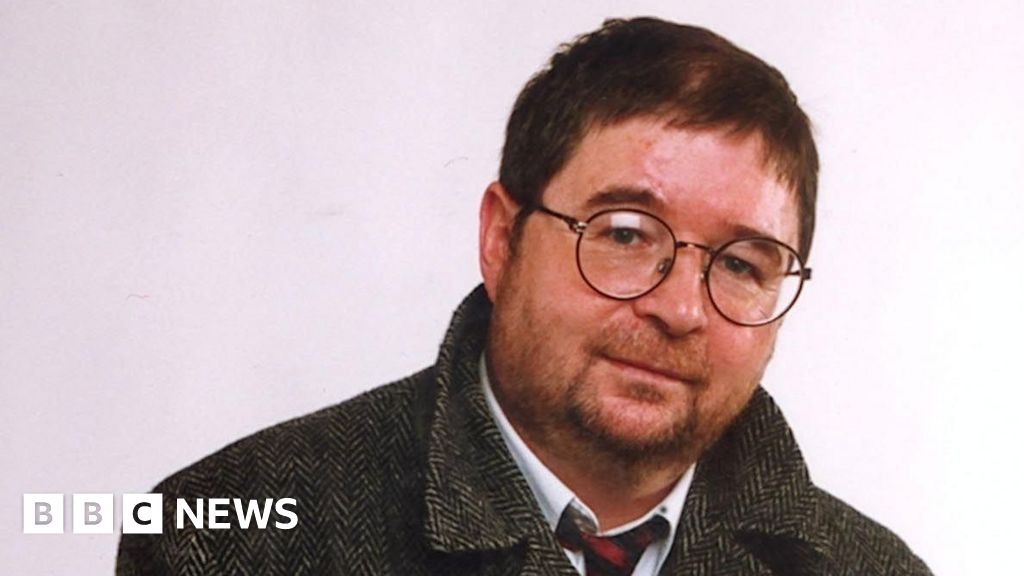
The brother of a journalist, who was shot dead as he walked home with his wife, says if he did not continue to fight for answers around the murder "the guilt would kill me".
Earlier this week marked the 25th anniversary of the 2001 murder of investigative reporter Martin O'Hagan.
The 51-year-old died in Lurgan, County Armagh, and was shot when walking home from a pub - a killing that was claimed by the Red Hand Defenders, a cover name used by both the Loyalist Volunteer Force and Ulster Defence Association.
But while his murder received widespread condemnation, and numerous charges that were subsequently withdrawn, no one has ever been convicted.
Those close to Martin have said pledges from police and government officials to find those responsible have gone unfulfilled, and they remain frustrated that his death has not received the same recognition as other high profile killings.
Martin was the first person to be murdered for being a journalist in Northern Ireland since the outbreak of the Troubles in 1969.
As a reporter for the Sunday World newspaper, he had built a reputation for stories which exposed paramilitaries and drug dealers operating in Northern Ireland.
He had infuriated County Armagh paramilitary bosses, particularly murdered LVF leader Billy Wright who he labelled 'King Rat ', by exposing crime and drugs rackets.
His brother Fintan told BBC News NI there was "talk that he was digging into collusion, digging into the finances of the LVF but there was never any proof".
"At the time I believed they did it because Martin made a mistake moving up there on the outskirts of Mourneview, a loyalist estate.
"Martin said at the time: 'the war is over'. It's all very well wishful thinking but at the end of the day it was a foolish thing to do. He made it easy for them and that's a very hard thing to live with," Fintan said.
"Within a short period of time the police were assuring us they were going to catch them" and "we, like fools, believed them".
Fintan now says he believes the people who murdered Martin were British agents.
In 2022, security sources told a BBC Spotlight investigation that police were given names of people said to have been involved in the killing within 48 hours but did not act on the information.
Fintan said, given the extensive surveillance of the Mid Ulster LVF, to believe that the intelligence service did not know Martin's murder was being planned is "just unbelievable".
He said the family have flagged a number of details about the case with the Police Ombudsman's office and if they are not included in the upcoming report then it's "not worth the paper it's written on".
He said while he is "hopeful", the family have had so many disappointments they do not get their hopes built up and deal with it in a "business-like fashion".
"It will come out, whether or not it confirms everything that I have experienced and seen and read – I doubt it."
In a statement, the Ombudsman's office said that since her appointment as new Police Ombudsman in June, Jacqui Durkin has been in contact with the O'Hagan family and "assured them that the completion of the public statement is one of her early priorities".
"She is actively reviewing the draft public statement and will provide the family with a publication timeline in due course."
A UK government spokesperson said Martin's murder was a "horrific attack on freedom of speech" and urged anyone with information to contact police.
"The safety of journalists is paramount," they added. "The UK government remains steadfastly committed to ensuring journalists are able to carry out their work free from threat, intimidation, or violence."
Martin had a history of involvement in the Official IRA (the group from which the Provisional IRA would emerge) and spent five years in Long Kesh prison in the early 1970s for moving weapons.
Fintan said he turned his back on violence when he got out of prison, got his degree and became a journalist.
"I think the fact that Martin had been in jail and in the Official IRA, which is no secret, I think that affected things," said Fintan.
"The first journalist [to be murdered in Northern Ireland], the flag bearers of free speech and the right to know is journalism, and it didn't really catch fire the way it should have, and I think it was his background of being a working-class republican," Fintan said.
"If you can't protect your journalists there's no such thing as news or free speech."
Richard Sullivan worked alongside Martin at the Sunday World and said the then Secretary of State John Reid stood in their offices and pledged that they would catch his killers and "no stone would be left un-turned in pursuing them".
"He also said that he would ensure that journalists would be able to work in Northern Ireland free from threat.
"Yet journalists continue to be threatened, even right up to this current day. And obviously, 25 years, a quarter of a century after Marty was killed, there's no sign of a prosecution," Sullivan said.
Martin's case has been contrasted with the murder of journalist Veronica Guerin in Dublin five years previously.
She had written several exposés of organised crime in Dublin and had been subjected to threats and beatings.
Within a week of her murder, the Irish government enacted the Proceeds of Crime Act 1996 and the Criminal Assets Bureau Act 1996, so that assets purchased with money obtained through crime could be seized by the government, leading to the formation of the Criminal Assets Bureau (CAB).
Brian Meehan was convicted for his role in the murder of Guerin.
"Dublin was in the grips of an organised crime war. And Veronica did an awful lot of reporting and covering of that. She was a victim of a contract killing," Sullivan said.
"And in a very similar way, that's what happened to Marty. But in Veronica's case, the government and security force reaction down there was like night and day to what happened up here.
"If a journalist was gunned down and shot on the streets as he walked home after a drink with his wife in London or Manchester or Liverpool, you would never hear the end of it, they would move heaven and earth to have the law changed to get these people caught.
"But in Marty's case, the investigation just fizzled out and stopped, even though they say the case is still open.
"Nothing has happened, and there's no sign of anything happening in the near future. The contrast couldn't be greater," Sullivan said.
Fintan will continue to fight for answers for what happened to his older brother.
"What I'm doing is not just for Martin, it's for me because if I wasn't doing anything the guilt would kill me for not doing something for my brother, and this is really the only thing I can do."
However, he said the more time passes the less likely that will happen.
"If you have an inquiry that's not being done properly or running into obstacles and the longer it goes on the less people care; the only people who care are family, close friends and colleagues.
"If the state's involved, which I'm convinced they are with what I've seen, why would they move heaven and earth to find the culprits?"
In a statement, the PSNI said they "continue to appeal anyone who has information about those responsible for this heinous act to do the right thing and tell us what they know".
"As this matter is currently subject to an ongoing Police Ombudsman investigation, it would be inappropriate to comment further."
Vigil marks 20 years since journalist shot dead
Police 'did not act' on journalist murder tip-off
Topics in this story
Gathered from external sources. Rights to this text belong to whoever originally published it.