In 2025, conservationists placed 20 reef cubes off northeast England; nine months later, 99% of the adult oysters attached to them were alive, as restoration work continued
Discover how marine conservationists successfully restored native oyster populations off northeast England, achieving a stunning 99% survival rate after just nine months. Learn about the innovative reef cubes and biodiversity improvements in this restoration project.
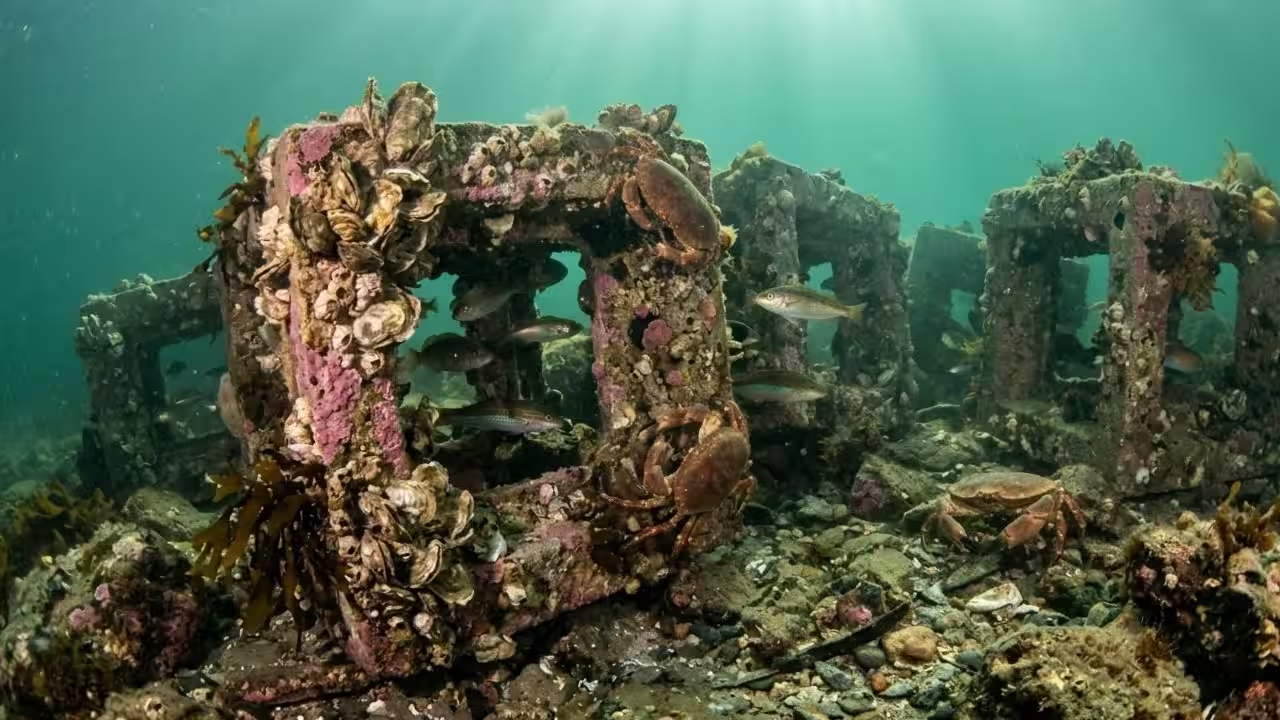
Under the cold and turbulent waters of the North Sea, a vanished marine ecosystem quietly staged a comeback. In October 2025, marine conservationists from the Zoological Society of London (ZSL) teamed up with Groundwork North East & Cumbria to help native oysters thrive again off northeast England.According to a report by Groundwork, the team placed 20 reef cubes off the coast of Whitburn, South Tyneside, to rebuild the lost habitat. Nine months later, in July 2026, underwater surveys showed that 99% of the adult oysters attached to the reef cubes were still alive alongside sea urchins and crabs. Furthermore, the young oysters survived the harsh winter conditions despite low temperatures and food scarcity, showing positive signs for future reef growth.A new hub for marine life Apart from the oysters, the divers also observed a surge in local biodiversity. A wide variety of fish and crabs had moved into the oyster reef cubes and were thriving. The ecological benefits extended to the water itself. As cited by Groundwork, a single oyster filtered nearly 200 litres of water in a day, roughly equivalent to one full bathtub.For centuries, oysters had served as natural water purifiers while supporting other marine ecosystems. Native oyster reefs disappeared from northeast England nearly 100 years ago. Across the United Kingdom, the native oyster populations have fallen by more than 95% since the 1800s, due to over-harvesting, pollution, disease, and habitat loss.Restoration project and recovery steps Created as part of The Wild Oyster Project: Tyne and Wear, the one-hectare restoration project (approximately the size of 1.25 football fields) combined three key elements to kickstart the recovery process: oyster reef cubes, oysters, and scallop shells. For this phase of the project, 20 oyster reef cubes were supplied by ARC Marine Limited. These textured concrete blocks replicated the natural reefs and offered shelter for 4,000 adult oysters. Their central portholes also served as habitat for other sea creatures. Furthermore, the conservationists added 60,000 juvenile oysters to grow the next generation of reef. Moreover, the team spread 100 tonnes of scallop shells on the seabed, which provided the growing reef a stable base and laid the groundwork for the site's strong summer survey results.Planned next steps Following the July survey, the team began installing custom-designed cages into the central openings of the oyster reef cubes. Each cage contained a mix of young and adult oysters to establish several generations of oysters on the reef while minimizing the risk of predation during the initial period. Eleven months into the project, by September 10, 2026, the team had deployed an additional 1,000 mature native oysters and 15,000 spat-on-shell (juvenile oysters) to boost the restoration site.While the team continued to work with industrial experts, it was also looking at innovative approaches to native oyster restoration in the North Sea. The Oyster Restoration Company (TORC) supported this phase by contributing to the design and engineering of the inner cage inserts, alongside oyster production and supply.The team remained focused on monitoring, assessment, and management of the test site to maximise survival and promote long-term reef viability. With programme funding from the Stronger Shores initiative coming to an end in 2027, the team was working to secure further grant funding to scale up restoration efforts across the North East coast.You use AI every day. Now get your AI Quotient. Take the AIQ test.
Topics in this story
Gathered from external sources. Rights to this text belong to whoever originally published it.