In 1990, John and Karen Lewis bought 1,000 acres of Costa Rican rainforest to stop it being logged; the reserve now shelters monkeys, sloths and over 300 bird species
Rest of World News: Discover the inspiring journey of John and Karen Lewis, who transformed 1,000 acres of Costa Rican rainforest into a thriving nature reserve that protects endangered species and benefits local communities.
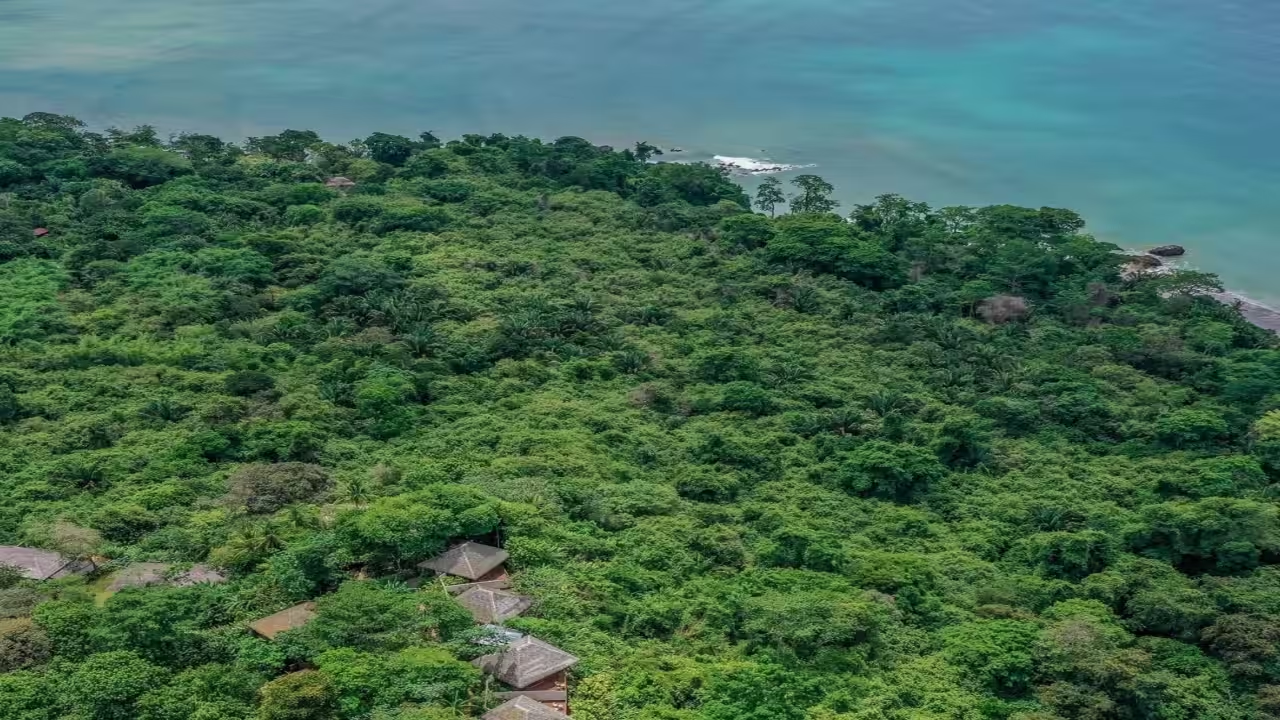
In 1990, John and Karen Lewis walked away from their old life in Minnesota to buy a stretch of virgin rainforest on Costa Rica's remote Osa Peninsula. What began as a two-week birdwatching trip became a decision that shaped the rest of their working lives. The couple sold nearly everything they owned to fund the purchase of roughly 1,000 acres of old-growth forest on the peninsula's southern tip, a spot so isolated that government officials warned almost nobody would ever visit it. That warning turned out to be wrong, and the land they saved is now a conservation success story.From volunteers to landownersJohn and Karen had met years earlier while serving with the US Peace Corps in Kenya, an experience that shaped their thinking about conservation and community-based tourism long before either of them had heard of the Osa. When that birdwatching trip brought them to the Osa in 1990, they were not looking for a business opportunity so much as a piece of forest large enough to matter. The lodge they eventually built there, Lapa Rios, now describes on its own website how the surrounding reserve shelters endangered monkeys, sloths and more than 300 bird species. Building a small lodge to fund the reserve's upkeep was almost an afterthought, a way to make the conservation pay for itself rather than an end in its own right.Turning a patch of jungle into a functioning nature reserve was not simple, and the Lewises spent years figuring out how to do it without displacing nearby residents. They built a school for the local community before adding tourist facilities, reflecting their belief that conservation lasts only if nearby residents benefit too. Locals were trained as lodge staff and nature guides rather than treated as an afterthought, and some of the children who first attended that school later took on roles helping to run the property.A refuge crowded with wildlifeThe reserve succeeded in ways the Lewises could not have fully predicted when they first signed the papers. As the surrounding region lost forest cover to cattle ranching and logging through the 1990s, the reserve they had quietly assembled became an increasingly important buffer for the neighbouring Corcovado National Park, itself regarded as one of the most biologically intense places on earth. Cayuga Collection, which later took over managing the lodge for the Lewises, notes that the Osa Peninsula holds all four of Costa Rica's monkey species, along with tapirs, anteaters and a wide range of frogs and snakes. The reserve serves as a corridor, allowing animals to move between protected areas that would otherwise be separated by farmland.Of the roughly 1,000 acres the Lewises bought, only a small fraction was ever cleared for the lodge, a handful of guest cottages and a footpath network, all deliberately clustered on a single ridge overlooking the Golfo Dulce. The remaining forest was left standing. That restraint is part of why the reserve still supports such a wide range of species decades after it was first established, even as tourism around it has grown considerably.Making the protection permanentBy the late 1990s, John and Karen had begun to worry about what would happen to the reserve once they were no longer around to protect it personally. They gathered experts from around the world for a week-long workshop to solve that problem, and the result was a plan to hand management to outside specialists while placing the forest under a legal arrangement no future owner could undo. In 2013, working with The Nature Conservancy and the Costa Rican legal group CEDARENA, they signed a conservation easement that binds the property in perpetuity, meaning the forest stays protected no matter who runs the lodge business housed within it, as reported at the time by Green Lodging News. That agreement completed a project that had taken more than two decades to finish. What started as a conservation project by two former aid workers has become a permanent fixture on the Osa Peninsula, one that will keep sheltering its resident sloths and monkeys long after the people who first thought to protect them are gone.Catch the latest World News and Live updates. Download the TOI app.
Topics in this story
Gathered from external sources. Rights to this text belong to whoever originally published it.