A billionaire gave $160 million to transform a 158-year-old dinosaur museum; in 2024, it reopened with bigger galleries and free entry
Yale Peabody Museum, now free to all, reopens after a $160 million renovation enhancing its dinosaur exhibits and educational facilities.
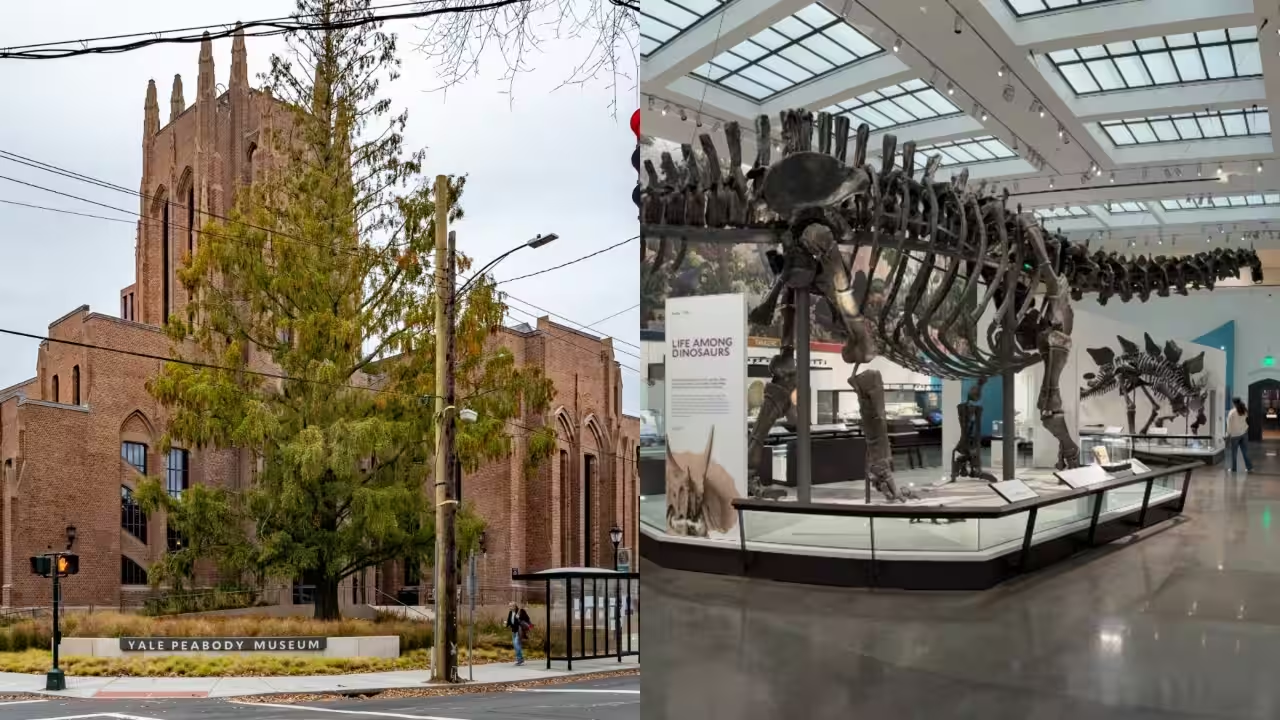
Natural history museums serve two purposes: they preserve scientific collections for research and make discoveries about the natural world accessible to the public. The Yale Peabody Museum in New Haven, Connecticut, brought these roles together after a major renovation. It reopened on March 26, 2024, following four years of work, with expanded galleries, restored dinosaur displays, new educational facilities and free admission for every visitor. The reopening marked a major change for a museum that had been an important part of Yale's scientific and educational work for more than a century.The renovation was inspired by a $160 million donation from Yale alumni and billionaire benefactor Edward P. Bass, Connecticut public radio station WSHU reported. Yale revealed the donation in 2018, and the university says it is the largest known gift to a natural history museum in the U.S. The museum dates to 1866; thus, it was 158 years old when its doors reopened, and Yale Peabody Museum affirmed in November 2021 that entry will remain free in perpetuity when the construction is complete.A bigger museum with more to seeThe museum had not undergone a major renovation in nearly a century. Designed by Centerbrook Architects and Planners, the project expanded exhibition space by more than 50% and spread the galleries across three floors instead of two. Classroom space tripled, and the museum gained a new education centre for schoolchildren from the New Haven area. New imaging, sound and 3D printing studios allow students to work hands-on with selected objects from the museum's collection, which contains around 14 million specimens and artefacts. The third floor galleries, including the David Friend Hall mineral and gem gallery, opened on a phased schedule after the March reopening.Dinosaurs remain a major attraction, and their displays received substantial changes during the renovation. Yale reported that the museum's famous dinosaur and prehistoric mammal fossils had been cleaned, repaired and remounted in poses reflecting current scientific understanding of these animals as active creatures. The displays include the first specimens of Brontosaurus, Stegosaurus and Triceratops ever discovered. The 65-foot Brontosaurus once again dominates the Burke Hall of Dinosaurs. Its tail was lengthened and raised to allow visitors to walk beneath it, while its head and neck were repositioned in a more alert, birdlike pose.Other displays also draw attention. In the new Central Gallery, a suspended scene depicts Archelon, the largest known sea turtle, appearing to flee a hungry mosasaur above visitors' heads. The American mastodon is now displayed with its tusks raised and exposed rather than in profile behind glass. A second-floor gallery features scientific instruments from the museum's History of Science and Technology Collection, including Yale's first microscope, purchased in 1734. Museum ambassadors help visitors understand the exhibits, while revised labels make the displays more accessible to a wider audience. But size and spectacle are only half the story. The other half is who gets through the door.Free admission changes who comesBefore the renovation, the Peabody charged an admission fee, unlike the Yale University Art Gallery and the Yale Centre for British Art, which already offered free public entry. The new policy brought the Peabody into line with those institutions and removed the admission cost for visitors from New Haven, the wider Connecticut community and beyond.Museum director David Skelly described free admission as one part of a wider effort to make the institution more accessible and welcoming. “Free admission is a means, not the end,” he said when Yale announced the policy. The renovation also improved access through redesigned galleries, clearer exhibit labels and museum ambassadors who help visitors understand the displays. New classrooms and a student-curated exhibition space further connect the museum's public role with teaching and research at Yale.Those planning a trip should note that individual visitors do not need a ticket or a booked time slot, according to the museum’s website. It is open Tuesday to Friday 10 a.m.- 5 p.m. and Saturday and Sunday noon-5 pm and closed on Mondays at the time of writing. School and group visits by appointment only. The museum is located at 170 Whitney Avenue in New Haven. Yale had a reservation system for the first 30 days to control crowds at launch and has since moved to walk-in visitation.The Peabody's reopening changed more than its galleries. Its restored fossil displays, expanded educational facilities, and wider access to the collections reflect a renewed emphasis on both public learning and scientific research. By making admission permanently free, the museum also opened its doors to visitors who might previously have been put off by the cost of entry.You use AI every day. Now get your AI Quotient. Take the AIQ test.
Topics in this story
Gathered from external sources. Rights to this text belong to whoever originally published it.