The 10 tech items that are no longer worth your money in 2026 — and what gadgets to get instead
Some gizmos were replaced by smartphones, others got dramatically cheaper and a few are still hanging on mostly out of habit.
If you buy something through a link in this article, we may earn commission.
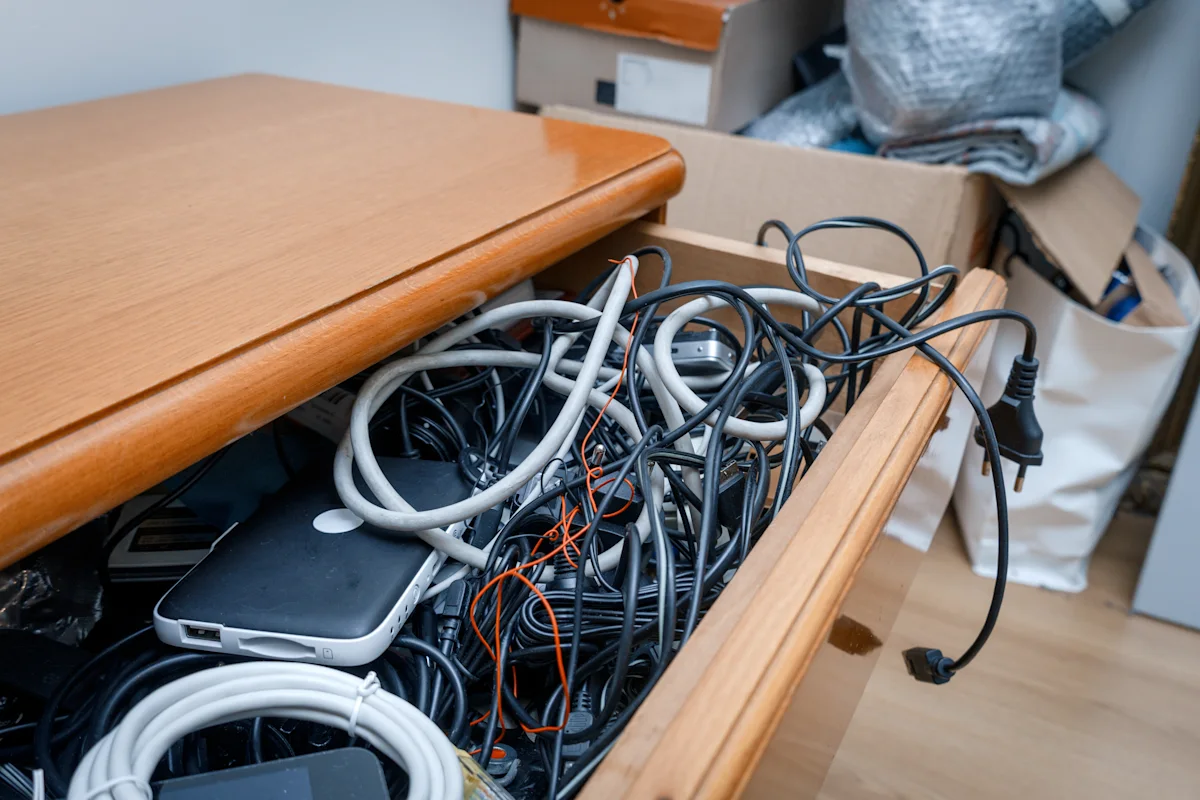
Everyone seems to have a drawer of outdated tech, right? Not long ago, I was digging around for a USB-C cable that I know I own when I unearthed a dusty Garmin GPS, a decade-old GoPro, two clip-on phone camera lenses and a tiny Bluetooth speaker that no longer holds a charge. At one point, all of that stuff felt cutting-edge. It was expensive too. Now? My phone does almost all of it better.
Soundcore Space 2 Noise-Cancelling Headphones
That's kind of the weird place tech is in right now. Smartphones have completely replaced a lot of gadgets. Others got so good — and so cheap — that paying premium prices no longer makes much sense. And then there are the products that still exist mostly because people keep buying them out of habit. Case in point: the entire aisle of overpriced HDMI cables at a certain electronics store near me.
Not every piece of tech needs to be "smart." Not every gadget deserves an upgrade cycle. And not every product deserves your hard-earned money in 2026. Here are some tech products that just aren't worth buying anymore — plus cheaper, smarter alternatives that make a whole lot more sense now.
I know this one is going to be controversial, but hear me out. Premium noise-cancelling headphones are great, no argument there. Models like the Apple AirPods Max 2 , Sony WH-1000XM6 and Bose QuietComfort series are comfortable, quiet and last forever on a charge. But if you're only pulling them out a few times a year for flights, the math starts to fall apart.
Sub-$150 noise-cancelling options have gotten shockingly good. You're giving up a few creature comforts, but not hundreds of dollars' worth of them. If you're not a daily user, you're mostly paying a luxury tax.
I wear my noise-cancelling headphones every single day. If you're getting that kind of use out of them, it makes a bit more sense to spend more money on a premium pair. But you don't have to, at least not to get premium noise-cancelling. And if all you really use them for is travel, these Soundcore Space 2 cans are a fantastic option at less than half the price of Bose, Sony and Apple's offerings.
Budget tablets live in a weird no-man's land. They're not powerful enough to replace a laptop, and they're not smooth or polished enough to feel like a great casual device either.
If you want something simple for browsing, streaming and light work, an iPad — or a Samsung Galaxy Tab if you prefer Android — will still run circles around most cheap tablets and last much longer for not much more money upfront.
Released in March 2025, the base-model iPad is an ultra-light, thin tablet that's powerful enough to replace your laptop for most tasks but slips into your bag with room to spare. Its spacious 11-inch Liquid Retina display will have you swiping and scrolling in color and sharpness so vibrant that it makes any screen that came before it feel like an old tube TV.
It's also our pick for the overall best iPad for most users . Why? If you've got a habit of toggling among a dozen apps, streaming videos and replying to messages simultaneously, you're in for a treat. And if you're into gaming, the graphics capabilities mean you can play even demanding games without dropping a frame.
Here's looking at you, Apple . The Apple TV may be my favorite streaming device, but the current version, released in 2022, is no longer worth the money, given how often the Fire TV Stick 4K Max goes on sale.
Will that change anytime soon? Maybe. Rumors of a new Apple TV have been floating around for a while. In the meantime, you can just save your money.
Tired of dealing with a streaming stick that is constantly full and bogged down by apps? This is the most powerful model out there, and it has double the storage of the version above. It's also among our picks for the best streaming stick you can buy.
Looking for the 4K version? Skip the Select, which may be cheap but lacks the features of the Plus or Max , which, even at full price, are well worth the money (and they go on sale often).
There was a time when a basic pedometer made a lot of sense: simple, affordable and focused. But that time was 2015.
Your phone already tracks steps. Smartwatches now track everything else, from workouts to sleep to recovery. While competitors like the Whoop (no screen) or the Oura Ring (smaller, lighter) at least offer an interesting alternative, trackers like the aging Fitbit Zip offer a small slice of the features of a smartwatch, but often cost almost as much.
The latest version of the SE comes with an always-on display, wrist-temperature sensing and a sleep score — features that were previously reserved for higher-end models, which is part of the reason why we named it the best smartwatch for iPhone users. The other reason? The price, which is routinely discounted below the Apple Store MSRP of $249.
"It automatically detects and logs things like walks, runs and bike rides (and can manually log most other exercises)," wrote our tester. It can also monitor my heart rate and can detect falls and car accidents. Check out our full Apple Watch SE 3 review for more.
Wireless charging is convenient, but it's never been the fastest option — and that hasn't really changed. What has changed is how cheap decent options have gotten.
Spending $80 to $150 on a "premium" charging stand doesn't necessarily get you significantly better performance than a more affordable one (if you're paying more, you should be on the lookout for features like Qi2.2 Certification). You're mostly paying for design and branding, or maybe multi-device support, which is fine if you care about that, but it's no longer something you need to spend up on to get good quality.
If all you're looking for is a simple charging stand to juice up your phone every night, you needn't spend much. This affordable option will do the job and also act as a phone stand, whether you're FaceTiming your family or catching up on The Pitt while doing the dishes.
A dashcam is a great investment, but the really cheap ones often aren't. Low-end models struggle with image quality, especially at night, and they're usually lacking the features that make higher-end models worthwhile in the first place.
If the footage isn't clear enough to read a license plate, it's not doing its job. If the video is grainy and the audio is useless, it's not helping you nearly as much as you think it is. You're better off spending a little more on a reliable model than relying on something that gives you a false sense of security.
Most cheap dashcams come with a basic SD card that you'll end up replacing, if they include one at all. This RedTiger not only records high-quality audio and 4K video, even at night, but also includes a 128GB microSD card.
This one has been around forever, and somehow it still needs to be said: expensive HDMI cables don't give you better picture quality.
As long as the cable supports the spec you need, a budget option will perform the same as one that costs five times as much. This is one of the easiest places to save money without sacrificing anything.
That HDMI cable you grabbed from the dollar store in 2009? It's probably the bottleneck in your system. This fan-favorite moves data faster than a film reel in an IMAX booth — we're talking beyond 8K video.
Bluetooth speakers have gotten really good over the past few years, which means once you cross the $150 price range, the improvements start getting a lot harder to notice.
Unless you really care about audio nuance or regularly need to fill a large outdoor space with sound, a $300+ speaker is a good choice. Snag one for half the price and you'll probably be just as happy.
How's this for an endorsement? "It has everything you want from a portable Bluetooth speaker," we wrote in our list of the best outdoor speakers of 2026 . "It's easy to move (thanks, '80s-boom-box-style handle), has incredible battery life ... and has excellent sound that, if I'm being honest, handily beats Sonos in outdoor environments. Credit that to the two tweeters and two midwoofers that combine to crank out a hefty 90 watts of audio goodness. Everything I played on the StormBox Blast just felt big ."
I used to look forward to every new GoPro Hero reveal. I owned at least a dozen over the years and used them constantly in my previous job as a motorsports cinematographer. GoPros are still incredible at what they do, but thanks to how good phones have gotten, what they do is increasingly niche.
If you're filming surfing, skiing or mountain biking, they're still fantastic. Though I'd argue that in most cases, the Insta360 is now the better option, and DJI has caught up (and in some areas, surpassed GoPro) too.
For everything else, your phone has caught up in a big way. It shoots high-quality, stabilized footage and, most importantly, it's already in your pocket. For casual use, having an extra device just doesn't make much sense anymore.
When 360 cameras were first introduced, they were difficult to use and even harder to edit. These days, apps make it easy to record first and decide which way you want your camera facing later. I use mine on bike rides, trail runs and hikes in the mountains, where I can set it and forget it. It hasn't let me down yet.
Buying a DSLR in 2026 is like buying a brand-new iPod. It technically still works, but you're a bit behind the times. Mirrorless cameras have completely taken over, and for good reason. They're lighter, faster and dramatically better at autofocus, so much so that even the OG DSLR brands — Canon and Nikon — are all-in on the newer systems.
On top of that, your phone has eaten the entire casual photography market. Unless you're planning to learn manual controls and invest in lenses, a DSLR is just a bulkier, more complicated way to take photos you could've gotten faster with your phone.
If you're looking at getting into photography and want something a bit better than your phone, forget buying a DSLR and go mirrorless instead. I say that as someone who currently has more than a few DSLRs collecting dust in my home office closet. Mirrorless, even cheap mirrorless, just does things better. Plus, quality lenses are where you really want to invest your money.
Other tech items you can stop wasting your money on
Smart fridges and high-end smart appliances
I was at CES the year Samsung first showed off its smart fridge. I made a video about how dumb I thought it was to put a tablet inside a kitchen appliance. Online, the commenters came for me. I'm standing my ground.
A fridge with a touchscreen sounds cool right up until you realize you're basically checking the weather on your refrigerator. Most of these features feel impressive in a showroom and then go completely unused in everyday life. Meanwhile, they add a serious premium to already expensive appliances. I don't need another thing in my kitchen that can break. Keep my food cool. That's all I ask.
Clip-on lenses made sense when phone cameras were limited. Back in 2016? Sure. Now? Not so much. Modern smartphones already have multiple lenses built in — ultra-wide, telephoto, even macro — all optimized for the sensor and software. External lenses are just one more thing to remember to bring along. And if you forget them at home, your phone still works just fine without them.
Cooling pads sound like a practical fix, but they rarely solve the real issue. Most modern laptops are designed to manage heat on their own, and when they don't, it's usually not the fault of the airflow underneath.
If your laptop constantly sounds like it's preparing for takeoff, a cooling pad might help a little, but it's not a real solution. It's more of a band-aid for a problem that probably requires a different device.
Listen, I love my iMac (and in all fairness, the iMac isn't what I am talking about here). All-in-one desktops look clean and simple, and that's part of the appeal. But that simplicity comes at the cost of flexibility.
A laptop paired with a good monitor gets you nearly the same experience with far more versatility — plus portability. And if you build your own PC, you can upgrade individual parts over time instead of being locked into a single unit that's harder to repair or replace.
Gathered from external sources. Rights to this text belong to whoever originally published it.