In 2021, Sheba planted coral onto huge steel letters underwater; the reef campaign lifted in-store sales 10.4% and delivered 308% ROI
Sheba's innovative coral restoration project off Sulawesi, Indonesia, not only revitalized marine life but also contributed to a significant 10.4% increase in store sales and an impressive 308% ROI, merging environmental sustainability with impactful advertising.
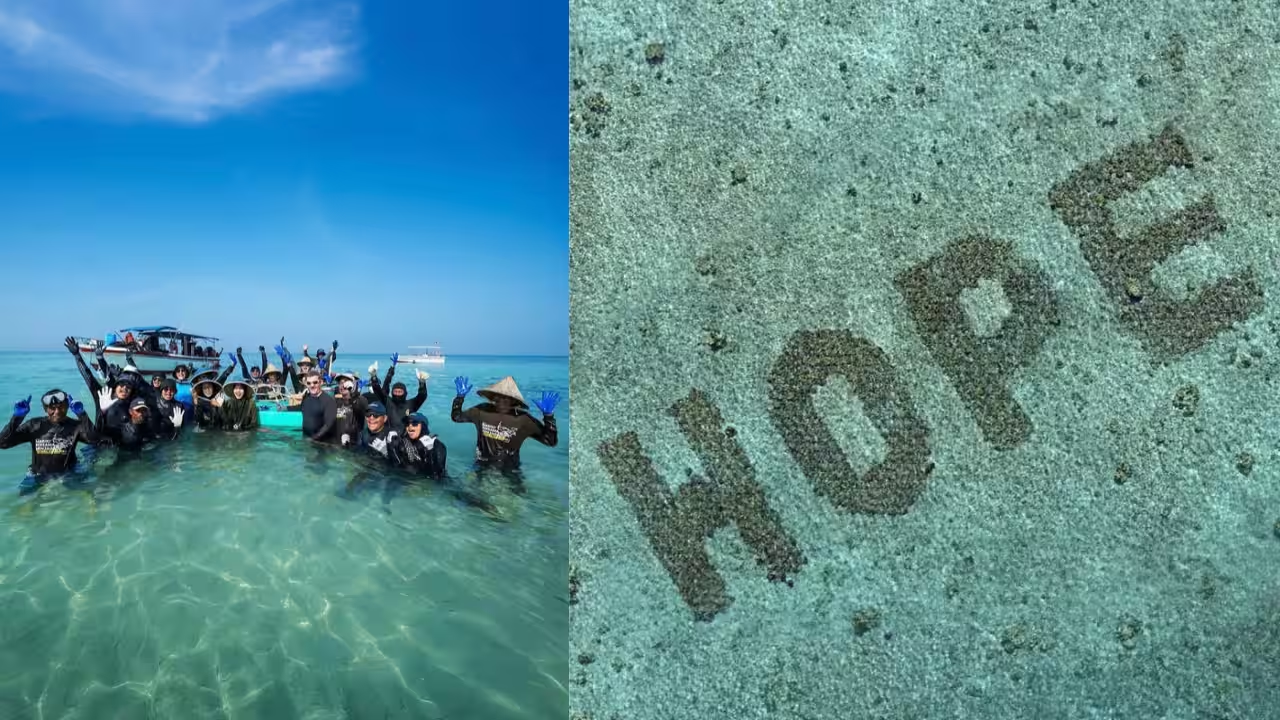
Mars-owned cat-food brand Sheba turned an underwater coral restoration project off Sulawesi, Indonesia, into a giant advertising campaign in 2021, where thousands of steel structures were placed on the seabed and arranged to spell “HOPE” across a reef that was roughly the length of an Olympic swimming pool, following which, coral was grown across the structures. The project was called Hope Reef, and Sheba launched it as part of a wider coral restoration programme, and combined an environmental project with digital advertising, Google Maps and a YouTube campaign. The campaign later reported a 10.4% increase in physical-store sales and a 308% return on investment.The letters were built from Reef StarsSheba used a restoration system called Reef Stars, steel structures that are designed to stabilise damaged coral rubble and provide a surface where coral fragments can grow. Google's account of the campaign says that the team worked with marine scientists to determine how large the installation needed to be for the word “HOPE” to appear clearly on Google Maps, and the completed reef stretched roughly the length of an Olympic swimming pool.The Reef Star structures were handmade by local residents, and were placed over an area of damaged seabed near the Indonesian island of Sulawesi, where destructive fishing had previously damaged the reef. Sheba's campaign team then built the advertising around the actual restoration work, with Google Maps allowing people to view the reef from above, while underwater imagery showed the coral growing across the installation. The physical advertising structure was also intended to disappear visually as coral growth expanded, and the steel framework remained beneath the reef while living coral covered more of it.Coral cover rose at the siteSheba and its partners reported that coral cover at the site increased substantially after the restoration began. The campaign's corporate reporting later stated that the reef reached about 70% coral coverage, in comparison with less than 2% at the start of the project. Fish abundance also increased by about 300%, according to the campaign's case study.The environmental work was carried out with marine scientists and local partners, while the marketing campaign was used to bring attention to the project. Mars announced Hope Reef in May 2021 as the first site in a programme that aimed to restore more than 185,000 square metres of coral reef around the world by 2029. The company said that the reef was intended to be visible through Google Earth and that advertising revenue from a dedicated YouTube channel would be directed toward additional reef restoration. WPP's 2022 annual report recorded 2.5 billion earned-media impressions and said that the project generated a 308% return on investment. More than one million people explored Hope Reef through Google Maps.The campaign produced a sales increase tooThe commercial numbers were important for Sheba because the project was designed to connect environmental restoration with the brand rather than run as a conventional corporate donation. The campaign case study reported a 10.4% increase in physical-store sales, and also recorded a 308% return on investment, with the environmental project forming the central creative idea behind the campaign. The marketing team also launched a YouTube channel in which advertising revenue from views was directed toward reef restoration, and Google reported that the channel generated hundreds of thousands of hours of viewing during its early months. The campaign later raised enough money through the channel to support another reef restoration project.The approach gave consumers several ways to encounter the project, since someone could see the “HOPE” reef on Google Maps, watch underwater footage, view campaign advertising or buy Sheba products. The campaign continued after its initial 2021 launch, and Sheba's current sustainability programme says that restoration efforts have expanded to multiple countries and that the Hope Grows programme now supports reef restoration at sites that go beyond Indonesia. In March 2026, Sheba also acknowledged that a regional coral disease outbreak had affected multiple reefs in the Spermonde Archipelago, including Hope Reef. The original installation was a functioning coral-restoration site that also became the centrepiece of a global advertising campaign, and the commercial result of a reported 10.4% physical-store sales lift and a 308% return on investment was unusually measurable.You use AI every day. Now get your AI Quotient. Take the AIQ test.
Topics in this story
Gathered from external sources. Rights to this text belong to whoever originally published it.