In 2012, Pinzón Island began eradicating invasive rats; nine years later, scientists found 156 wild-born young giant tortoises, though recovery still needed support
After eradicating invasive black rats, Pinzón Island has seen a resurgence in its giant tortoise population, with 156 young tortoises born and an estimated 1,100 tortoises now living in the wild. Discover how conservation efforts are revitalizing this unique ecosystem.
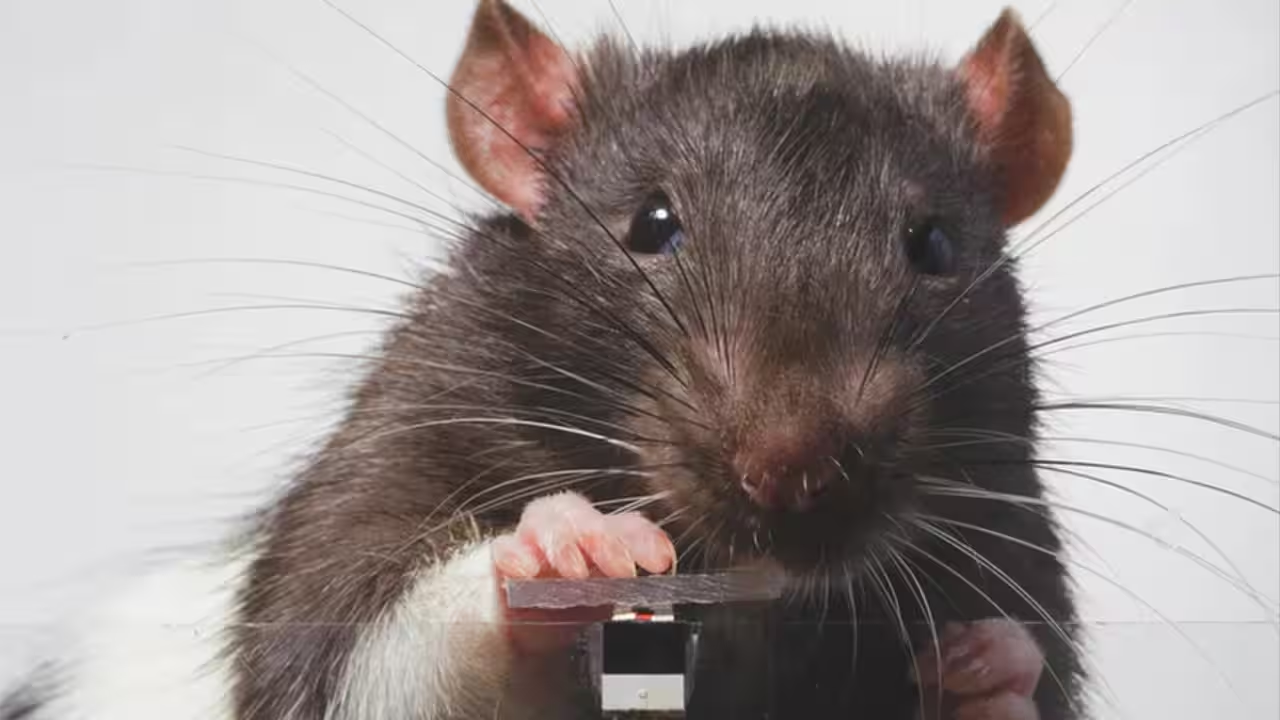
In December 2021, a team of 24 scientists and park rangers spent 10 days counting giant tortoises on Pinzón Island in the Galápagos, nearly a decade after black rats had been removed from the island. According to the Galápagos Conservancy's release on the census, they estimated the island's Pinzón giant tortoise population at between 975 and 1,100 and located 156 juveniles that were all born after the rats were gone. According to the Conservancy, the number of tortoises on the island was increasing for the first time in a century. However, the Conservancy cautioned that the population was still not self-sustaining.Before 2012, fewer than 200 adults remained, and no hatchlings survived in the wildAccording to the Galápagos Conservancy, black rats were introduced on Pinzón Island in the late 1800s and ate tortoise eggs and baby tortoises; hence, there was no natural reproduction for over a century. A 2018 paper published in PLOS ONE reported that, before the rats were removed, the Pinzón giant tortoise (Chelonoidis duncanensis) faced extinction, with fewer than 200 adults remaining and no juveniles surviving because of the invasive black rats. Because no baby tortoises survived in the wild, conservationists collected eggs from natural nests, raised the hatchlings in captivity, and released the juveniles back into the wild. According to the Galápagos Conservancy, the first 20 juvenile Pinzón giant tortoises were released in 1970, and by the end of 2017, a total of 1,007 had been repatriated to the island.Rat eradication began in December 2012 The rat eradication program took place in December 2012, with Island Conservation, the Galápagos National Park Directorate, and other collaborators. A year later, when the island was declared rat-free, it became the largest Galápagos island where rats have been successfully eradicated. The program also left residual rodenticides in some lava lizards.The first hatchlings emerged on Pinzón by December 2014The first tortoise hatchlings were noted to have emerged by December 2014 from their nests. As stated by the Conservancy, these are the first hatchlings and the first survival of baby tortoises on the island of Pinzón in almost a century. According to another Conservancy report, natural recruitment into the wild population has gone on ever since.A 2021 census recorded 156 juvenile tortoisesThe survey was organized by Wacho Tapia, the Conservancy's Director of Conservation, as part of the Iniciativa Galápagos initiative conducted in conjunction with the Galápagos National Park Directorate. As of 2017, the island held 100 native individuals and 400 of the repatriated tortoises, ranging from 5 to 40 years old. The 156 juvenile tortoises represent the group that indicates natural reproduction is taking place. This survey was a field study announced in the Conservancy release, not a peer-reviewed study.A 2018 genomic study compared 25 historical and 149 modern samples A separate peer-reviewed paper examined the same tortoises from a genetic angle. In a 2018 study in Evolutionary Applications, Jensen and colleagues compared genome-wide DNA from 25 historical museum samples, collected on an expedition in 1905 and 1906, with 149 contemporary samples, collected around 2014. The estimated effective population size of the current generation was 58, with a 95% confidence interval of 50 to 69.It was established that genetic diversity between modern and historical specimens was basically identical, with no traces of genetic patterns associated with a population bottleneck being observed, as well as the absence of population structure. The estimated effective population size of the current generation was 58, with a 95% confidence interval of 50 to 69. This number reflects the number of reproductive individuals within a population and thus cannot be considered a census number. In conclusion, the authors assert that head-starting saved the Pinzón giant tortoise from impending extinction. However, since the modern specimens were collected around 2014, roughly two years after the rat eradication program, this study essentially provides information regarding the genetic characteristics of the population after years of head-starting, but not regarding the juveniles recorded in 2021.Egg collection at the Fausto Llerena Center was still recommended after the 2021 censusThe Conservancy recommended continuing to collect eggs and bring them to the Fausto Llerena Giant Tortoise Breeding and Rearing Center, where the eggs are incubated and hatchlings are kept until they reach five or six years of age. The whole island has recovered as well. Tapia noted that the ecosystem now provides better conditions for endemic species of flora and fauna, including hawks, Galapagos rails, finches, and lizards, and trees like yellow cordia, carob, and cat’s claw. Danny Rueda, the Director of the Galapagos National Park, said that ten years after the eradication, the tortoise population could be positively identified as recovering.You use AI every day. Now get your AI Quotient. Take the AIQ test.
Topics in this story
Gathered from external sources. Rights to this text belong to whoever originally published it.