The rioting across France is a symptom of a much larger public and political crisis
“We have a mess on our hands, to put it bluntly,” French Prime Minister Sebastien Lecornu said Monday.
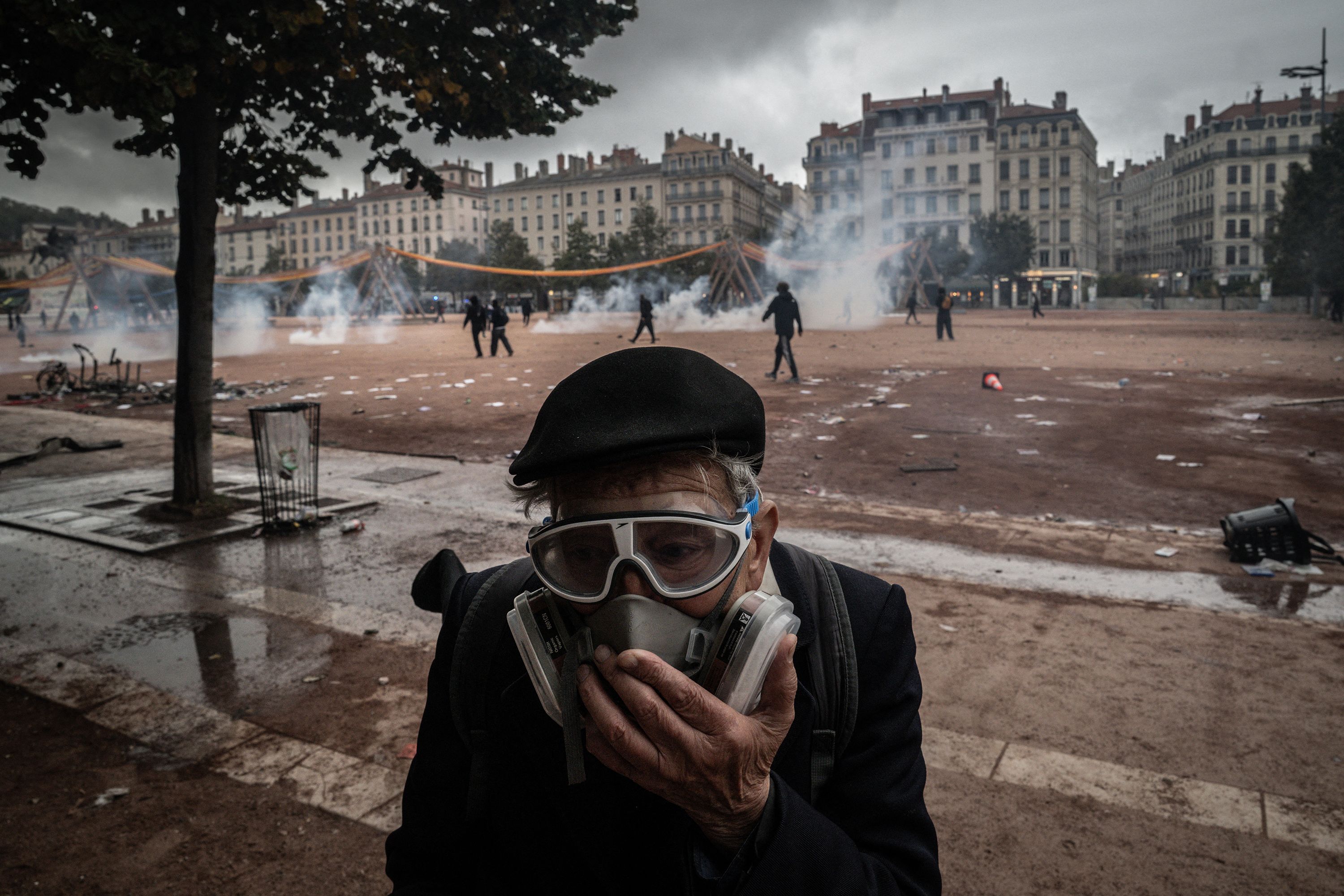
“We have a mess on our hands, to put it bluntly,” French Prime Minister Sebastien Lecornu said Monday. If anything, he might be guilty of understatement. After widespread rioting at the weekend – estimated to have cost several hundred million dollars in property damage and theft – France faces a toxic mix of urban rebellion, political drift and economic crisis. The disorder at the weekend occurred in major cities across the country, leading Interior Minister Laurent Nuñez to offer his resignation because of the police’s failure to contain the rioting. There was rampant looting in Paris, Marseille, Bordeaux and other cities, while the city hall in Limoges, which survived two world wars, was badly damaged by fire and its clock spire collapsed. The violence at the weekend, which led to some 2,400 arrests, followed weeks of protests by French students angry about crumbling schools, a lack of teachers and dismal job prospects. More than 6,000 arrests were made during the school protests that began at the start of the fall term and more than 100 schools were damaged. More demonstrations are scheduled for next weekend. In November, labor unions plan to strike. France faces a winter of discontent in the run-up to a presidential election next spring. The far-right candidate Marine Le Pen is leading in the polls. Political drift In a national televised address Sunday, President Emmanuel Macron condemned the violence but did not set out ideas to deal with it or seize the initiative. Instead, he warned of politicians seizing on the chaos for political gain – before leaving France for a three-day visit to the Gulf states. Lecornu similarly deployed the blame game. After far-left presidential candidate Jean-Luc Mélenchon accused the government of “opening the door to chaos” with its policing tactics, Lecornu shot back: “You cannot call for an end to the violence while providing excuses to those who commit it. This is YOUR political responsibility.” Le Pen, who is standing in the presidential election for the far-right National Rally party, has sought to inject the issue of migration into the debate, blaming the violence on delinquents from France’s banlieues, poor urban areas where much of the country’s migrant population lives. “Our country is caught in a vice…between violence and powerlessness,” she said, suggesting only her firm hand could restore order amid Macron’s “chaos.” The president of her National Rally party, Jordan Bardella, poured fuel on the fire, demanding that “Antifa militias, far-left extremist groups and Black Bloc groups” be designated as terrorist organisations.” Black Bloc groups wear matching or similar black clothing along with face masks during protests to hide their identity. Analysts say this political fragmentation, which led to the paralysis of parliament after snap elections called by Macron in 2024 backfired, is likely to persist – and is at the core of France’s deepening crisis. The political center in France has evaporated, allowing the National Rally and Mélenchon’s far-left France Unbowed party to harvest growing public exasperation, while Macron’s successive prime ministers have been unable to pass a budget through Parliament. The multitude of candidates in the center, “most with relatively few supporters, will ultimately help secure the second-round election for one of the two contenders who represent the greatest danger to democracy in France,” wrote Robert Zaretsky, a professor of modern French history at the University of Houston, in an essay for the Atlantic. Debt and déclinisme The current crisis has polarized an already deeply divided society. Besides the shock and anger at the weekend’s mayhem, there is an air of defeatism. In a recent Ipsos-BVA poll, 85% of respondents said that France was in decline, and 98% were dissatisfied with the present state of the country. Whoever governs France next will have shrinking room for maneuver, even if they can stitch together a stable coalition. The French economy is stagnating. Farmers were hit by an extremely hot and dry summer, while global energy prices stoked inflation. Tourism remains a strong earner for France, but the videos of violence on the streets circling the globe in the past two days may deter some travelers. French businesses are wary of the drift and indecision. Investment has fallen about 1% in the first half of this year amid climbing interest rates. Above all, there is the debt. “France carries one of the highest government debt burdens in Europe, and political deadlock means we expect its debt level to continue rising,” researchers at Oxford Economics said in July. France will have to issue a record high of €340 billion in medium- and long-term bonds next year, according to analysts. Its debt as a proportion of gross domestic product (GDP) rose to 119% in the second quarter of this year, double the European Union’s target. Jittery investors sent the country’s 10-year government bond yield up to 4.9% on Monday. Its reputation in bond markets is not helped by Mélenchon’s plan to freeze or wipe away the French sovereign bonds held by the Bank of France. “Political fragmentation may persist well after the 2027 elections, meaning that France’s next government will continue to kick the public-finance can down the road,” said Oxford Economics. This would “prolong the existing climate of high uncertainty, weighing on confidence and domestic demand.” The man most revered by the French, General Charles de Gaulle, once declared that “France cannot be France without grandeur.” De Gaulle had soaring ambitions for the country’s global role and independence. But during his long presidency he also told an aide: “I keep the theater going as long as I can and then, after me, have no illusion, things will go back to where they were.” De Gaulle stepped down a year after the 1968 riots that shook France – events that some commentators are likening to today’s shock. When he became president, Macron was seen as the antidote to what the French call déclinisme (a word that first appeared in the French Larousse dictionary in 2016.) “He delivers an extremely positive, constructive message, full of hope for the future. He shows that there is also another France,” wrote one commentator. A decade later, Macron’s approval rating is hovering at about 15 to 17%, according to multiple polls Déclinisme is still very much on the lips of a citizenry that is demanding more from a beleaguered state that has less.
Topics in this story
Gathered from external sources. Rights to this text belong to whoever originally published it.