1886: A New Hampshire family had an architect build 8-year-old Fanny a log playhouse with a working stove; it still welcomes visitors
Explore the fascinating history of Fanny Glessner's log cabin playhouse in New Hampshire, built in 1886, featuring a working stove and child-sized furnishings. This unique playhouse continues to welcome visitors today, showcasing the childhood of a future pioneer of forensic science.
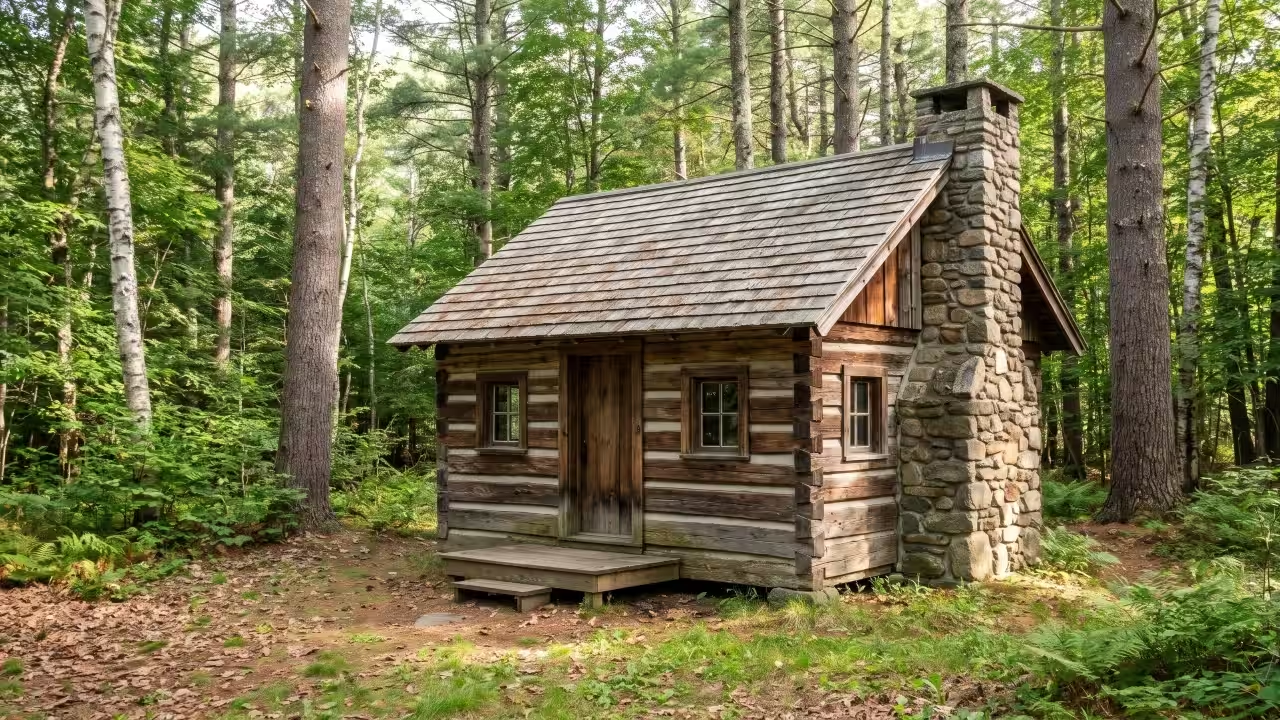
Rich families on both sides of the Atlantic gave their kids something much better long before backyard trampolines and plastic play tents. They constructed tiny versions of actual homes. Throughout the late nineteenth century, playhouses proliferated on rural estates, and most were never meant to be simple toys. A youngster might exercise the adult skills of cooking, hosting, and managing a home on these small stages.One of the finest survivors is in the White Mountains of New Hampshire. Around 1886, a log cabin playhouse was built for eight-year-old Fanny Glessner at the family’s vacation estate, The Rocks, near Bethlehem, according to the Society of Architectural Historians. It included child-sized furnishings and a working cooker, and it still stands today, open to guests. It was created by Isaac Scott and used by Fanny to practise her homemaking talents, hosting tea parties and making jams and jellies.A summer cottage in the hillsTo understand why a girl in 1886 had a cabin like this, it helps begin by looking at her family’s summer traditions. Fanny’s father, John Jacob Glessner, was a Chicago businessman who later helped found International Harvester, according to the Forest Society. The family first came to the North Country of New Hampshire in 1878 because the mountain air helped her brother George’s hay fever. After a few summers in a big resort hotel, they bought land of their own. In September 1882 they bought their first 100 acres, and a year later their home, called simply the Big House, was finished. That mansion was planned by the same family friend, Isaac Scott, who would go on to create much of the estate. His buildings included a carriage barn, a gardener’s cottage, an observatory, various summer houses and a bee house for Fanny’s mother, Frances.Playhouses of the eraFanny's cottage was hardly the only theatre of the times. Playhouses and Privilege, a new book, examines children’s playhouses built on British and American estates from the 1850s to the mid-1930s. The story begins near the start of that saga, at Osborne, at the Swiss Cottage erected in 1853 for Queen Victoria and Prince Albert. A children's cottage on the grounds of Cornelius Vanderbilt's Newport house was erected in 1886, the same year as Fanny's. In Chicago, the Sears family also built a log cabin on Prairie Avenue in the 1880s, and it survives today in Kenilworth, Illinois.Fanny’s cabin was well used. The Forest Society now maintains it for The Rocks and recalls that she spent many hours there playing, baking and making jellies. It used to be atop the hill, close by the Big House. Fanny moved it down behind the cottage later. In 1999 the Forest Society moved it again to its present place, where it is open to tourists.From playhouse to miniaturesThe cabin’s most famous resident moved on to a career that, weirdly enough, was also about establishing little worlds. Fanny grew up to become Frances Glessner Lee, who is known today as a pioneer of forensic science. After coming into the family fortune in the 1930s, she turned to forensic science in her fifties. In the 1940s, she produced the Nutshell Studies of Unexplained Death, a series of highly realistic, miniature crime scenes to instruct homicide investigators, which the Smithsonian American Art Museum describes as a meeting point of craft and forensic science. In 2017, the museum showed all 19 studies thought to survive together for the first time at its Renwick Gallery.Fanny never really left The Rocks. Later she made the Gardener’s Cottage her home and in 1938 enlarged her cottage at The Rocks so that she could live there all year round. In 1940, she had a tea house and pond built in the gardens that had been laid out with the help of the firm of Frederick Law Olmsted. Meanwhile, her tiny crime scenes were constructed between 1943 and 1948, and for each she worked from case records and witness accounts based on actual investigations. No one knows if it was a log cabin in the forests of New Hampshire that gave her the idea. But a childhood spent maintaining a little residence, with its own cooker and sparse furniture, sits well with an adult existence of carefully crafted smaller spaces.Today, the playhouse sits on land that still functions as a Christmas tree farm. In 1978, two of the Glessners’ grandchildren donated The Rocks, by then around 1,400 acres with 22 buildings, to the Forest Society, with the proviso that there must always be a crop growing in the field. For decades, that crop has been Christmas trees. If you are planning to visit Bethlehem, you can view the cabin where an eight-year-old once baked and canned jellies, but you might want to verify the Forest Society’s guest information before you go.You use AI every day. Now get your AI Quotient. Take the AIQ test.
Topics in this story
Gathered from external sources. Rights to this text belong to whoever originally published it.