What Trump, Putin and Xi want from superpower summit
President Trump’s Asia trip will be capped by an unprecedented meeting with Russian President Vladimir Putin and Chinese President Xi Jinping — a nuclear-armed trilateral that harkens back to a more Machiavellian era of geopolitics. The summit, expected to take place Wednesday on the sidelines of the Asia-Pacific Economic Cooperation summit in Shenzhen, China, is…
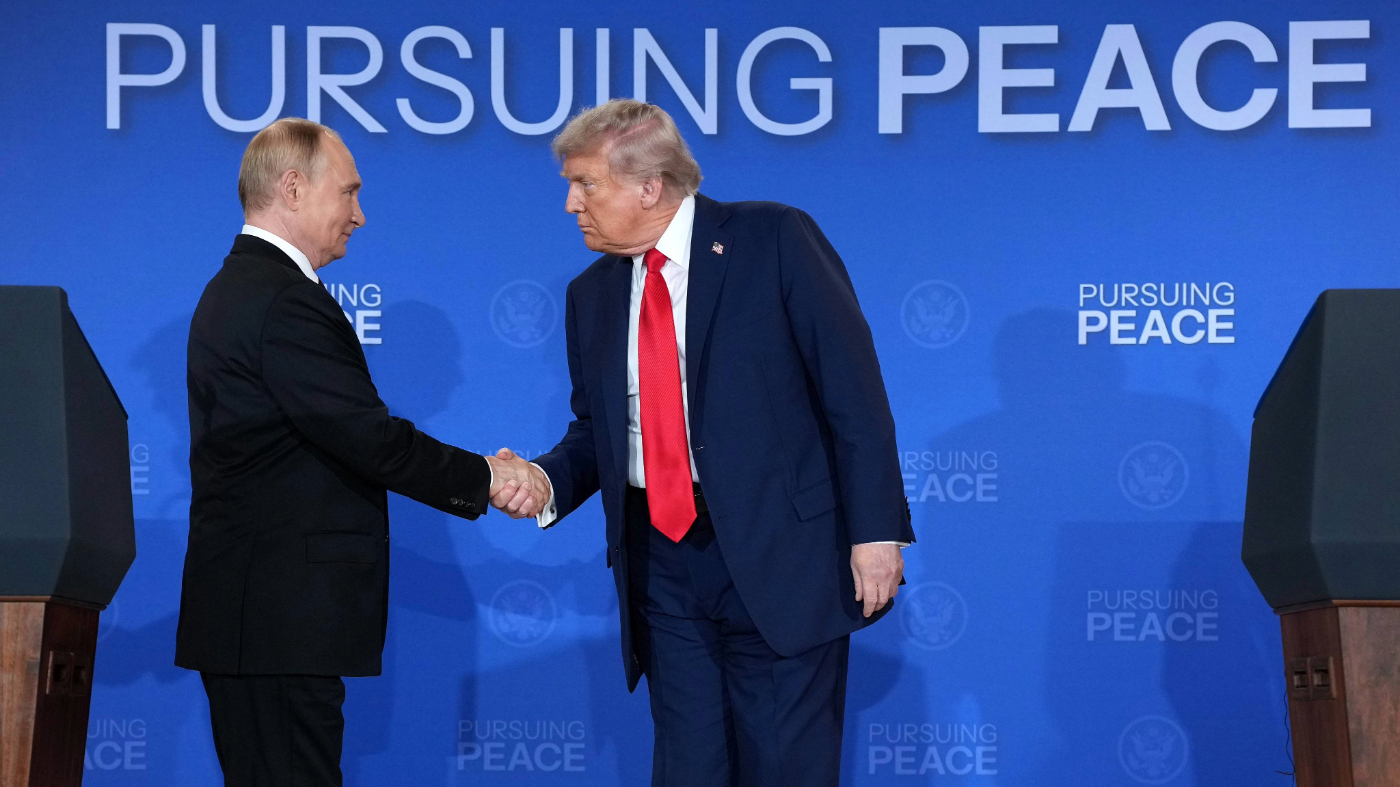
President Trump’s Asia trip will be capped by an unprecedented meeting with Russian President Vladimir Putin and Chinese President Xi Jinping — a nuclear-armed trilateral that harkens back to a more Machiavellian era of geopolitics.
The summit, expected to take place Wednesday on the sidelines of the Asia-Pacific Economic Cooperation summit in Shenzhen, China, is drawing rough comparisons to the Yalta Conference, when President Roosevelt met with British Prime Minister Winston Churchill and Russian leader Joseph Stalin to divide spheres of influence after World War II.
The agenda for this week’s meeting is murkier, but Trump says global conflict will again be at the center of talks, with the three powers discussing the fate of countries while excluding them from the discussion.
Trump is on the opposite side of Xi and Putin in the U.S.-Israel war with Iran, though he has played down their support for Tehran. The U.S. under Trump has shifted toward Russia’s position in negotiations to end the Russia-Ukraine war, but Washington continues to support Kyiv with intelligence, satellite access and U.S. arms purchased by Europe.
“On its face, declaring Shenzhen ‘Yalta 2’ is an awkward analogy,” Catherine Grace Katz, a historian and author of “The Daughters of Yalta: The Churchills, Roosevelts, and Harrimans: A Story of Love and War,” wrote in an article for LawFare.
“And yet, at a deeper, far more concerning level, Yalta may accidentally turn out to be exactly the right analogy for a summit among Trump, Putin, and Xi in November, particularly amid lapses in intelligence sharing between the U.S. and Ukraine and Trump’s decision to lift some sanctions on Russia, clear signals that the White House’s well of support for Ukraine may soon be running dry.”
Trump has indicated he wants to talk about Ukraine, Iran and denuclearization with Putin and Xi. He’s made little progress in finding areas of agreement or convergence on any of the issues, despite nearly two years of promising imminent breakthroughs.
The U.S. is the key backer of Ukraine’s more than four-year resistance to Russia’s intent to take over the country. And Russia would not be able to sustain its war against Ukraine if it wasn’t for China’s support.
Both Russia and China have provided Iran a variety of support — buying Iranian oil, selling dual-use military items and, reportedly, providing weapons — which has allowed Tehran to resist U.S. military and economic pressure. Russia has reportedly provided intelligence allowing Iran to hit U.S. bases.
And while Russia has earlier participated in nuclear nonproliferation talks with the U.S., China has shown little to no willingness to limit its nuclear weapons buildup. The Pentagon has assessed China will probably have more than 1,000 operational nuclear warheads by 2030.
A senior U.S. official said it was unlikely any deals or breakthroughs would come from the summit.
“We do not expect to get to any kind of agreement,” the official said Friday during a briefing with reporters. The meeting is the “entry point” and baseline for future, productive conversations, the official added.
Foreign policy experts agree there’s unlikely to be anything substantial.
“The meeting of these three leaders is the message,” Scott Kennedy, senior adviser in Chinese Business and Economics at the Center for Strategic and International Studies, told the Singapore-based Channel NewsAsia .
“A message they all agree on, even if they don’t say it, is that great powers have a larger voice than smaller powers.”
For Putin, the image of him alongside Trump and Xi — who has called the Russian leader his “no limits” partner — demonstrates an elevated international position, even as Ukraine’s supporters in Europe and Asia have tried to alienate him. These countries argue any success Putin achieves in Ukraine will further embolden China to take over Taiwan.
“Holding such a meeting would give Putin another opportunity to argue that Western efforts to isolate Russia over its war in Ukraine have failed the test of time,” said Oleg Ignatov, the International Crisis Group’s senior analyst for Russia.
Xi’s motivations are more complicated. He’s not likely to be interested in nuclear nonproliferation talks and is not involved in the U.S.-mediated talks between Russia and Ukraine.
“Beijing will approach the three-way summit with caution,” said William Yang, senior analyst for Northeast Asia with the International Crisis Group.
While Xi can use the summit to demonstrate China as wielding strong convening power, the Chinese leader is likely to focus on “broad-scoped topics like global stability,” Yang noted.
“This approach would reflect Beijing’s efforts to minimize potential damage to its global image and relationship with European countries,” he said.
There are few signals that Putin or Xi are taking Trump’s talk of denuclearization seriously — or that any major preparatory work has taken place for a breakthrough or deal. But that shouldn’t exclude finding some way to progress nuclear weapons reduction, said Daryl Kimball, executive director of the Arms Control Association.
“Resuming progress on arms control and disarmament negotiations, bilaterally or multilaterally, is essential and this meeting is an important opportunity to begin to take the steps necessary to reduce the nuclear danger,” Kimball said in an email to The Hill.
Kimball said there are concrete steps the three leaders can take. The first is to agree to launch talks for a new agreement to cap and freeze nuclear arsenals.
Trump, Xi and Putin could also reaffirm a ban on nuclear weapons testing, part of commitments under the 1996 Comprehensive Nuclear-Test-Ban Treaty. All three countries have signed the document but not ratified it. They could also launch technical talks to guard against “clandestine, low-yield nuclear explosions,” before the treaty enters into force.
Third, the leaders could reinforce commitments to maintain human control over decisions about nuclear weapons in the face of risks posed by artificial intelligence.
A senior U.S. official said China should “step up to the adult’s table” and engage in hard talks about its nuclear weapons arsenal.
“The world is very much a place that we share, and that the things that China is doing very opaquely with their nuclear arsenals are something that have impacts on the security of every human being in the world,” the official added.
The trilateral summit will conclude Trump’s trip in Asia, heightening the pressure on America’s democratic partners in the region to exert influence on the president in meetings beforehand.
Trump is set to attend a leader-level meeting with the heads of the other three countries that make up the Quad — Japan, India and Australia — on the sidelines of the Association of Southeast Asian Nations summit in Manila. It will be the first Quad gathering in two years.
The Quad is viewed as a preeminent security grouping contesting China’s ambition in the region. But Trump’s lack of focus on the group, and tensions with India over trade deals, have weakened the Quad, experts say.
The meeting will be particularly important for Japanese Prime Minister Sanae Takaichi, whose country is on the front line of provocation from both China and Russia, which are increasing joint naval drills and military exercises surrounding Japan.
Japan is the “linchpin” of U.S. security in Asia, said a former U.S. official, requesting anonymity because of the sensitivity of the topic.
“I don’t think it is just the issue of what issues are described or discussed in the meeting. It is the meeting itself and then the surrounding choreography,” the former official said.
“The most important thing that President Trump can do in China is have a warm, good meeting with Prime Minister Takaichi.”
Topics in this story
Gathered from external sources. Rights to this text belong to whoever originally published it.