In 2016, Barack Obama expanded that Hawaiian ocean refuge by 442,781 square miles, creating a protected area nearly the size of the Gulf of Mexico
In a landmark decision, President Obama expanded the Papahānaumokuākea Marine National Monument by 442,781 square miles, establishing the largest protected area on Earth to safeguard marine biodiversity and cultural heritage.
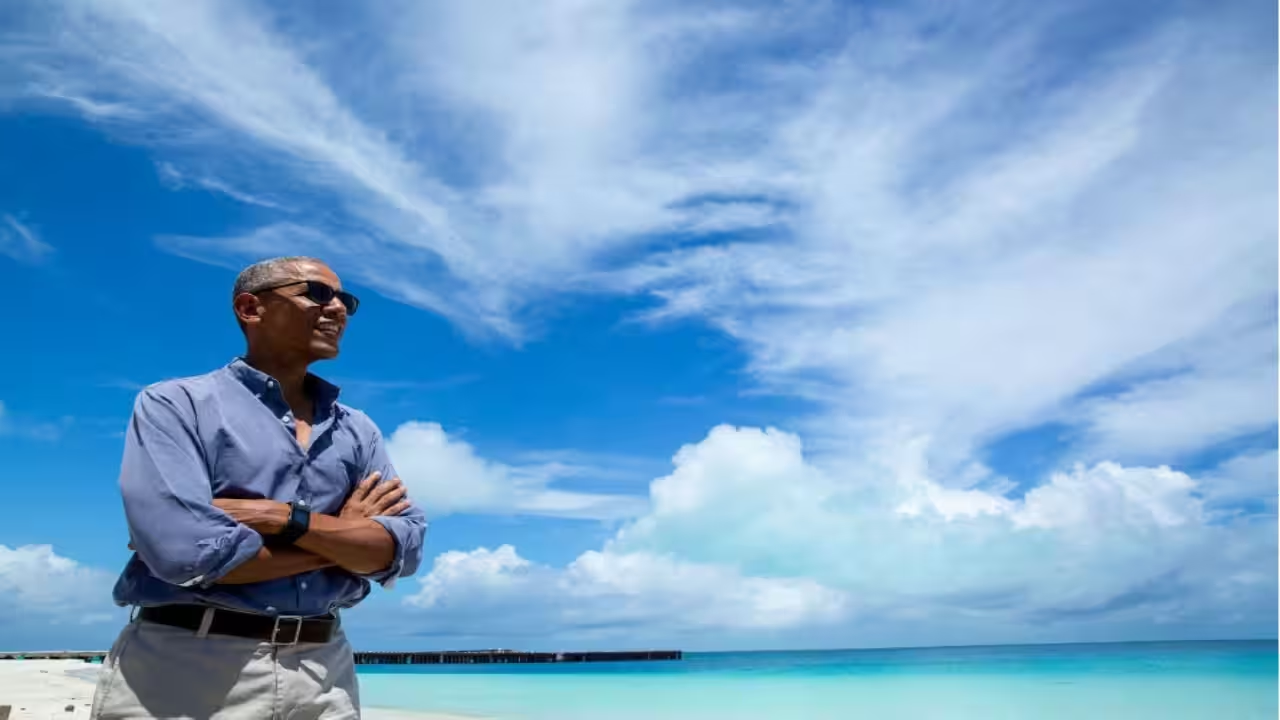
For almost a century, the Northwestern Hawaiian Islands, a group of small, isolated islands and atolls located far to the northwest of the main Hawaiian Islands, have been considered unique. According to the Department of the Interior, protection started with bird reservations and expanded into the Hawaiian Islands National Wildlife Refuge in 1940. The Papahānaumokuākea Marine National Monument, which spans 139,797 square miles of water, was established by President George W. Bush in 2006. Scientists found that deep-water life extended beyond the monument's bounds, and the site was inscribed as a mixed natural and cultural UNESCO World Heritage Site in 2010.A proclamation signed by President Barack Obama on August 26, 2016, significantly changed the monument's scale. The monument’s own Papahānaumokuākea website report explains that the enlargement included 442,781 square miles, bringing the total protected area to 582,578 square miles, roughly the size of the Gulf of Mexico. That made Papahānaumokuākea one of the largest protected areas on Earth at the time.How the expansion happenedThe expansion proposal had a clear lead-up. In June 2016, Hawaii Senator Brian Schatz submitted it to President Obama, marking the tenth anniversary of the original monument. Early August saw public forums held on Oʻahu and Kauaʻi and on 25 August Governor David Ige wrote to the president confirming his support. The decision was also made in consultation with Native Hawaiian leaders, cultural organisations, conservation organisations, scientists and fishermen, the White House said.Science was a key factor. The White House said new exploration had revealed new species and deep-sea habitats and important ecological links between the existing monument and the waters beside it. The monument was expanded under the Antiquities Act, which lets presidents protect federal lands and waters by proclamation, and according to the monument's own figures, the move more than quadrupled the original protected area.What the new protections permitAccording to the White House fact sheet, no commercial resource extraction is permitted in the expanded area, including commercial fishing or future mineral mining. By permit, noncommercial fishing (including recreational fishing and fish removal for Native Hawaiian traditional customs) and scientific study are authorised.The fishing issue drew strong opposition. National Geographic said Hawaii's longline fleet strongly opposed the expansion, since boats that had fished in the newly protected waters would have to halt. The White House, in turn, cited Hawaii’s carefully managed longline fleet as a world leader in environmentally friendly techniques and said the decision built on a long legacy of marine conservation in Hawaiian waters.Why the waters matterThe White House said the extension provides crucial protection for more than 7,000 marine species, including whales and sea turtles listed under the Endangered Species Act. It also features black coral, a specimen of which NOAA has estimated to be more than 4,500 years old, among the longest-living marine species known. The extended region is a sacred site in Native Hawaiian culture and part of traditional voyaging and wayfinding, and it also holds historically significant wrecks of ships and planes from the Battle of Midway during World War II.NOAA scientists examined deep seas in and around the monument earlier in 2016 using a remotely operated vehicle, capturing deep marine life at depths ranging from around 2,130 feet to 2.7 miles. Some of that film was shot outside the bounds of the monument originally, as NOAA’s Earth is Blue feature outlines, and is now protected.Papahānaumokuākea is a good example for anyone attempting to understand why ocean protection became a big component of the discourse around conservation. It shows how a remote chain of islands, a decade of monument protection and fresh scientific findings have led to a vast region of open ocean being blocked to commercial extraction, while still allowing for cultural activities and research.You use AI every day. Now get your AI Quotient. Take the AIQ test.
Topics in this story
Gathered from external sources. Rights to this text belong to whoever originally published it.