In 2002, Kentucky researchers examined 20 treated subgrade sections across 14 road sites; after 8–15 years, treated soil’s CBR ranged from 24 to 59, versus 2 for untreated soil
A groundbreaking study from the University of Kentucky reveals that chemical treatments significantly improve road subgrade strength, ensuring long-lasting pavement performance. Discover the key findings and implications for transportation infrastructure.
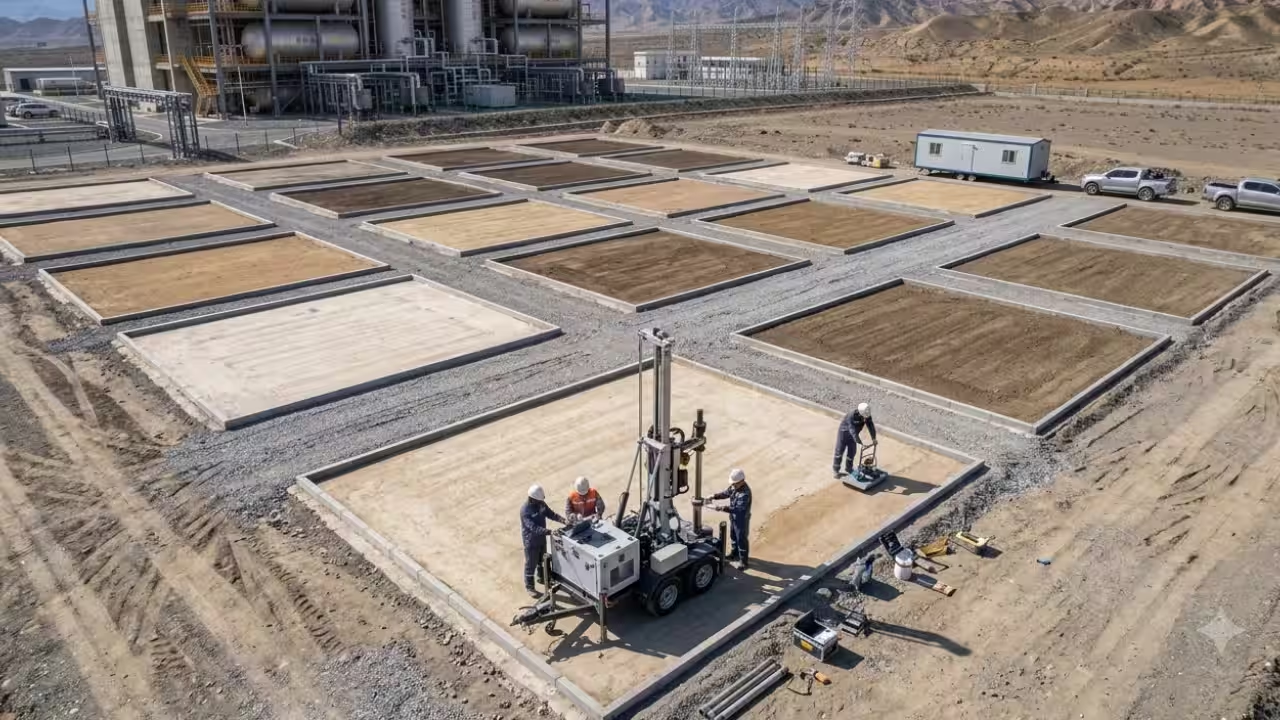
Roads depend on the soil beneath them to support traffic and prevent pavement damage. When the underlying layer is weak, repeated vehicle loads can contribute to cracking, rutting and surface deterioration. In a 2002 study, researchers at the University of Kentucky examined whether chemical treatments could improve road subgrade strength over the long term. They studied 20 treated sections across 14 sites where the pavements had already been in service for approximately 8 to 15 years. The findings appeared in Long-Term Benefits of Stabilizing Soil Subgrades, published in June 2002 by the Kentucky Transportation Center. Tommy C. Hopkins, Tony L. Beckham, Liecheng Sun, Bixian Ni and Barry Butcher conducted the research. The full report is available through the University of Kentucky’s UKnowledge repository.Researchers examined 20 treated road sectionsChemical stabilisation of road subgrades had been used in Kentucky since the mid-1980s to improve foundation strength. The study aimed to find out whether these improvements had lasted after years of traffic and weathering. The researchers studied 20 chemically treated sections at 14 road sites. Scientists took approximately 455 samples of soil cores from both treated soil and non-treated soil beneath it. In the experiments, scientists used several types of chemical stabiliser: hydrated lime, Portland cement, a combination of hydrated lime and Portland cement and a by-product of hydrated lime production known in the study as MKD.Treated soil recorded a much higher CBR valueOne of the tests measured the California Bearing Ratio (CBR), which compares the penetration resistance of the soil with that of standard crushed rock. Engineers use it to judge how well soil can support load under a road and a higher value generally means a stronger subgrade. In terms of CBR at the 85th percentile, chemical treatment of the subgrade resulted in in-situ values of CBR that ranged from 24 to 59. The corresponding value of soil beneath the layer of treated soil was only two. Hence, treated soil gave results that were about 12 to 30 times better than those of untreated soil. A falling weight deflectometer was also used to determine how the pavement behaved under load. Back-calculated modulus values for the treated layers were about twice those of the untreated soil.Most road sections remained in good conditionAdditionally, pavement condition status was considered along with soil strength test results. Twelve out of 14 roadways had pavements in good condition, according to Kentucky Transportation Cabinet criteria. The research team projected that these pavements would still be rated good at the end of their 20-year design period. Two roadways had a thin overlay of asphalt pavement after about 15 years. There was a difference in the soil layer condition as well. The untreated subgrade had a soft, moisture-affected surface layer, while the treated soils did not. This contributed to the better engineering characteristics of the chemically stabilised materials.Findings supported the long-term value of soil stabilisationThe study offered proof in the field that chemical improvement of road foundations would last through many years of use. The research included data from multiple locations with various stabilisers. This enabled the engineering personnel to evaluate the effectiveness of treatment through the test period rather than short laboratory tests. The research team also developed structural layer coefficients for estimating the load-carrying capacity of pavements built over chemically treated foundations. The values were tested using sections of the roads that were designed with thinner pavement.The research indicated that stabilisation of the road helped in maintaining the structural integrity of the road foundation. This does not imply that all treatments would be equally effective. Main factors such as composition of soil, moisture content, methods of construction and traffic loading have an impact on performance. The study helped transportation departments understand that the benefits of soil stabilization would last long after the construction process. It might also provide the designers of pavement structures with more design options.You use AI every day. Now get your AI Quotient. Take the AIQ test.
Topics in this story
Gathered from external sources. Rights to this text belong to whoever originally published it.