Venezuelan interim president offers details on US oil deal
Venezuelan interim President Delcy Rodríguez on Saturday provided details on her country’s new oil deal with the U.S., after President Trump said much of Venezuela’s oil reserves will be under “majority U.S. control.” “This 25-year bilateral project envisages the development of 17 strategic oilfields with a production target of more than 1.5 million barrels per…
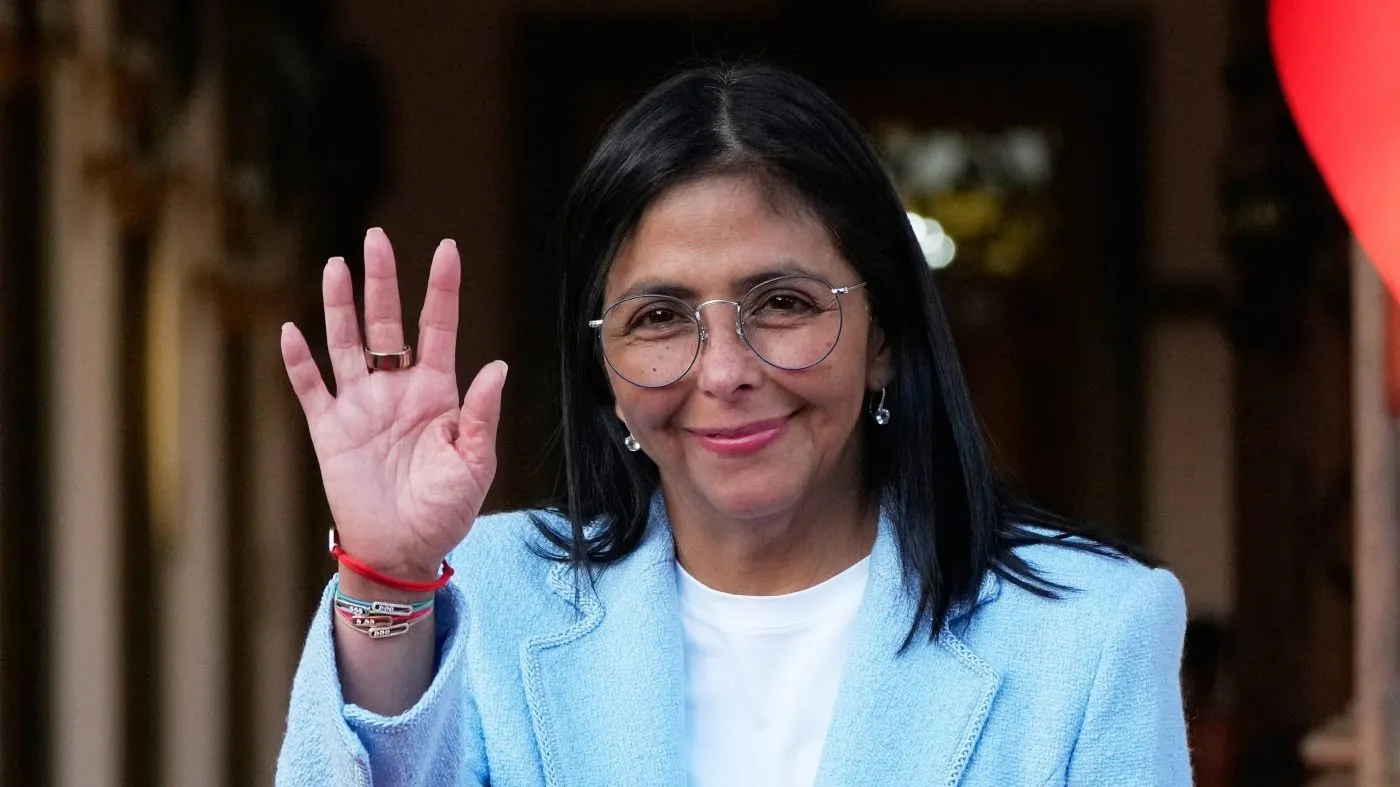
Venezuelan interim President Delcy Rodríguez on Saturday provided details on her country’s new oil deal with the U.S., after President Trump said much of Venezuela’s oil reserves will be under “ majority U.S. control .”
“This 25-year bilateral project envisages the development of 17 strategic oilfields with a production target of more than 1.5 million barrels per day,” Rodríguez said on state TV outlet VTV in a late-night address. “That figure relates solely to the bilateral agreement between Venezuela and the United States.”
Rodríguez hailed the deal as “historic,” adding that it will revive Venezuela’s economy and increase government revenue.
“The agreement is based on a very simple premise,” she said. “Each party contributes what it does best. Venezuela contributes oil, its industry and the experience of its workers accumulated over more than 100 years. The United States contributes the capital and technology needed to recover and develop those assets.”
Rodríguez added that in return, “Venezuela receives production, jobs, investment in infrastructure, increased revenue for the government and productive linkages for domestic industry.”
The deal establishes $19 going to Venezuela for each barrel of oil produced and sold to the U.S., generating an estimated $209 billion a year to the South American country, she said. The benchmark price per barrel is $65, which she said could fluctuate based on global prices.
The $65 billion-per-barrel figure represents about 21 percent of Venezuela’s total proven reserves, which amount to 303 billion barrels.
Rodríguez noted that her country will own the natural resources “while leveraging capital, technology and operational expertise to support the recovery of a strategic industry that has been severely affected by sanctions.”
“But there is something that must be absolutely clear,” she said. “Venezuela retains ownership and sovereignty over its resources, while utilizing capital, technology and operational capacity to leverage the recovery of a strategic industry that has been severely hit by sanctions.”
Trump on Friday praised the deal as “THE BIGGEST OIL DEAL IN WORLD HISTORY!” He wrote on Truth Social that the U.S. “secured majority U.S. control of more than 65 BILLION BARRELS of proven Oil Reserves in Venezuela, at no cost to the American Taxpayer.”
Rodríguez granted a joint venture between the U.S. government and a private operator in Venezuela 100-year “concessions” for oil fields containing 63 billion barrels of proven reserves, a U.S. official previously told The Hill.
Trump engaged with Venezuela over its oil following the U.S. capture of President Nicolás Maduro in January.
The push for oil production comes as the U.S. faces rising prices on energy amid the conflict with Iran, which has cut off oil exports from exiting the Strait of Hormuz, where roughly one-fifth of the world’s oil travels through.
Sen. Chris Van Hollen (D-Md.) was among several Senate Democrats who pushed back on the deal , saying Friday that it “isn’t a win.”
“This is proof Trump put our service members at risk to get Venezuelan oil for his billionaire buddies,” he wrote on social media. “Putting our soldiers’ lives on the line for private profit is a gross dereliction of his constitutional duty.”
Topics in this story
Gathered from external sources. Rights to this text belong to whoever originally published it.