Drought-hit Karnataka cannot afford polluted rivers: Experts warn of sewage contamination and shrinking oxygen levels
BENGALURU: A state grappling with drought can ill afford to let its rivers become repositories for untreated sewage.
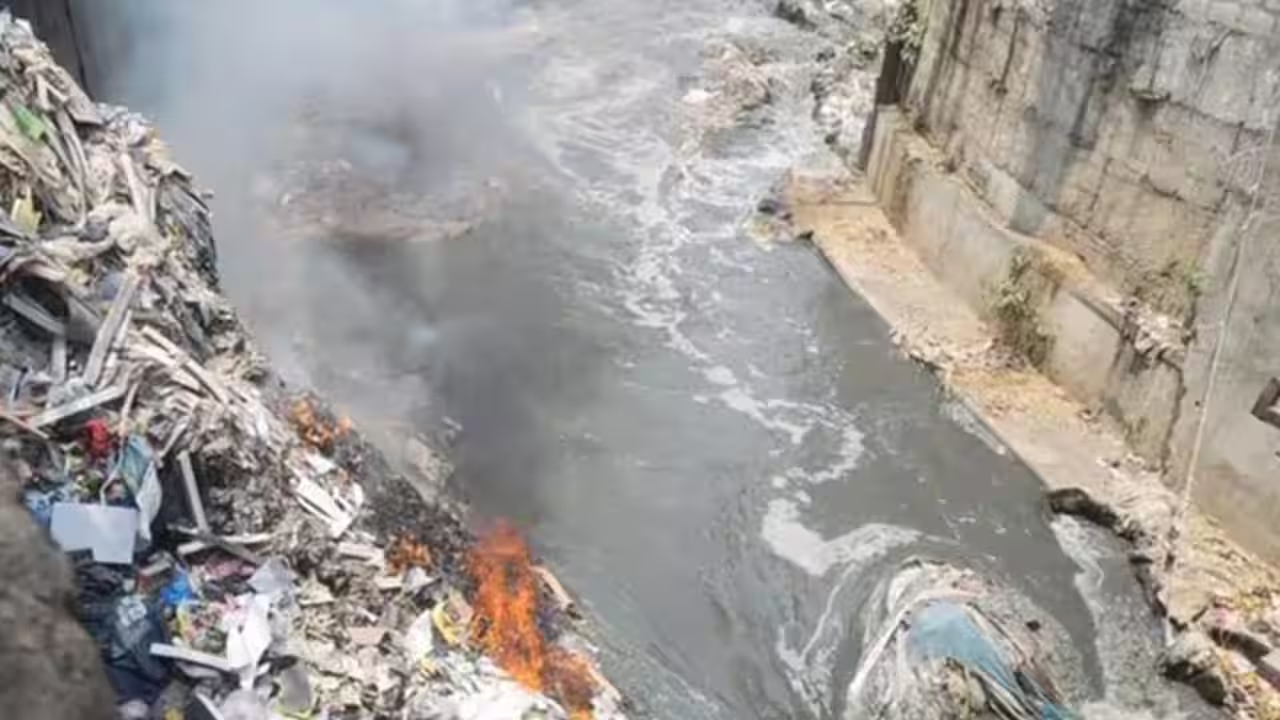
BENGALURU: A state grappling with drought can ill afford to let its rivers become repositories for untreated sewage. Yet, Karnataka’s latest water-quality assessment presents a troubling picture: at some monitoring points, pollution is severe enough to leave little or no oxygen in the water, while bacterial counts run into lakhs.The Karnataka State Pollution Control Board’s August 2026 assessment covers 66 monitoring locations across 14 identified polluted stretches.The readings show that pollution is not confined to a few prominent waterways but extends across multiple river stretches. Data for rivers beyond the Dakshina Pinakini and Arkavathi, two of the most affected rivers with high biochemical oxygen demand (BOD) and high faecal-coliform counts, also raise concern.High (BOD) indicates that microorganisms need more oxygen to break down organic pollution, leaving less dissolved oxygen available for aquatic life.High faecal-colifor m counts indicate contamination by faecal matter and warn of the possible presence of disease-causing pathogens.Experts point out that with water already scarce, long-term plans to protect its quality should be as critical as securing its supply while framing policies.Drains turned into sewage channelsKC Subhash Chandra, a hydrogeologist, says that Bengaluru’s natural drains, or rajakaluves, have become conduits for sewage, with discharges from residential areas flowing into lakes.These flows are perennial, yet pollution levels went unexamined for years, while sewage treatment remained lacking. The problem extends beyond Bengaluru. Townships across Karnataka generate pollution through human activity.Industrial discharges into drains worsen the situation and risk groundwater contamination. Rules prohibit industrial pollution in natural drains and groundwater, but strict action is needed to prevent such discharges.Industries, including textile, lead and battery units, must keep sewage and effluents out of natural drains and treat them to tertiary, potable-level standards. Otherwise, pollution will continue.Regular monitoring of biochemical oxygen demand (BOD), chemical oxygen demand (COD) and dissolved oxygen (DO) can establish the extent of contamination. Recent fish deaths in lakes should serve as a warning. Sewage inflows reduce dissolved oxygen, while oxygen demand rises.Until discharges are stopped and treated, Bengaluru’s lakes will remain vulnerable.Make polluters pay for clean riversVishwanath S, who is a Water conservation expert, says that industrial pollution must also be stopped through effluent treatment plants, ensuring no industrial discharge enters rivers. Domestic sewage is greater in volume, but industrial effluents have a greater impact. Filing cases is the least that can be done.Peenya industrial area, which pollutes the Arkavathi, doesn’t have a single functional common effluent treatment plant of scale. We need a long-term plan and, until then, must recognise that rivers will remain polluted.The question is where the money will come from. The principle must be that polluters pay.Every household & apartment discharging sewage must pay for its collection, conveyance and treatment. Unless we get the pricing of water and wastewater right, institutions responsible for managing them won’t have funds to tackle pollution and we’ll keep repeating the ritual every year: a report flags pollution, the board issues notices, and pollution continues.We must address the root of the problem by establishing a system to collect the money needed to treat wastewater. That’s a difficult political question because nobody wants to raise water prices or charge for sewage collection and treatment.Funding issues, drains hamperAction plans have been prepared for all identified polluted river stretches in Karnataka, but gaps in sewage infrastructure, funding constraints and delays in coordination continue to hamper Karnataka State Pollution Control Board’s (KSPCB) clean up efforts.Untreated sewage is the primary source of river pollution, a senior official said. Restoring water quality requires sewage treatment plants (STPs) along rivers, but inadequate underground drainage networks remain a hurdle.“Laying pipes needs a large budget, and the state can’t release funds all at once,” the official said, adding that projects have to be taken up in phases, with priority given to cities like Bengaluru, Mysuru and Mangaluru.The official was hopeful of completing works in the next two years. Coordination among around 270 urban local bodies and panchayats presents another challenge.Most STPs have to be established by these bodies, requiring clearances, budgets and permissions. While almost all cities have STPs, some have been discontinued.In Bengaluru, most identified polluted stretches are along the Arkavathi, while many of Karnataka’s polluted stretches are near Belagavi, which has numerous riverbanks, the official said.The board has also stepped up enforcement.It has filed around 40–42 criminal cases under the Water Act against polluters, the official said. Several of the cases are pending before district magistrate courts. Earlier, action largely involved fines, but the board is now pursuing criminal cases as well.The KSPCB also conducts awareness programmes, particularly during festivals, urging people not to dump waste into rivers.Following national green tribunal and high court orders, urban local bodies have received pollution-control funding more actively in recent years, though allocations are being made progressively.You Can Also Check: Gold Rate in Bengaluru | Silver Rate in Bengaluru | Bank Holidays in Bengaluru | Public Holidays in Bengaluru | Bengaluru AQI | Weather in Bengaluru | Petrol Price in Bengaluru | Diesel Price in Bengaluru | CNG Price in Bengaluru | LPG Price in BengaluruStay updated with the latest Bengaluru news. Download the TOI App.
Topics in this story
Gathered from external sources. Rights to this text belong to whoever originally published it.