2 years of protests, one crucial election: Serbia's students challenge Vucic's 14-year rule
Serbia’s student-led anti-corruption movement, which emerged after a deadly railway station disaster in November 2024, is now mounting its biggest
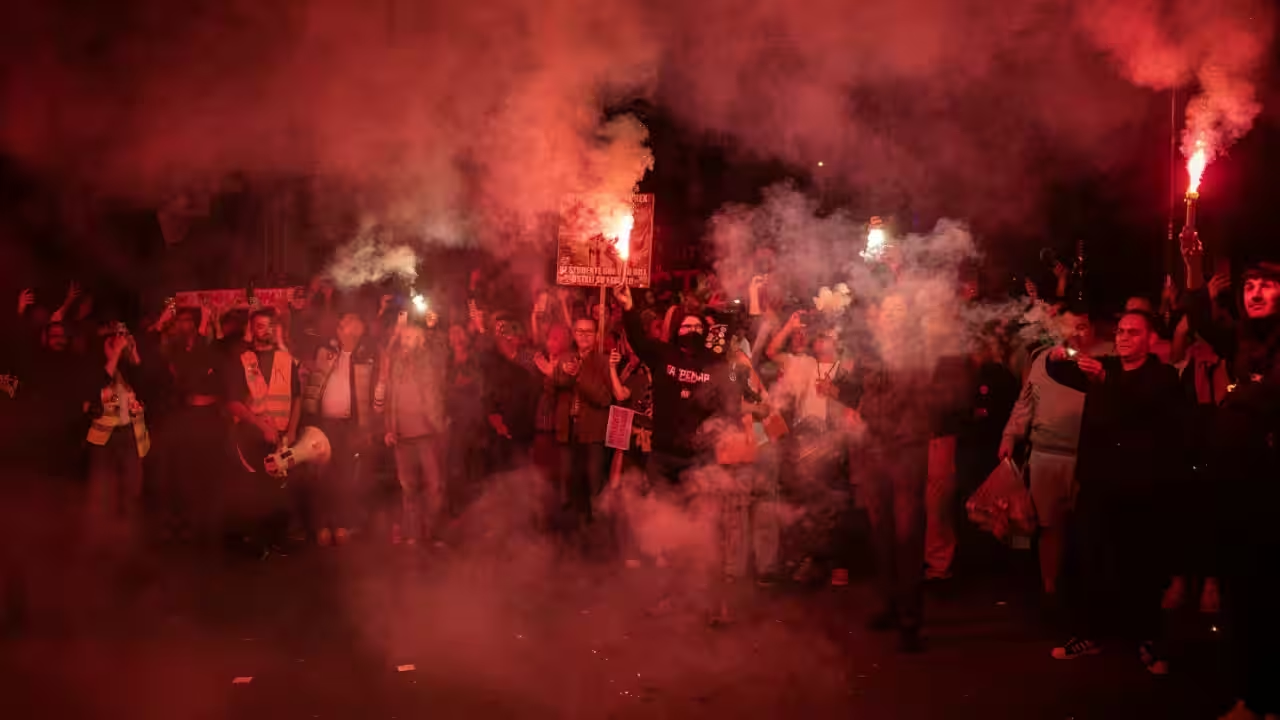
Serbia’s student-led anti-corruption movement, which emerged after a deadly railway station disaster in November 2024, is now mounting its biggest political challenge yet to populist leader Aleksandar Vucic, with an early parliamentary election on October 25 threatening to end the ruling party’s 14-year grip on power.The election comes amid heightened tensions over alleged surveillance and intimidation of government critics. On Monday, digital rights researchers said they had confirmed with “high confidence” that the phone of Vladan Djokic, rector of the University of Belgrade and a prominent supporter of the protests, was infected with Pegasus spyware in 2026 reported AP.The Citizen Lab research group said it conducted the forensic analysis in cooperation with Serbia-based digital rights organisation SHARE Foundation. Pegasus, developed by Israeli company NSO Group, can infiltrate smartphones and give operators access to messages, location data, microphones and cameras.The findings follow reports in September that at least 14 activists and students had their phones hacked and infected with spyware, including Pegasus. Serbian authorities have previously denied involvement in such attacks. There was no immediate comment from the authorities on the latest findings.Djokic described the alleged hacking as a “serious attack on my privacy, security and the integrity of the post of rector”. He added that it was “yet another attempt of intimidation designed to prevent any critical position and public action”.The allegations have added to concerns over the treatment of government critics as the student movement prepares for a decisive electoral contest against Vucic’s Serbian Progressive Party (SNS).How did the protests begin?The protests first started in November 2024 after a concrete canopy at a railway station in Novi Sad, Serbia’s second-largest city, collapsed, killing 16 people.The tragedy triggered widespread anger over alleged corruption and negligence in public infrastructure projects. Students demanded accountability for the deaths, arguing that corruption and failures in oversight had contributed to the disaster.What began as a demand for justice soon grew into a nationwide movement against corruption and the government’s handling of public institutions. University students organised demonstrations, blocked faculties and mobilised supporters across the country.The protests put growing pressure on Vucic’s government and contributed to a political crisis that forced a government collapse. Students have since emerged as a significant political force, challenging a ruling party that has dominated Serbian politics for 14 years.Psychology professor Aleksandar Baucal, an early supporter of the movement who is now on the students’ election ticket, said the protests reflected a broader frustration with the state of Serbian society.“Their generation grew up in a society that is deeply unjust,” Baucal said. “They realised that if they gave up, they would give up on their lives,” he added. “This has made them an opponent who can't give up.”The student movement has now evolved from a protest campaign into an electoral challenge, seeking to translate public anger over corruption into political change.The early parliamentary election on October 25 pits Vucic’s SNS against a student-backed electoral ticket known as the Students’ List. The 250-seat parliament is at the centre of the contest, with the outcome expected to determine whether the ruling party can extend its hold on power.Vucic resigned as president last month to pursue a return as prime minister, according to the Associated Press report. The veteran politician has repeatedly accused the student protests of being organised from abroad to “destroy” the country, without providing evidence for the claims.The students, meanwhile, say their objective extends beyond replacing the government. They want to rebuild democratic institutions, tackle corruption and strengthen independent media to create conditions for free and fair elections in the future.Their candidates were selected through a process involving proposals and vetting at universities across Serbia. The list includes teachers, professors, experts, athletes, farmers and artists, alongside more familiar public figures.Vukasin Djinovic, a student from Novi Sad, said the movement’s collective approach set it apart from the country's established political leadership.“It has been important for us to dismantle the personality cult,” he told the Associated Press.The movement has no single leader or spokesperson. Instead, students say decisions are taken collectively through faculty assemblies, known as plenums, where participants discuss and vote on plans.Djinovic said the movement supports “democracy, tolerance and respect for everyone's opinion”.The approach has helped the students present themselves as an alternative to Vucic’s centralised political leadership, although the election will test whether their protest support can translate into votes.Surveillance allegations and fears of a crackdownThe campaign is unfolding amid accusations of surveillance, detentions and pressure on government opponents.The student movement warned on Sunday that its meetings were being monitored and alleged that authorities planned to detain some of its members ahead of a major rally scheduled for Thursday. Police had not commented on the allegations.Several students have been detained during the protests on accusations including anti-state activities. The authorities’ actions have drawn criticism from demonstrators, who say pressure has strengthened rather than weakened their movement.The Pegasus findings have brought renewed attention to the risks faced by activists and public figures critical of the government. SHARE Foundation warned that, without an effective investigation and accountability, “there is a serious risk that digital repression will continue and spread further, reaching every part of society and every critical voice”.A separate analysis is also under way to establish whether the phone of associate prosecutor Rade Bajic was hacked. Bajic worked on a corruption case linked to a proposed luxury development at a former military compound bombed during the 1999 NATO campaign. The project was linked to a company associated with Jared Kushner, US President Donald Trump’s son-in-law, and was later cancelled.Bajic was replaced after speaking out about the alleged corruption. A government minister and several others charged in the case are on trial in Serbia.NSO Group says it sells its technology to government agencies to combat serious crime and terrorism. However, investigations by journalists and human rights researchers have documented its use against journalists, activists and other members of civil society. The US Commerce Department placed the company on its trade blacklist in November 2021, citing evidence that foreign governments had used its spyware to target journalists, activists and government officials.What is at stake in the election?The October 25 vote is being watched closely because it could determine whether the student movement can turn nearly two years of demonstrations into a direct challenge to the ruling establishment.The SNS and the Students’ List are believed to be running close, according to the Associated Press, making the result uncertain. International election monitors and the European Union have raised concerns about the safety and fairness of the vote.The ruling party has faced previous accusations of election irregularities, including voter pressure, bribery and inflated voter lists. The party has denied the allegations.Analysts fear that both sides could claim victory on election night and that a defeat for the ruling party could trigger further confrontation.Political scientist Aleksandra Krstic, from Belgrade’s Faculty of Political Sciences, said the students had given people hope that political change was possible.“Students have shown clearly that they are the force, both as a generation and politically, that can bring about a change,” she said.“That is what gave people hope, that it can be different after 14 years of the Serbian Progressive Party regime,” Krstic added.But she warned that tensions remained high: “We all fear extreme violence.”You use AI every day. Now get your AI Quotient. Take the AIQ test.
Topics in this story
Gathered from external sources. Rights to this text belong to whoever originally published it.