In 1988, Ohio attorney Neil McKown secretly bought 155 neglected acres; 38 years later, the family farms nearly 500 acres and he declined a $400,000-$500,000 timber cut to keep the woods
In 1988, Ohio lawyer Neil McKown signed a deal to buy 155 acres of overgrown, run-down land in Shelby.
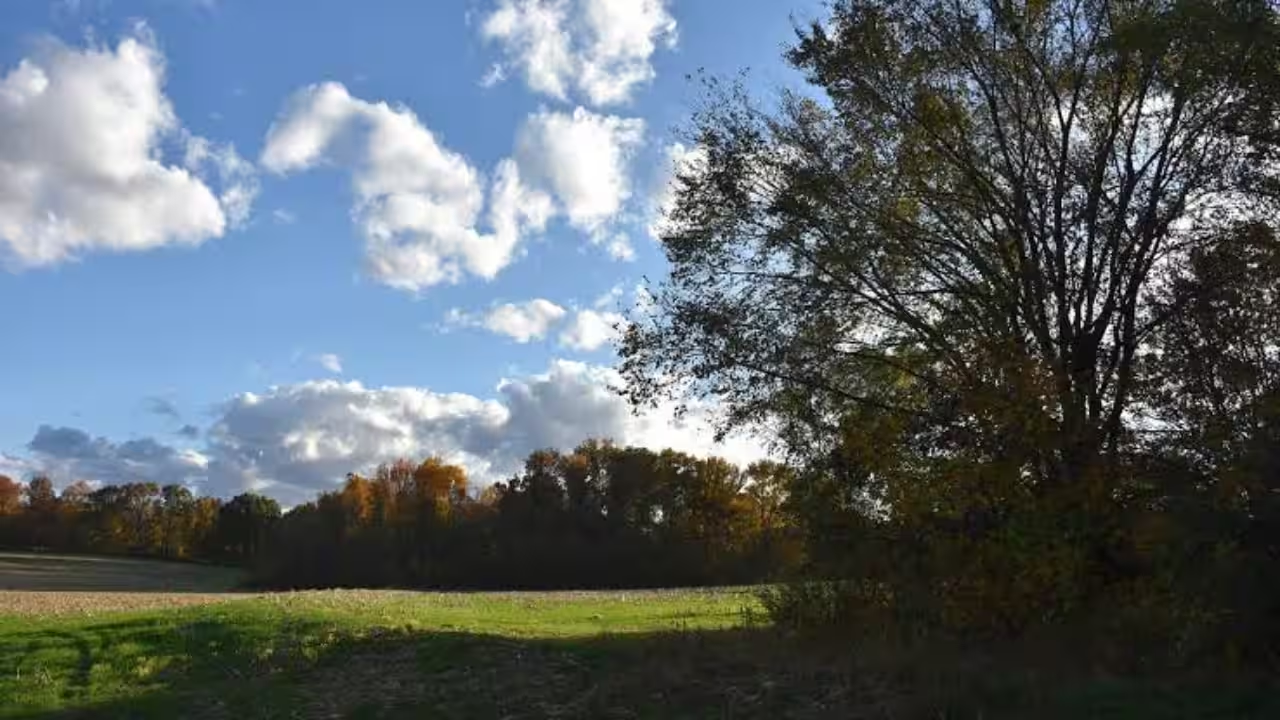
In 1988, Ohio lawyer Neil McKown signed a deal to buy 155 acres of overgrown, run-down land in Shelby. When he got home that evening, he asked his family to get into the car to see what he had just bought. His wife, Pamela, was not impressed by the property. She thought it was an eyesore. But that quiet, impulsive purchase began a decades-long effort to care for the land. Thirty-eight years later, the McKown family manages nearly 500 acres in Richland County, raising row crops, alfalfa, hay, and cattle. Their work to improve soil health, manage water, and care for the woods has earned them the Ohio Conservation Farm Family Award, according to Farm Progress.Escape from the courtroomNeil McKown spent years practicing law with his father. He and his family lived in a suburban home on seven acres. Over time, the pressure of legal work began to wear on him. He tried hobbies such as trap shooting and golf to relax. But people often approached him during his free time to ask for legal advice. "I needed to be by myself, without the computer, email, phone or people," Neil told Farm Progress editor Jennifer Kiel. "I wanted to be left alone with my thoughts." Going back to his rural roots seemed like the right choice. He had grown up five miles from where the family farm is today and had worked summer jobs on nearby farms. But moving into farming full time was still a major learning experience. When he planted his first soybean crop in 1990, three neighboring farmers stopped to look at his grain drill. They were concerned that he did not know what he was doing. Neil said he still laughs when he thinks about those early days, but the family kept going.Turning forced fun into family progressThe original property had about 80 tillable acres. The rest was made up of overgrown woods and pasture. Improving the neglected land became a family project for Neil, Pamela, and their young children, Sam and Lauren. To improve the timber stands, the family spent Sunday afternoons clearing grapevines through a conservation district cost-share program. "We'd work until noon, 1 o'clock, and build a fire and have weenie roasts," Neil told Farm Progress. "We called it forced fun." He let the children keep whatever cost-share money they earned from the work. Fixing the farm's drainage was just as difficult. The farm sits in a prehistoric lake basin with heavy, silty soil and only one working drainage outlet. Instead of depending on outside contractors, the McKowns worked with a neighbor to the south to dig a ditch that connected with an existing drainage system. Over five years, they added tile drainage across the fields and planted 30-foot grass buffer strips along the ditch banks to help protect water quality. "A lot of things that we've done, we've just gone out and done, and really haven't sought a whole lot of outside help or resources," Neil told Farm Progress. "We just do what's right."Choosing trees over cashThe family grew its land holdings as nearby properties went up for sale. In the mid-1990s, they added cattle and hay equipment. By age 14, Sam McKown was doing custom hay work for neighboring farms. Today, managing the woods is still a major part of the family's conservation work. Working with a former Ohio State forester, Neil has focused on improving the forest over the long term instead of making quick money from it. The forester told him that a heavy timber harvest could bring in between $400,000 and $500,000. Neil turned down the money. "I'd rather see the woods," he said, explaining that his main goal was to improve the timber stand. The family has also removed invasive burning bush, set up an apiary, maintained a farm pond, and hosted educational days for local school children. Students have learned about vernal pools, wildlife, glaciers, and the history of the land.Handing over the reinsSam McKown, now 43, has become the main manager of the farm's daily work. He puts much of his time into producing high-quality hay. About 90 percent of his hay is sold to horse owners and cattle producers. He also manages 15 head of beef cattle. To build his own place in farming, Sam bought another 130 acres near Ontario, Ohio. He grows alfalfa and row crops there. He also placed 40 acres into a 15-year Conservation Reserve Program reforestation effort. His sister, Lauren, chose law and healthcare policy and works in Columbus. Sam also defended farmers against criticism over environmental problems. "I think farmers get a bad rap," Sam told Farm Progress. "Most people involved in agriculture that own land, that farmland — it's a generational thing, and they're doing their best to manage profit while protecting the environment." For Pamela, the doubts she had in the early days have turned into an appreciation for the quiet life the family created from that sudden land purchase. "My friends see this as work," Pamela said. "But it's something we enjoy. I love being out here. I find it peaceful."You use AI every day. Now get your AI Quotient. Take the AIQ test.
Topics in this story
Gathered from external sources. Rights to this text belong to whoever originally published it.