In 2015, Washington bonded ultra-hard bauxite chips to a Snohomish County ramp with polymer resin; wet-weather crashes dropped from nearly 14 to one
Discover how Washington State's innovative application of high-friction bauxite surface treatment drastically reduced wet-weather crashes at a busy ramp by 93%, enhancing road safety and proving effective for state agencies nationwide.
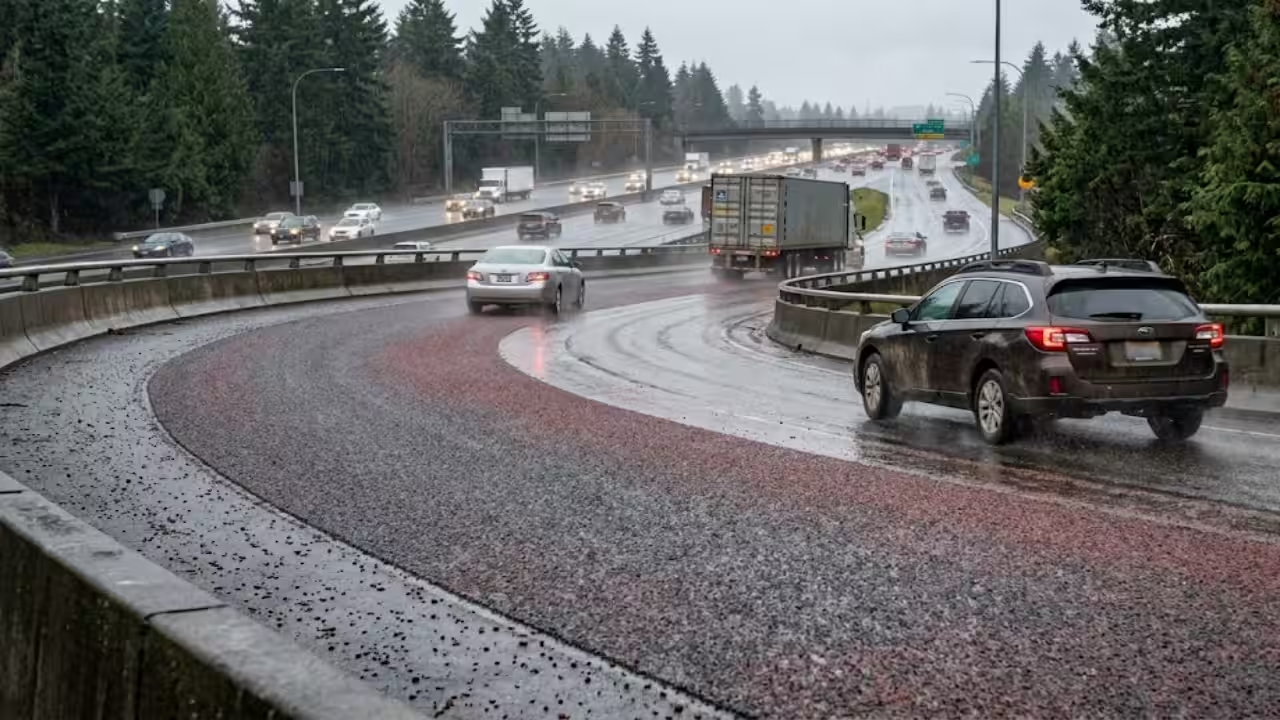
Roads rarely become dangerous without a reason. Ramps that curve onto busy highways are often where a vehicle is pushed beyond what its tyres can grip, because of a tight curve, a downhill approach and a layer of rain. Engineers call the grip between tyre and road friction. Drivers who have done nothing wrong can still slide out of their lane when friction is too low.Over the past ten years, one remedy has spread across the country: the high-friction surface treatment, which the Federal Highway Administration describes as a polish-resistant material such as calcined bauxite bonded to the road with a polymer resin binder. The agency also notes that curves and junctions require significantly higher levels of friction than straight roads, especially in rainy weather.Washington State tried it in Everett, in Snohomish County. In June 2015, engineers applied a covering of resin and bauxite to the eastbound State Route 526 ramp to southbound Interstate 5. In the five years before treatment, the ramp averaged 13.8 wet surface crashes a year. In the year after, it recorded one, according to a 2017 Washington State Department of Transportation analysis. To understand those results, it helps to know what was laid down on the road and how it grips.Bauxite meets resinCalcined bauxite is conventional bauxite ore that has been heated to 1,000-1,200 degrees Celsius. The heating drives off moisture and increases the alumina concentration, leaving a highly durable aggregate that remains rough under traffic. Crews spread a polymer resin binder over the pavement, then drop the bauxite chips onto it before it sets, locking each chip in place. According to the Federal Highway Administration, the bond is strong enough to resist aggressive cornering, harsh braking and even snowploughs.Bauxite is not the only stone engineers have tried. In a 2015 study, the National Center for Asphalt Technology at Auburn University tested granite, flint, basalt, silica sand, steel slag, emery and taconite against calcined bauxite, which provided the best friction performance. Skid-trailer readings showed bauxite's friction number dropping from 70 to 63, against 54 to 40 for granite and 54 to 43 for flint. Engineers see it as a spot fix for places where wet skids keep happening, largely because the layer is thin and sits on top of the old asphalt instead of replacing it. The results at those spots are the more telling part.Two ramps, big dropsThat same month, WSDOT also treated an Eastgate on-ramp, from 148th Avenue SE to westbound Interstate 90. Friction readings at both locations rose from the upper 30s to the low to mid 70s. The analysis compared a five-year average with the first year after installation, from July 2015 to June 2016. On the State Route 526 ramp, collisions on wet surfaces dropped from an average of 13.8 a year to one, a 93% decrease. All crashes there, wet and dry, dropped from 17.6 to seven. The Eastgate ramp did even better on wet roadways, with wet surface crashes falling from 23.2 a year to one.The spread between those numbers is telling. A comparable ramp in Vancouver, Washington, treated with a two-part epoxy product called Tyregrip, saw wet-weather run-off-the-road crashes fall from 24 to five over the five years after treatment, a decline of 79 per cent, while all other crashes fell by only 10 per cent. Injuries from crashes dropped from seven to one. Not all crashes are caused by skids on the surface.There’s a warning on the same ramp in Vancouver too. The first application in 2010 raised friction just a little, but the provider reapplied it in May 2011, and measurements jumped to about 77. Later the overlay started to fracture and peel, and by the end of the research in May 2016, huge chunks had come away. WSDOT couldn’t narrow down the source, but it suggested that dampness in the underlying asphalt or the tremendous load on the surface from rotating tyres could be the cause. Friction stayed in the 70s throughout, and the crash benefit held.What the wider evidence saysFlorida started employing the surfaces in 2006, and a 2016 analysis of 47 installations found an average 32% reduction in total crashes and a 75% reduction in rainy weather crashes. It also found that 22% of the systems were in poor or failed condition, with loss of aggregate being the most common concern.The other thing is the cost. The Vancouver ramp cost $43,800 for 1,200 square yards in 2010, roughly $36.50 a square yard, according to WSDOT's Tyregrip evaluation. Florida’s overall expenses were between $36 and $113. That is pricey by regular resurfacing standards, but a Texas study cited by WSDOT suggested that avoiding even one fatal crash can return almost 100 times the initial investment. A 2020 FHWA study reached a similar conclusion, finding significant crash reductions from high-friction surface treatments at curves and ramps, particularly for wet-weather crashes.The lessons for road agencies are rather clear. This solution works well for short segments where wet skids tend to group together, such as a sudden ramp or bend, not long straight highways. The pavement below must be solid and clean, as this area is where several of the failures started. And no surface will prevent every crash. Still, it's tough to argue with a decline from roughly 14 rainy weather collisions a year to one, and that explains why more states keep reaching for resin and bauxite.You use AI every day. Now get your AI Quotient. Take the AIQ test.
Topics in this story
Gathered from external sources. Rights to this text belong to whoever originally published it.