Dolores Huerta, farmworker and civil rights activist, dies at 96
Huerta co-founded the United Farm Workers with César Chávez, improving the lives of the country's mostly Latino farmworkers and changing the course of the labor movement.
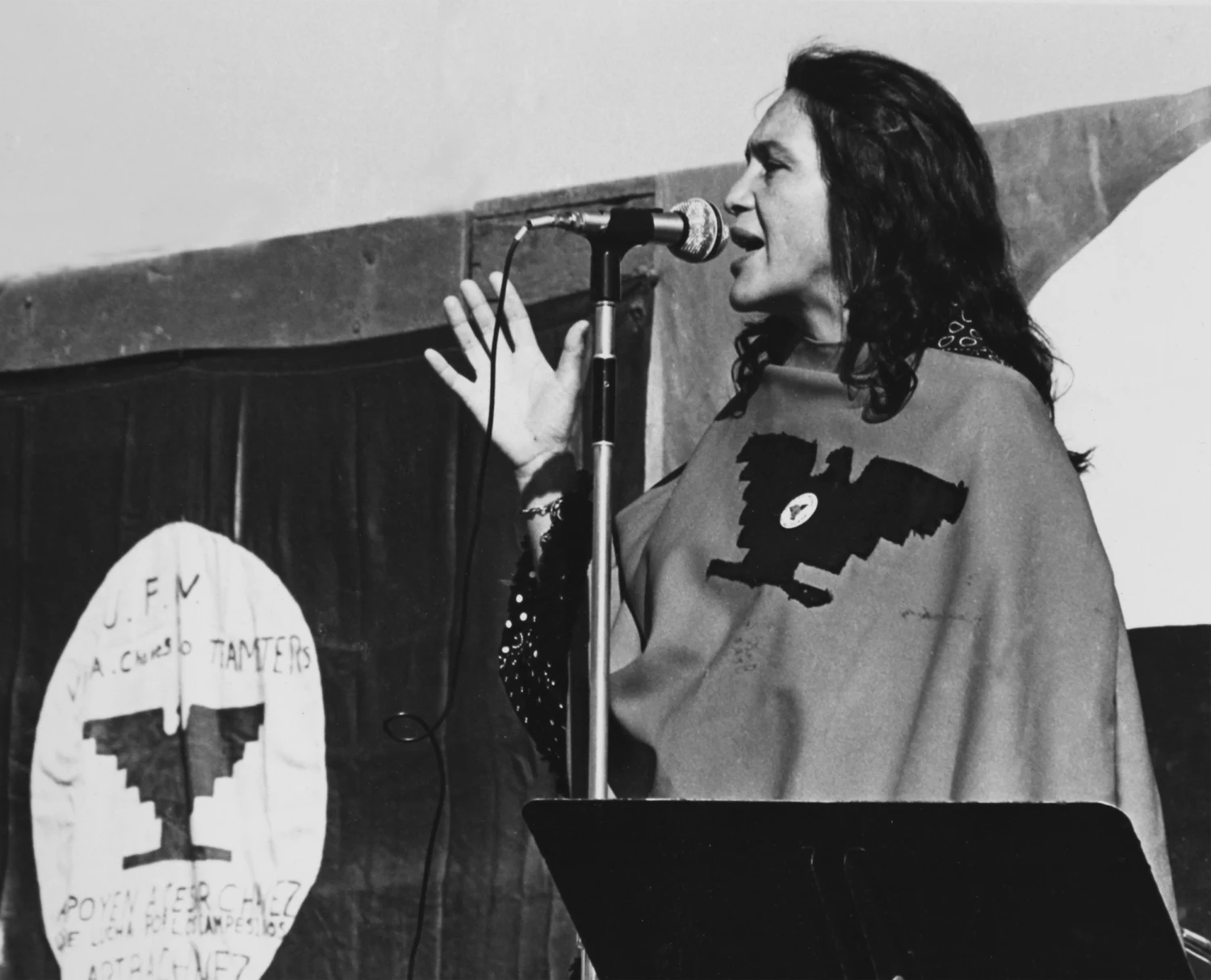
Dolores Huerta, arguably the nation's most well-known Latina civil-rights leader, has passed away at 96, her family said in a statement. The labor leader and civil rights activist was the co-founder, with Cesar Chavez, of the United Farm Workers (UFW), the first nationally recognized union for farm workers. An inspiration to generations of Americans, Huerta spent decades fighting labor injustices and political, racial and gender inequality. Huerta was “the most famous Latina that has ever been in the labor movement, and the renown was well-earned,” said Matthew J. Garcia, professor at Dartmouth College and author of the 2014 book, “From the Jaws of Victory: The Triumph and Tragedy of Cesar Chavez and the Farm Worker Movement.” “She was extraordinary.” In her UFW heyday, Huerta cut a striking figure, a fierce young Latina shouting through a bullhorn, rallying workers and leading marches. This was a rare sight at a time when Hispanics had yet to become a political force. She was the embodiment of a “Chicana,” a politically active Mexican American woman claiming her own power. Though she was most famous for her leadership in the United Farm Workers, Huerta was committed to social and political activism throughout her life, supporting voting rights, immigrant rights, environmental justice, LGBTQ+ equality and other issues. She was arrested more than 25 times for participating in non-violent civil disobedience activities. In 2019, at 89, she was arrested while joining a union protest for better pay for home health care workers. She also prominently campaigned for many Democratic candidates. In 1993 Huerta was the first Latina inducted into the National Women’s Hall of Fame. In 2012, President Barack Obama awarded her the Presidential Medal of Freedom, the nation’s highest civilian honor. In a shocking coda to her life story, Huerta revealed in 2026 that Chavez had sexually abused her during their time as union leaders. This revelation came as part of a bombshell investigation by the New York Times, alleging that Chavez had groomed and abused girls and women. Huerta had not known about the young girls’ and young women’s allegations, she said. In a statement about her revelations, Huerta said, “I carried this secret for as long as I did because building the movement and securing farmworker rights was my life’s work.” Of Mexican American descent, Huerta was born in 1930 in New Mexico and grew up in Stockton, California. Civic engagement was part of her family tradition. “My father was an assemblyman; I had a cousin who was a judge. When we were kids, we used to listen to FDR’s fireside chats,” she said. “When I turned 21, part of my birthday ritual was to go and register to vote.” After college, Huerta worked as a teacher. But she was shocked to see the children of farm workers coming to school barefoot and hungry, and living in homes with dirt floors. Determined to make more of a difference in people’s lives, she decided to become a community organizer. In her mid–20s, Huerta joined a California Latino civil rights group as a lobbyist, working in Sacramento in support of pensions for noncitizens and disability insurance for farm workers. Then came a turning point in Huerta’s life, when she met fellow organizer Cesar Chavez at a 1955 fundraising dinner. They shared an interest in the welfare of farm workers, and seven years later they launched the National Farm Workers Association, a forerunner to the UFW. Although Chavez was the face of the movement, Huerta’s organizing was essential to its success in winning farm workers the right to collectively bargain for better wages and working conditions. It was she who coined the slogan “Sí se puede” (Yes we can!), which became the rallying cry of the farm worker movement. Through protests, strikes, and grassroots campaigns, the UFW helped improve the lives of some of the country’s poorest and most marginalized workers. From the mid-60s to the mid-70s, millions of Americans participated in boycotts of grapes and lettuce. It was a heady time, Huerta recalled in the 2017 documentary about her life, “Dolores.” “We had this ambience all around you, that you could really change the world," she said in the documentary. It was during this time that Huerta experienced two separate unwanted sexual encounters with Chavez. The first time, Huerta told the Times, was in 1960, when Chavez pressured her into sex. The second time was in 1966, a situation that Huerta described as rape. These traumatic experiences became a dark secret that she would keep for nearly 60 years, even as she became a much-admired feminist and labor icon. “Dolores was by Cesar Chavez’ side the whole way through,” said Garcia. “They took what had been a largely rural movement and turned it into a cause that captured the national imagination.” Huerta, he pointed out, brought the UFW’s message into places like Los Angeles and New York City. “She was also a tenacious and strong negotiator of contracts on behalf of farm workers.” Despite Huerta’s significant efforts with the UFW, her role was often overlooked. “She was as strong a figure as Cesar was... I think she is an unsung hero in many parts of the U.S., and in our history,” said Domingo Garcia, former national president of the League of United Latin American Citizens. “Dolores stood for courage. She stood for righteousness and justice when it was unpopular to do so — and when there could be consequences for doing so.” Huerta helped mobilize working-class and poor people, Garcia said, “but she never backed down. She is a profile in courage that every American should know about, especially Latinos and women.” In speaking her truth about the abuse she suffered, in 2026 Huerta was hailed by Latino civic and advocacy organizations for her courage. Yet Huerta’s legacy will always be intertwined with that of Chavez. “I have never identified myself as a victim, but I now understand that I am a survivor — of violence, of sexual abuse, of domineering men who saw me, and other women, as property, or things to control,” Huerta said in her 2026 statement. “My heart aches for everyone who suffered alone and in silence for years.” Huerta noted that the farm worker movement had always been bigger than one individual. “Cesar’s actions do not diminish the permanent improvements achieved for farmworkers with the help of thousands of people,” she said. “We must continue to engage and support our community, which needs advocacy and activism now more than ever.” In her mid–20s, Huerta joined a California Latino civil rights group as a lobbyist, working in Sacramento in support of pensions for noncitizens and disability insurance for farm workers. These early legislative victories were among Huerta’s proudest achievements. Huerta was “the most famous Latina that has ever been in the labor movement, and the renown was well-earned,” said Matthew J. Garcia, professor at Dartmouth College and author of the 2014 book, “From the Jaws of Victory: The Triumph and Tragedy of Cesar Chavez and the Farm Worker Movement.” “She was extraordinary.” In her UFW heyday, Huerta cut a striking figure, a fierce young Hispanic woman shouting through a bullhorn, rallying workers and leading marches. This was a rare sight at a time when Latinos had yet to become a political force. She was the embodiment of a “Chicana,” a politically active Mexican American woman claiming her own power. “Dolores was by Cesar Chavez’ side the whole way through,” said Garcia. “They took what had been a largely rural movement and turned it into a cause that captured the national imagination.” Huerta, he pointed out, brought the UFW’s message into places like Los Angeles and New York City. “She was also a tenacious and strong negotiator of contracts on behalf of farm workers.” Huerta’s involvement with the UFW came at great personal cost. The mother of 11 children, she left several children behind with relatives when she went to organize farmworkers in the fields. She was often not available for her other children due to the demands of her work. Despite Huerta’s significant efforts with the UFW, her role was often overlooked by the media and historians. “She was as strong a figure as Cesar was — I think she is an unsung hero in many parts of the U.S., and in our history,” said Domingo Garcia, national president of the League of United Latin American Citizens. “Dolores stood for courage. She stood for righteousness and justice when it was unpopular to do so — and when there could be consequences for doing so.” Huerta helped mobilize working-class and poor people, Garica said, “but she never backed down. She is a profile in courage that every American should know about, especially Latinos and women.” Within the UFW, Huerta saw gender-based inequality, which led to an awakening of her feminist identity. “When I went to Delano (California) to work with the farmworkers, I had to tamp down my feelings about women in power because there was a different ambiance with the male dominance in the movement. There were a lot of women in the movement, but we saw we needed to be on the executive board,” she reflected in 2017. “The feminists helped me understand why it was important for women to be able to have control of their bodies and control of their lives.” Huerta was arrested more than 25 times for participating in nonviolent civil disobedience activities and strikes, even late in life. In 1988, at age 58, Dolores was assaulted by a police officer while protesting the policies of then-presidential candidate George H.W. Bush in San Francisco. In 2019, at 89, she was arrested while joining a union protest for better pay for home health care workers. Huerta was committed to activism throughout her life, supporting voting rights, immigrant rights, LGBTQ+ equality and environmental justice. She founded the Dolores Huerta Foundation in 2003 to “create networks of healthy, organized communities pursuing social justice through systemic and structural transformation,” according to its website. Huerta married her first husband Ralph Head in 1948. They had two daughters together. Her second husband was Venturo Huerta, with whom she had five children. She had four children with her longtime partner Richard Chavez (brother of Cesar), who passed away in 2011. By 2024, Huerta was pleased by the progress that Latinos had made, in areas like political representation and education, but remained concerned about threats to democracy. “Fascism, and voter suppression, is real,” she said. “But my optimism comes from knowing that we, the people, have the power to change things; if we organize, if we vote, and when we elect representatives who will enact policies that benefit all people.” As the country’s political and social landscape changed during her lifetime, Huerta never waved in her belief that people united in common cause can alter their circumstances. “When people come together and take collective action,” she said in 2020,” whether it’s in a march, whether it’s in a union election or, most important, come together to vote, this is how we make change.” Among her many honors, in 1993 Huerta became the first Latina inducted into the National Women’s Hall of Fame. In 2012, then-President Obama awarded her the Presidential Medal of Freedom, the nation’s highest civilian award. Upon receiving this prestigious award, Huerta noted, “The great social justice changes in our country have happened when people came together, organized, and took direct action. It is this right that sustains and nurtures our democracy today.”
Topics in this story
Gathered from external sources. Rights to this text belong to whoever originally published it.