In 1921, girl buried 3,500 years ago in Denmark was found with a strange drink, unusual clothes and a child’s bones; archaeologists still wonder who she was
Europe News: In 1921, the excavation of a burial mound near Egtved in Denmark brought an extraordinary Bronze Age story back into view. Inside a sealed oak coffin .
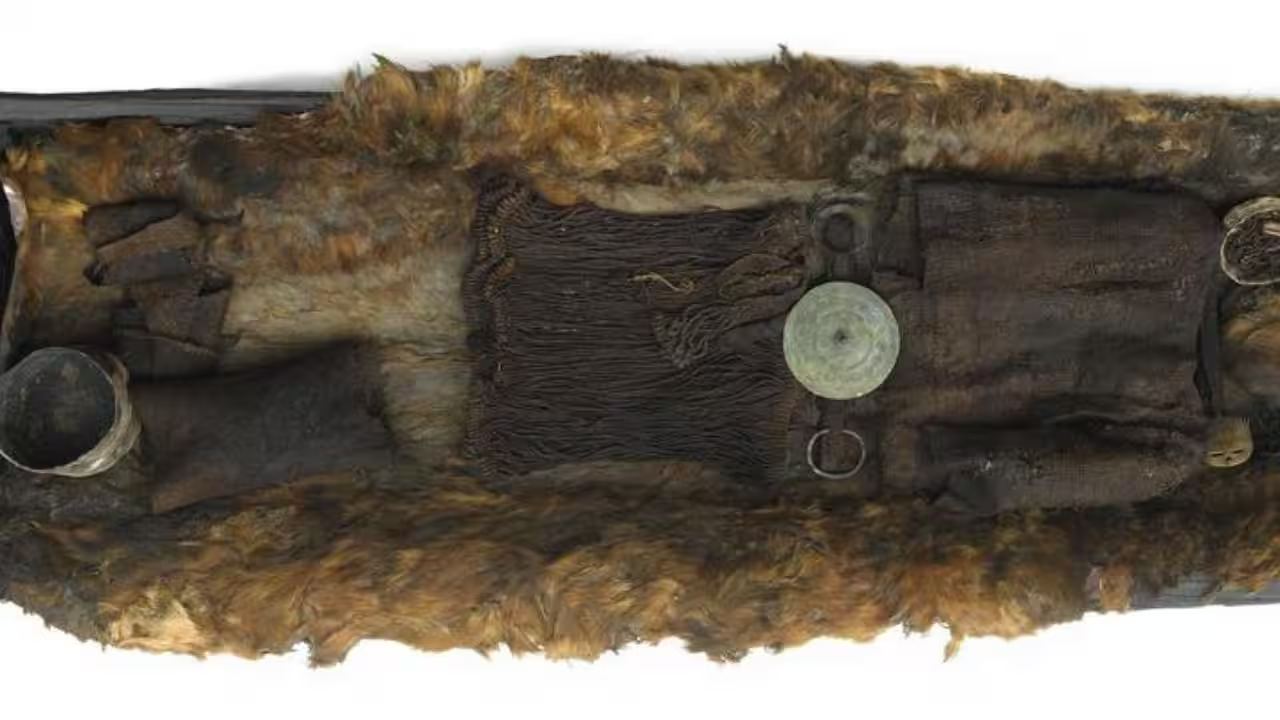
In 1921, the excavation of a burial mound near Egtved in Denmark brought an extraordinary Bronze Age story back into view. Inside a sealed oak coffin lay the remains of a young woman who had been buried around 1370 BC, along with clothing, jewellery, tools and a small bark bucket. The discovery was remarkable because the coffin had protected fragile materials that would normally disappear over thousands of years. According to the National Museum of Denmark, the girl was about 16 to 18 years old when she died, and only parts of her hair, brain, teeth, nails and skin survived. Her unusual clothes and burial objects have since offered clues about Bronze Age rituals and everyday life, making her one of Denmark’s most famous prehistoric figures ever found.What was found inside the ancient coffin of DenmarkThe Egtved Girl was buried inside an oak coffin beneath a barrow known as Storehøj, near Egtved, west of Vejle. The National Museum of Denmark states that she was laid to rest around 1370 BC, meaning the burial was almost 3,500 years old when archaeologists opened it in 1921. The coffin had preserved a surprisingly detailed picture of the young woman and the objects placed with her. Her clothing included a short tunic and a knee-length skirt made from cords. A large bronze belt plate decorated with spirals rested on her stomach, while bronze rings were found around her arms and another slender ring was worn in her ear. A horn comb was attached to her belt, and a small bark box near her face contained a bronze awl and remains of a hair net. At her feet was another bark container that had once held a fermented drink. The burial also contained a small bundle of clothing and cremated bones belonging to a child aged around five or six. Some additional bones from the same child were found inside the bark box. The discovery therefore left archaeologists curious about the people connected to the burial.What did the Bronze Age drink reveal about that eraPerhaps one of the most unexpected clues came from the small bark bucket placed near the Egtved Girl's feet. When researchers examined the thick brown material remaining at the bottom, they found evidence that the container had held a fermented drink. According to the National Museum of Denmark, the drink was probably a type of beer sweetened with honey. It appears to have been made using cowberries or cranberries, while wheat grains, bog myrtle and large amounts of pollen were also detected. The pollen was particularly useful. The museum explains that pollen can act like a fingerprint for plants, allowing researchers to identify some of the ingredients that were present in the ancient drink. What might initially have looked like a dark residue therefore became evidence of how people prepared beverages more than three millennia ago. The find also shows how much information can remain hidden in ordinary burial objects. The bucket itself was simple, but its contents preserved details about plants, food and drink that would otherwise have been lost.Importance of the girl’s unusual skirtThe Egtved Girl's clothing has become one of the most recognisable features of the burial. According to the National Museum of Denmark, the skirt was about 38 centimetres long, reached the knees and was wound twice around her waist. It was made from cords rather than woven cloth and was part of a style that was used throughout the Bronze Age. The skirt may have been more than everyday clothing. Small bronze female figures discovered at Grevensvænge in Zealand were also shown wearing similar cord skirts. The museum notes that these figures have been interpreted as representing rituals performed during Bronze Age religious feasts. One assumption is that women wearing these skirts may have taken part in ritual dances. If that is correct, the Egtved Girl's clothing could offer more than a glimpse of Bronze Age fashion. It could also hint at activities in which she may have participated during her lifetime. The National Museum of Denmark presents it as a possibility rather than a certainty. Still, the connection between the skirt and ritual imagery gives the simple-looking garment an intriguing meaning.Unfolding the Bronze Age with this unique burial in DenmarkThe Egtved Girl's grave provides a rare glimpse into a period when clothing, jewellery, ritual and burial customs were closely connected. Her bronze belt plate, decorated with spirals, may have represented the sun, which the National Museum of Denmark describes as the most important element in Bronze Age religion. Her grave also demonstrates how carefully certain individuals could be prepared for burial. She was placed in an oak coffin with clothing, personal items, a drink and other objects. The survival of these materials has allowed researchers to move beyond studying bones only and consider aspects of Bronze Age life that are normally difficult to recover. The discovery at Egtved shows how a single well-preserved burial can turn an otherwise distant period of history into something remarkably human.Catch the latest World News and Live updates. Download the TOI app.
Topics in this story
Gathered from external sources. Rights to this text belong to whoever originally published it.